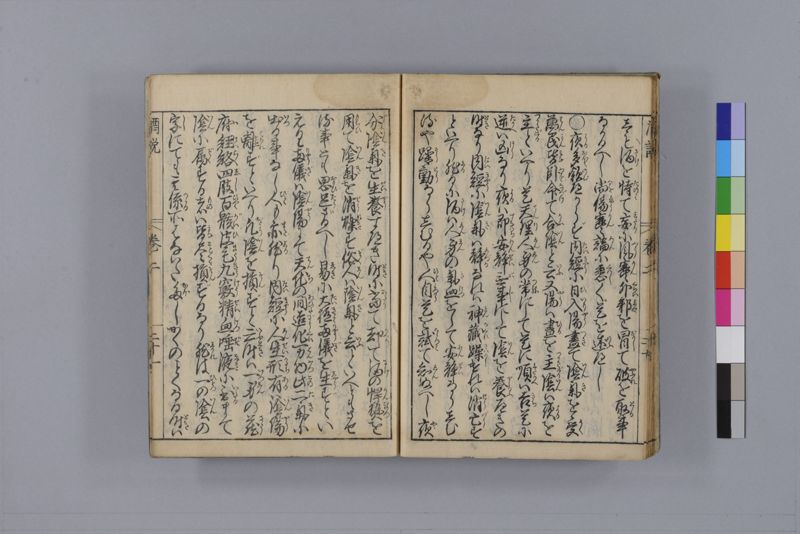
翻刻
【右丁】
しも酒(さけ)を恃(たのみ)て妄(みたり)に風寒(ふうかん)外邪(くわいしや)を冒(おかし)て破(やふれ)を取(とる)事
なかるへし尚(なを)傷寒論(しやうかんろん)に悉(くはし)く是を述(のふ)へし
○夜(よる)多(おほく)飲(のむ)へからず内経(たいきやう)に日(ひ)入(いり)陽(やう)尽(つき)て陰気(いんき)を受(うく)
万民(はんみん)皆(みな)臥(ふす)命(なづけ)て合陰(かふいん)と云(いふ)又 陽(やう)は昼(ひる)を主(つかさどり)陰(いん)は夜(よる)を
主(つかさどる)といへり是 天理(てんり)人身(しんしん)の常(つね)にして是に順(したかへ)は吉(きち)是に
逆(たかへ)は凶(けう)なり夜(よる)は即(すなはち)安静(あんせい)無事(ぶじ)にして陰(いん)を養(やしなふ)へきの
時(とき)なり内経(たいきやう)に陰気(いんき)は静(しづか)なれは神(しん)蔵(かくれ)躁(さはかし)けれは消亡(せうばう)す
といへり然(しか)るに酒(さけ)は人身(しんしん)の気血(きけつ)をして安静(あんせい)ならしむ
るや躁動(さうとう)ならしむるや人(ひと)自(みつから)是を試(こゝろみ)て知(しん)ぬへし夜(や)
【左丁】
分(ぶん)陰気(いんき)を生養(せいやう)すへき時(とき)に当(あたり)て却(かへり)て酒(さけ)の悍熱(かんねつ)を
用(もちひ)て陰気(いんき)を消爍(せうれき)す俗人(ぞくしん)は陰気(いんき)といふといへともさせ
る事とも思(おもひ)足(たら)ざるへし易(ゑき)に大極(たいきよく)両儀(りやうぎ)を生(しやう)ずとい
えり両儀(りやうぎ)は陰陽(いんやう)にて天地(てんち)の間(あひた)造化(ざうくは)万物(はんふつ)此(この)二気(にき)に
出(いつ)る事なし人(ひと)も亦(また)然(しか)り内経(たいきやう)に人生(しんせい)形(かたち)有(ある)は陰陽(いんやう)
を離(はなれ)ずといへり凡(およそ)陰(いん)を損(そん)ずと云(いふ)時(とき)は一身(いつしん)の蔵(さう)
府(ふ)経絡(けいらく)四肢(しし)百骸(ひやくがい)皮毛(ひまう)九竅(きうけう)精血(せいけつ)唾液(だゑき)に至(いたる)まて
陰(いん)に属(ぞく)する者(もの)は皆(みな)尽(こと〳〵く)損(そん)ずるなり然(しかれ)は一(ひとつ)の陰(いん)の
字(し)にても其 係(かゝる)所はなはた多(おほ)しかくのことくなる時(とき)は
現代語訳
【右丁】
しても酒を頼みにして妄りに風寒や外邪を冒して破れを取ることがあってはならない。なお『傷寒論』に詳しくこれを述べるべきである。
○夜に多く飲んではならない。『内経』に「日が入り陽が尽きて陰気を受け、万民皆が臥す、これを合陰と名づける」また「陽は昼を主り、陰は夜を主る」とある。これは天理・人身の常であって、これに順えば吉、これに逆らえば凶である。夜はすなわち安静無事にして陰を養うべき時である。『内経』に「陰気は静かなれば神は蔵れ、躁がしければ消亡する」とある。しかるに酒は人身の気血を安静にするか躁動させるか、人は自らこれを試して知るべきである。夜
【左丁】
分、陰気を生養すべき時に当たって却って酒の悍熱を用いて陰気を消爍する。俗人は陰気というといっても、さしたることとも思い足らないだろう。『易』に「大極は両儀を生ず」とある。両儀は陰陽にて、天地の間、造化万物はこの二気に出ることなし。人もまた然り。『内経』に「人生、形有るは陰陽を離れず」とある。およそ陰を損ずという時は、一身の臓府・経絡・四肢百骸・皮毛・九竅・精血・唾液に至るまで陰に属する者は皆ことごとく損ずるのである。しからば一つの陰の字にてもその係る所ははなはだ多し。このようになる時は
英語訳
【Right page】
one should never rely on alcohol and recklessly expose oneself to wind-cold and external pathogens only to suffer defeat. Furthermore, the Treatise on Cold Damage should describe this in detail.
○One should not drink much at night. The Inner Classic states: "When the sun sets and yang is exhausted, one receives yin qi, and all people lie down - this is called 'joining with yin.'" It also says "Yang governs the day, yin governs the night." This is the constant principle of heaven and human body - following it brings good fortune, opposing it brings misfortune. Night is precisely the time to be calm and peaceful, nourishing yin. The Inner Classic states: "When yin qi is quiet, the spirit is stored; when it is agitated, it dissipates and perishes." Now, does alcohol make the qi and blood of the human body calm or agitated? People should test this themselves to know. At night,
【Left page】
when it is time to generate and nourish yin qi, one instead uses alcohol's fierce heat to consume and destroy yin qi. Common people, when they hear of yin qi, probably do not think it amounts to much. The Book of Changes states: "The Great Ultimate generates the Two Principles." The Two Principles are yin and yang - between heaven and earth, in the creation of all things, nothing emerges outside these two qi. The same is true for humans. The Inner Classic states: "In human life, having form cannot be separated from yin and yang." Generally, when we speak of damaging yin, everything belonging to yin in the entire body - the organs, meridians, four limbs and hundred bones, skin and hair, nine orifices, essence and blood, saliva - all are completely damaged. Therefore, even with just the single character "yin," what it relates to is extremely vast. When such a situation occurs,