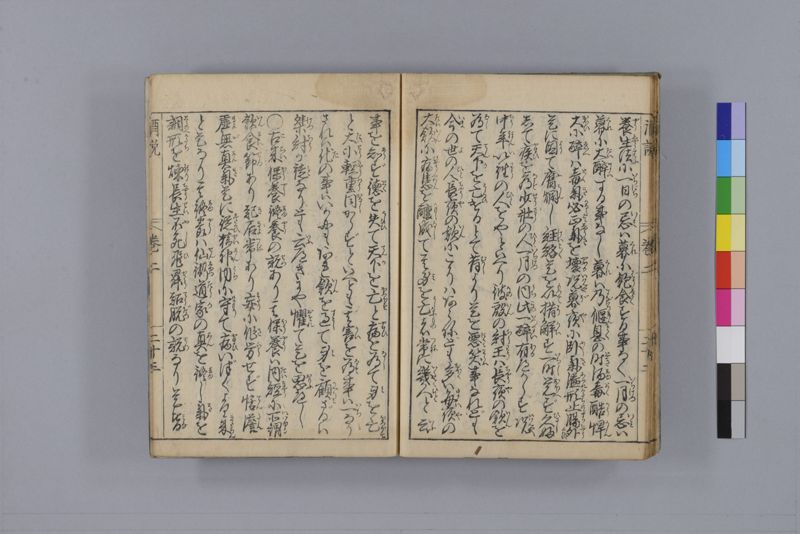
翻刻
【右丁】
養生法(やうしやうはふ)に一日(いちにち)の忌(いみ)は暮(くれ)に飽食(ばうしよく)する事なく一月(いちけつ)の忌(いみ)は
暮(くれ)に大醉(たいすい)する事なし暮(くれ)は乃(すなはち)偃息(えんそく)の時(とき)酒毒(しゆとく)酷悍(かうかん)
大(おほい)に醉(ゑへ)は毒気(とくき)必(かならす)正気(しやうき)を壊(やふる)況(いはんや)暮夜(ぼや)に臥気(ふしき)溢(あふれ)形(かたち)止(とゝまる)腸(ちやう)外【左ルビ:くわい】
是に因(より)て腐爛(ふらん)し経絡(けいらく)是を以(もつて)措解(そかい)す一時(いちし)覚(おほへ)ず久(ひさし)ふ
して疾(やまひ)を為(なす)少壮(せうさう)の人(ひと)一月(いちけつ)の内(うち)此(この)一醉(いつすい)有(ある)へからず況(いわんや)
中年(ちうねん)以往(いわう)の人(ひと)をやといへり彼(かの)殷(いん)の紂王(ちうわう)は長夜(ちやうや)の飲(いん)を
為(なし)て天下(てんか)を亡(うしなひ)けるとて昔(むかし)より是を悪(にくみ)笑(わらふ)事なれども
今(いま)の世(よ)の人(ひと)長夜(ちやうや)の飲(いん)にこそはあらねども多(おほく)は毎夜(まいや)の
大飲(たいいん)に病患(ひやうくわん)を醸成(かもしなし)て其 身(み)を亡者(うしなふもの)常(つね)に幾(いくはく)人(ひと)と云(いふ)
【左丁】
事を知(しら)ず徳(とく)を失(うしなひ)て天下(てんか)を亡(ほろほす)と病(やまひ)を為(なし)て身(み)を亡(ほろほす)
と大小(たいせう)軽重(きやうちう)同(おなし)からずといへとも其 害(かい)を為(なす)事は一(いち)なり
されは他(た)の事はいかにもあれ飲(いん)を過(すこし)て身(み)を顧(かへりみ)ざるは
桀紂(けつちう)が徒(と)なりとも云(いふ)へきにや懼(おそれ)て是を思ふへし
○古来(こらい)保養(ほうやう)修養(しゆやう)の説(せつ)あり其 保養(ほうやう)は内経(たいきやう)に所謂(いはゆる)
飲食(いんしい)節(せつ)あり起居(ききよ)常(つね)あり妄(みたり)に作労(さらう)せず恬澹(てんたん)
虚無(きよぶ)真気(しんき)是に従(したかひ)精神(せいしん)内(うち)に守(まもり)て病(やまひ)いづくより来(きたらん)
と是なり其 修養(しゆやう)は仙術(せんしゆつ)道家(たうか)の真(しん)を修(しゆ)し気(き)を
調(とゝのへ)形(かたち)を煉(ねり)長生(ちやうせい)不死(ふし)飛昇(ひせう)超脱(てうだつ)の説(せつ)なり是 皆(みな)
現代語訳
【右丁】
養生法によれば、一日の禁忌は夕方に飽食することであり、一月の禁忌は夕方に大酔することである。夕方はすなわち休息の時であり、酒毒は猛烈で、大いに酔えば毒気が必ず正気を破壊する。ましてや夕暮れから夜にかけて横になると気が溢れ、形が止まって腸の外に出て、これによって腐敗し、経絡がこのために解体する。一時は気づかないが、長く続けば病気となる。少壮の人でも一月の内にこの一度の酔いがあってはならない。ましてや中年以降の人においてをやという。かの殷の紂王は長夜の飲酒をして天下を滅ぼしたということで、昔からこれを憎み笑うことであるが、今の世の人は長夜の飲酒ではないとしても、多くは毎夜の大飲によって病患を醸成して、その身を滅ぼす者が常にどれほど多いかということを
【左丁】
知らない。徳を失って天下を滅ぼすのと、病気になって身を滅ぼすのとでは、規模の大小軽重は同じではないといっても、その害をなすことは同じである。だから他のことはどうであれ、飲酒が過ぎて身を顧みないのは桀紂の類いだとも言えるのではないか。恐れてこれを思うべきである。
○古来、保養と修養の説がある。その保養は内経にいわゆる「飲食に節度があり、起居に規則があり、みだりに労働せず、恬淡虚無にして真気がこれに従い、精神が内に守られて病気はどこから来ようか」というものである。その修養は仙術・道家の真を修め気を調え、形を練って長生不死・飛昇超脱を説くものである。これらは皆
英語訳
【Right page】
According to health preservation methods, the daily prohibition is eating to satiation in the evening, and the monthly prohibition is becoming greatly intoxicated in the evening. Evening is the time for rest, and alcohol toxicity is fierce - if one becomes greatly drunk, the toxic qi will inevitably destroy the vital qi. Moreover, when one lies down from evening to night, the qi overflows, the form stops and extends outside the intestines, causing decay, and the meridians become disrupted as a result. One may not notice at first, but continuing this for long will cause illness. Even young and strong people should not have this one bout of drunkenness within a month, let alone middle-aged and older people. That King Zhou of Yin brought about the fall of his kingdom through all-night drinking, and this has been despised and ridiculed since ancient times. However, while people today may not engage in all-night drinking, many brew illness through nightly heavy drinking and destroy their bodies - how many such people there are
【Left page】
is unknown. Though losing virtue and destroying a kingdom versus becoming ill and destroying one's body differ in scale and severity, the harm they cause is the same. Therefore, regardless of other matters, excessive drinking without regard for one's body could be said to be like the tyrants Jie and Zhou. One should fear and contemplate this.
○Since ancient times, there have been theories of preservation (baoyang) and cultivation (xiuyang). Preservation refers to what the Inner Classic calls: "having moderation in food and drink, regularity in daily activities, not laboring recklessly, maintaining tranquil emptiness so that true qi follows accordingly, and keeping the spirit guarded within - from where could illness come?" Cultivation refers to the theories of immortal arts and Daoist practices of cultivating truth and regulating qi, refining form for longevity, immortality, ascension and transcendence. These are all