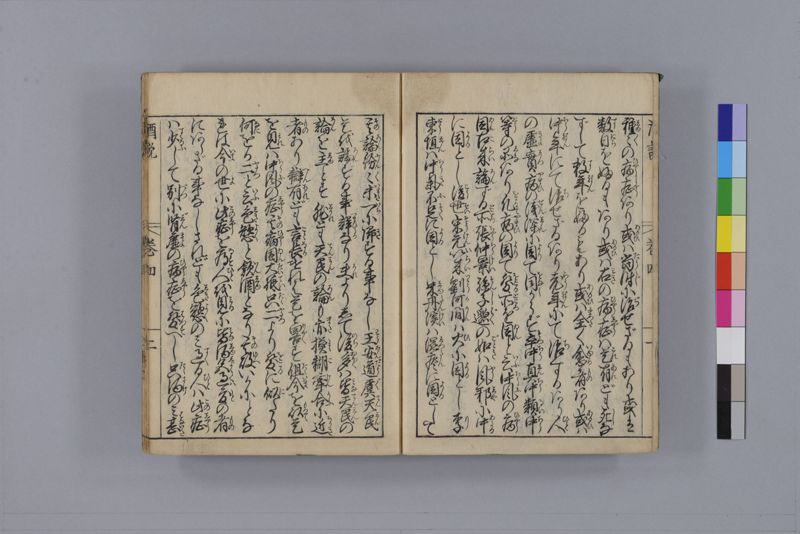
翻刻
【右丁】
種々(しゆ〳〵)の病症(ひやうしやう)あり或(あるひ)は当時(たうじ)に治(ぢ)せざるもあり或は
数日(すにち)をふるもあり或(あるひ)は右(みき)の病症(ひやうしやう)は是(これ)有(あれ)ども死(し)な
ずして数年(すねん)をふるもあり或(あるひ)は全(まつた)く愈(いゆる)者(もの)あり或(あるひ)は
中年(ちうねん)にて治(ち)せざるあり老年(らうねん)にて治(ち)するあり人(ひと)
の虚実(きよしつ)病(やまひ)の浅深(せんしん)に因(より)て同(をなし)からず卒中(そつちう)真中(しんちう)類中(るいちう)
等(とう)の品(しな)あり凡(をよそ)病(やまひ)の因(より)て発(をこる)所(ところ)を因(ゐん)と云(いふ)中風(ちうふ)の病(ひやう)
因(ゐん)古来(こらい)論(ろん)ずる所(ところ)張仲景(ちやうちうけい)孫子邈(そんしばく)の如(ごとき)は風邪(ふうしや)に中(あたる)
に因(よる)とし後世(こうせい)宋元(そうけん)以来(いらい)劉河間(りうかかん)は火(ひ)に因(よる)とし李(り)
東垣(とうゑん)は中気(ちうき)不足(ふそく)に因(よる)とし朱丹渓(しゆたんけい)は湿痰(しつたん)に因(よる)として
【左丁】
其論(そのろん)紛々(ふん〳〵)未(いまた)一(いち)に帰(き)する事なし王安道(わうあんだう)虞天民(ぐてんみん)
是を論(ろん)ずる事 詳(つまひらか)なり夫(それ)よりして後(のち)多(おほく)は皆(みな)天民(てんみん)の
論(ろん)を主(しゆ)とす然(しかれ)とも天民(てんみん)の論(ろん)も亦(また)模糊(もこ)牽合(けんかう)に近(ちかき)
者(もの)あり弁(へん)有(あれ)ども言(こと)長(なか)けれは是を略(りやく)す但(たゝ)今(いま)を以(もつて)是
を見(みれ)は中風(ちうふ)の症(しやう)其(その)病因(ひやうゐん)大抵(たいてい)只(たゝ)二(ふたつ)より発(をこる)に似(に)たり
何(なに)をか二(ふたつ)と云(いふ)色欲(しきよく)と飲酒(いんしゆ)となり其故(そのゆへ)いかにとな
れは今(いま)の世(よ)に此症(このしやう)を為(なす)人(ひと)を見(みる)に皆(みな)酒色(しゆしよく)過度(くはと)の者(もの)
にあらざる事なしされども色欲(そいきよく)のみ過(すく)る人(ひと)は此症(このしやう)
は少(すくなふ)して別(べつ)に腎虚(じんきよ)の病症(ひやうしやう)を発(はつす)へし只(たゝ)酒(さけ)のみ甚(はなはた)
現代語訳
【右丁】
様々な病症があり、ある場合はその時に治らないものもあり、ある場合は数日を経るものもあり、ある場合は上記の病症はあるけれども死なずに数年を経るものもあり、ある場合は完全に治る者もあり、ある場合は中年で治らないものがあり、老年で治るものもある。人の虚実、病の浅深によって同じではない。卒中、真中、類中等の種類がある。およそ病の発生する原因を「因」という。中風の病因について、古来論じられているところでは、張仲景、孫思邈のような医師は風邪に中ることによるとし、後世宋元以来、劉河間は火によるとし、李東垣は中気不足によるとし、朱丹渓は湿痰によるとしている。
【左丁】
その論は紛々として、未だ一つに帰することがない。王安道、虞天民がこれを論じることは詳細である。それ以後は多くは皆、天民の論を主とする。しかしながら天民の論もまた曖昧で牽強付会に近いものがある。弁はあるが言葉が長いのでこれを省略する。ただ今をもってこれを見れば、中風の症状、その病因は大抵ただ二つより発生するようである。何を二つというかといえば、色欲と飲酒である。その理由はいかになるかといえば、今の世にこの症を患う人を見ると、皆酒色過度の者でない事はない。しかし色欲のみ過ぎる人はこの症は少なくして、別に腎虚の病症を発するであろう。ただ酒のみ甚だしく
英語訳
[Right page]
There are various symptoms, and in some cases they do not heal at that time, in some cases they persist for several days, in some cases the aforementioned symptoms exist but the patient does not die and persists for several years, in some cases there are those who recover completely, in some cases they do not heal in middle age, and in some cases they heal in old age. It differs according to each person's constitution (deficiency or excess) and the severity of the disease. There are types such as sudden stroke (sotchū), true stroke (shinchū), and stroke-like conditions (ruichū). Generally, the cause from which a disease arises is called "in" (cause). Regarding the causes of apoplexy, what has been discussed since ancient times: physicians like Zhang Zhongjing and Sun Simiao attributed it to being struck by pathogenic wind, while in later generations from the Song and Yuan dynasties onward, Liu Hejian attributed it to fire, Li Dongyuan attributed it to deficiency of central qi, and Zhu Danxi attributed it to damp phlegm.
[Left page]
These theories are chaotic and have not yet converged into one. Wang Andao and Yu Tianmin's discussions of this are detailed. Since then, most have mainly followed Tianmin's theory. However, Tianmin's theory also has aspects that are vague and close to forced interpretation. Though there are arguments, since the discourse is lengthy, I will omit it. But looking at this from today's perspective, the symptoms of apoplexy and their causes seem to arise from just two main sources. What are these two? Sexual desire and drinking alcohol. Why is this so? When we observe people in today's world who suffer from this condition, they are invariably those who indulge excessively in wine and sex. However, those who only indulge excessively in sexual desire have fewer of these symptoms and would likely develop other kidney deficiency symptoms instead. Only those who drink alcohol excessively...