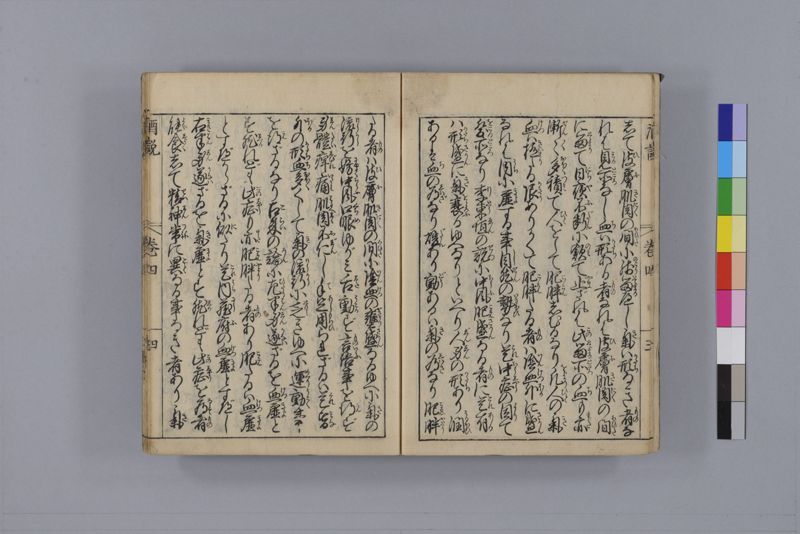
翻刻
【右丁】
して皮膚(ひふ)肌肉(きにく)の間(あひた)に残留(のこりとゝまる)へし気(き)は形(かたち)なき者(もの)な
れは見所(みるところ)なし血(ち)は形(かたち)ある者(もの)なれは皮膚(ひふ)肌肉(きにく)の間(あひた)
に留(とゝまり)て日夜(にちや)不断(ふだん)に飲(のみ)て止(やま)ざれは此(この)留(とゝまる)所(ところ)の血(ち)も亦(また)
漸々(せん〳〵)多(おほく)積(つみ)て人(ひと)をして肥胖(こえ)しむるなり凡(をよそ)人(ひと)の気(き)
血(けつ)は極(きはまり)たる限(かきり)ありかくて肥胖(こえ)たる者(もの)は陰血(いんけつ)外(ほか)に盛(さかん)
なれは内(うち)に虚(きよ)する事 自然(しせん)の勢(いきほひ)なり是(これ)中症(ちうしやう)の因(より)て
発(をこる)所(ところ)なり李東垣(りとうゑん)の説(せつ)に中風(ちうふ)肥(こえ)盛(さかん)なる者(もの)に是(これ)有(ある)
は形(かたち)盛(さかん)に気(き)衰(をとろふ)るゆへなりといへり人身(じんしん)の形(かたち)あり潤(うるほひ)
あるは血(ち)の為(しはざ)なり煖(だん)あり動(どう)あるは気(き)の為(しはさ)なり肥胖(こゑふとり)
【左丁】
たる者(もの)は皮膚(ひふ)肌肉(きにく)の間(あひた)に陰血(いんけつ)の壅(ふさかり)盛(さかん)なるゆへに気(き)の
流行(りうかう)を妨(さまたく)中風(ちうふ)口(くち)眼(め)ゆがみ舌(した)動(うこか)ず言語(ものいふ)事を得(え)ず
身体(しんたい)痹(しびれ)痛(いたみ)肌肉(はたへしゝ)不仁(ふじん)し手足(てあし)用(もちひ)られざるは是(これ)皆(みな)
外(ほか)の形(かたち)血(ち)多(おほく)く【衍ヵ】して気(き)の流行(りうかう)に乏(ともし)きゆへに運動(めくりうこく)事
を得(え)ざるなり古来(こらい)の論(ろん)に左半身(ひたりはんしん)遂(かなは)ざるを血虚(けつきよ)と
す然(しか)れども此症(このしやう)も亦(また)肥胖(こえふとり)たる者(もの)あり肥(こえ)たるは血虚(けつきよ)
とすべからざるに似(に)たり是(これ)内(うち)蔵府(さうふ)の血虚(けつきよ)とすべし
右半身(みきはんしん)遂(かなは)ざるを気虚(ききよ)とす然(しか)れども此症(このしやう)を為(なす)者(もの)
能(よく)食(しよく)して精神(せいしん)常(つね)に異(こと)なる事なき者あり気(き)
現代語訳
【右丁】
そして皮膚と肌肉の間に残留するのである。気は形のないものであるから見ることはできない。血は形のあるものであるから、皮膚と肌肉の間に留まって、日夜絶えず飲酒を続けて止めなければ、この留まっている血もまた徐々に多く蓄積して、人を肥満させるのである。およそ人の気血には極限がある。このようにして肥満した者は、陰血が外に盛んになるので、内が虚するのは自然の勢いである。これが中風の発症する原因である。李東垣の説では「中風が肥満した者に起こるのは、形が盛んで気が衰えるためである」と言っている。人身に形があり潤いがあるのは血のためであり、温かさがあり動きがあるのは気のためである。肥満
【左丁】
した者は、皮膚と肌肉の間に陰血が滞って盛んになるために、気の流行を妨げる。中風で口や目が歪み、舌が動かず、言語を発することができず、身体が痺れて痛み、肌肉が感覚を失い、手足が使えなくなるのは、これらは皆、外の形で血が多くて気の流行に乏しいために、運動することができないからである。古来の論では、左半身が動かないのを血虚とする。しかしながら、この症状でも肥満した者がいる。肥満しているのを血虚とすべきではないように思われる。これは内臓府の血虚とすべきである。右半身が動かないのを気虚とする。しかしながら、この症状を起こす者で、よく食べて精神が常と変わらない者がいる。気が
英語訳
[Right page]
and remain between the skin and flesh. Since qi has no form, it cannot be seen. Since blood has form, it remains between the skin and flesh, and if one continues drinking day and night without stopping, this accumulated blood also gradually increases and makes the person obese. Generally, human qi and blood have limits. When someone becomes obese in this way, with yin-blood flourishing externally, it is natural that the interior becomes deficient. This is where apoplexy originates. According to Li Dongyuan's theory, "Apoplexy occurs in obese people because their form is abundant while their qi declines." The human body having form and moisture is due to blood; having warmth and movement is due to qi. Those who are obese
[Left page]
have yin-blood stagnating and flourishing between the skin and flesh, thus obstructing the circulation of qi. In apoplexy, when the mouth and eyes become crooked, the tongue cannot move, speech becomes impossible, the body becomes numb and painful, the flesh loses sensation, and the hands and feet cannot be used - all of these occur because there is abundant blood externally but insufficient qi circulation, preventing movement. According to ancient theories, inability to use the left half of the body is attributed to blood deficiency. However, there are also obese people with this condition. It seems inappropriate to attribute obesity to blood deficiency. This should be considered as blood deficiency of the internal organs. Inability to use the right half of the body is attributed to qi deficiency. However, among those who develop this condition, there are some who eat well and whose spirit remains unchanged. The qi