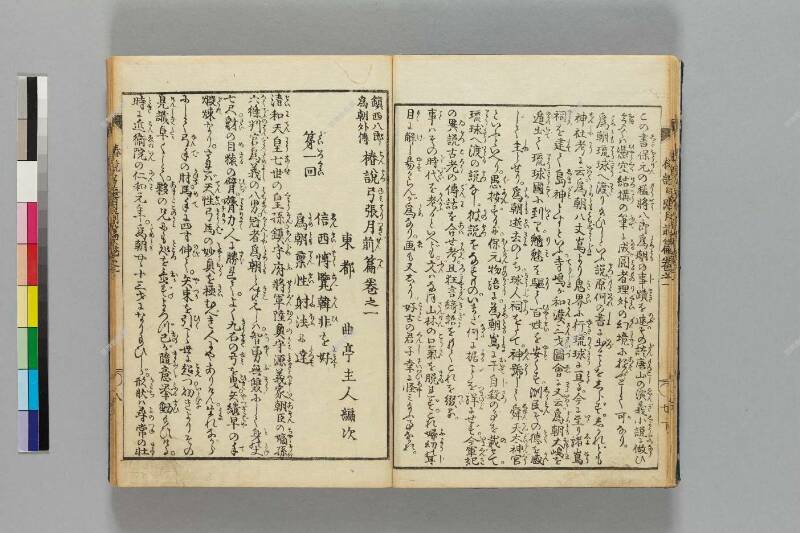
翻刻
ゐ【右丁】
この書(しよ)保元(ほうげん)の猛将(もうせう)八郎 為朝(ためとも)の事蹟(じせき)を述(のぶ)。その談(だん)唐土(もろこし)の演義(えんぎ)小説(しょうせつ)に倣(なら)ひ
多(をほ)くは憑空(ひやうくう)結構(けつこう)の筆(ふで)に成(なる)。閲者(みるもの)理外(りぐわい)の幻境(げんきやう)に遊(あそ)ぶとして可(か)なり。
為朝(ためとも)琉球(りうきう)へ渡(わた)り給ひしという説(せつ)。原(もと)何(いつれ)の書(しよ)に出(いづ)ることをしらず。 しかれども
神社考(しんしやこう)に云(いはく)。為朝(ためとも)八丈島(はちじようじま)より鬼界(きかい)に行(ゆき)。琉球(りうきう)に亘(わた)る。今に至(いた)り諸島(しよとう)
祠(やしろ)を建(たて)て島神(しまがみ)とすといふ。寺島(てらじま)が和漢三才図会(わかんさんさいづゑ)に又云(またいはく)。為朝(ためとも)大島(おほしま)を
遁出(のがれいで)て琉球国(りうきうこく)に至(いた)り。魑魅(りみ)を駆(かり)て百姓(ひやくせい)を安(やす)くす。洲民(しうみん)その徳(とく)を感(かん)
じて主(しゆ)とせり。為朝(ためとも)逝去(せいきよ)のゝち。球人(きうじん)祠(やしろ)をたて。神号(しんがう)して舜天(しゆんてん)太神宮(だいじんぐう)
といふといへり。愚(ぐ)按(あん)ずるに。保元物語(ほうげんものがたり)に。為朝(ためとも)島(しま)に于(おいて)自殺(じさつ)の事を載(の)せて。
琉球(りうきう)へ渡(わたる)の説(せつ)なし。彼(かの)説(せつ)をなすもの。いまだ何(なに)に据(よる)ことを詳(つまびらか)にせず。今(いま)軍記(ぐんき)
の異説(ゐせつ)古老(ころう)の伝話(でんわ)を合(あは)せ考(かふがへ)。且(かつ)狂言(きやうげん)季語(きぎよ)をもてこれを綴(つゞ)る
事(こと)はその時代(じだい)を考(かんがふ)るといへども。文(ぶん)はなほ山林(さんりん)の口気(こうき)を脱(まぬ)れず。これ婦幼(ふよう)の耳(じ)
目(もく)に解(げ)し易(やす)からんが為(ため)なり。画(ゑ)も又しかり。好古(こうこ)の君子(くんし)幸(さいはひ)に怪(あやし)み給ふ事なかれ。
【左丁】
《割書:鎮西八郎|為朝外伝》椿説弓張月前篇(ちんせつゆみはりつきぜんへん)巻之一
東都 曲亭主人編次
第一回(だいいつくわい) 信西博覧韓非(しんさいはくらんかんひ)を好(よみす)
為朝稟性射法(ためともりんせいしやほふ)に達(たつす)
清和天皇七世(せいわてんわうなゝせ)の皇孫(くわうそん)。鎮守府将軍(ちんじゆふせうぐん)陸奥守(むつのかみ)源義家朝臣(みなもとのよしいえあそん)の嫡孫(ちやくそんの)
六條判官為義(ろくでふのはんぐわんためよし)の八男(はちなん)。冠者為朝(くわんじやためとも)と聞(きこ)えしは。智勇無双(ちゆうぶそう)にして身(み)の丈(たけ)
七尺。豺(さい)の目 (め) 猿(さる)の臂(ひぢ)。膂力(りよりよく)人に勝(すぐ)れて。よく九石(きうせき)の弓(ゆみ)を曳(ひき)。矢(や)■(つぎ)#1早(ばや)の手(て)
煆煉(だれ)なり。されば天性弓馬(てんせいきうば)の妙奥(みやうおう)を極(きは)むべき人にやありけん。生(うま)れながら
にして弓手(ゆんで)の肘(かひな)。馬手(めて)に四寸 伸(のび)て。矢束(やつか)を引(ひく)こと世に超(とえ)つ。幼(いとけな)きよりその
見識(けんしき)卓(たか)くして。夥(あまた)の兄(このかみ)にも処(ところ)を置(おか)ず。よろづ己(おの)が随意(まに〳〵)挙動(ふるまひ)給ひける。
時(とき)に近衛院(こんゑのいん)の仁和(にんわ)元年。為朝(ためとも)やゝ十三歳になり給ひしが 形状(かたち)は尋常(よのつね)の壮(ます)
現代語訳
【右丁】
この書は、保元の乱の猛将・八郎為朝の事績を述べるものである。その語り口は中国の演義小説にならい、多くは空想によって構成された筆によるものである。読者は、理を超えた幻想の境地に遊ぶものとして読まれたい。
為朝が琉球へ渡られたという説について、もとはどの書物に出るものか知らない。しかしながら、『神社考』にはこう言う——為朝は八丈島より鬼界島へ行き、琉球へ渡った。今に至るまで諸島に祠を建てて島神として祀るという。寺島(良安)の『和漢三才図会』にもまたこう言う——為朝は大島を脱け出して琉球国に至り、魑魅を退けて百姓を安んじた。島民はその徳に感じて主君とした。為朝が逝去ののち、琉球人は祠を建て、神号して「舜天太神宮」と呼ぶという。
私見を述べるならば、『保元物語』には、為朝が島において自害したことが記されているのみで、琉球へ渡るという説はない。あの説を唱える者たちも、いまだその根拠を詳らかにしていない。今、軍記物の異説や古老の伝承を合わせ考え、かつ狂言・季語を用いてこれを綴ることにした。
時代考証はしているとはいえ、文体はなお山里の話し言葉の域を脱していない。これは婦女子や子どもにもわかりやすくするためである。絵もまた同様である。好古の君子には、どうかこれを奇怪に思われないようにお願いしたい。
【左丁】
《鎮西八郎為朝外伝》椿説弓張月 前篇 巻之一
東都 曲亭主人 編次
第一回 信西、博覧にして韓非を好む
為朝、稟性にして射法に達す
清和天皇七世の皇孫、鎮守府将軍・陸奥守・源義家朝臣の嫡孫、六条判官為義の八男、冠者為朝と称えられたのは、智勇無双にして身の丈七尺、豺の目に猿の臂、膂力人に優れて、よく九石の弓を引き、矢継ぎ早の手練れであった。されば、天性弓馬の妙奥を極めるべき人であったか。生まれながらにして弓手の肘が馬手より四寸長く伸びており、矢束を引くこと世に抜きんでていた。幼いころよりその見識は高く、多くの兄たちにも遠慮をせず、万事己の思いのままに振る舞われた。
時に近衛院の仁和元年(※)、為朝はようやく十三歳になられたが、その形は尋常の若者
英語訳
【Right page】
This book recounts the deeds of Tametomo, the fierce warrior of the Hōgen Rebellion, also known as Hachirō. Its narrative style follows the model of Chinese *Yanyi* (romanticized historical fiction), and much of it is composed through the brush of imaginative invention. Readers should approach it as a journey through a realm of fantasy that transcends ordinary reason.
Regarding the theory that Tametomo crossed over to the Ryūkyū Islands, it is not known from which text this account originally derives. Nevertheless, the *Jinja-kō* (A Study of Shrines) states: "Tametomo traveled from Hachijōjima to Kikaijima and then crossed to the Ryūkyūs. To this day, shrines have been built on various islands and he is venerated as a local deity." Terajima (Ryōan)'s *Wakan Sansai Zue* (The Illustrated Japanese-Chinese Encyclopedia) further states: "Tametomo escaped from Ōshima and arrived in the Kingdom of Ryūkyū, where he drove away demons and malevolent spirits and brought peace to the common people. The islanders, moved by his virtue, made him their lord. After Tametomo's passing, the people of Ryūkyū built a shrine and honored him with the divine title 'Shunten Daijingū.'"
In my own considered view, the *Hōgen Monogatari* records only that Tametomo took his own life on the island, and contains no account of his crossing to the Ryūkyūs. Those who advance that theory have yet to make clear the basis upon which they rely. I have therefore gathered and considered variant accounts from military chronicles and oral traditions passed down by elders, and have woven this tale together with elements of *kyōgen* (comic theater) and seasonal expressions (*kigo*).
Although I have endeavored to reflect historical accuracy in matters of period, the writing style still does not fully escape the manner of rustic speech. This is intentional, for the sake of accessibility to women and children. The illustrations are likewise conceived in this spirit. I humbly ask gentlemen of antiquarian taste not to find fault with these choices.
【Left page】
*The Outer Chronicles of Chinzei Hachirō Tametomo:* **Chinsetsu Yumiharizuki (The Crescent Moon of the Bow)**, First Volume of the Forepart
Compiled by Kyokutei Shujin of the Eastern Capital
**Chapter One:** Shinzei, widely learned, takes pleasure in reading Han Fei
Tametomo, gifted by nature, attains mastery of archery
The eighth son of Rokujō Hangwan Tameyoshi — himself the legitimate grandson of Minamoto no Yoshiie, Lord of Mutsu and Commander-General of the Pacification Headquarters, a seventh-generation imperial descendant of Emperor Seiwa — was called the young warrior Tametomo. He was peerless in both wisdom and valor, standing seven feet tall, with the eyes of a jackal and the arms of an ape. His physical strength surpassed all others; he could draw a bow of nine *koku* in tension, and was a consummate master of rapid-fire archery. Truly, he seemed destined by nature to plumb the deepest mysteries of archery and horsemanship. From birth, his bowstring arm (left arm) extended four *sun* longer than his rein arm (right arm), making his draw of the arrow-span unrivaled in the world. Even from a young age, his perception was keen, and he deferred to none of his many elder brothers, conducting himself entirely as he pleased in all matters.
It was in the first year of Nin'a during the reign of Emperor Konoe (※) that Tametomo had just reached the age of thirteen. In appearance, he was beyond the ordinary young man of his age...