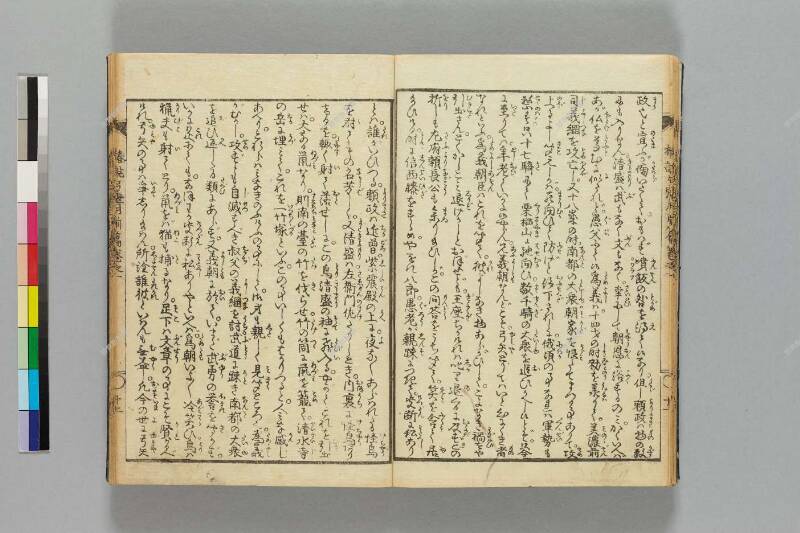
翻刻
【右丁】
政(まさ)也と宣(のたま)ふが傍(かたはら)いたくて。おもはず《振り仮名:噴飯|ふんはん|○わらふ》の咎(とがめ)を得(え)て候なり。但(たゞ)し頼政(よりまさ)は物(もの)の数(かず)
にも入りなん。清盛(きよもり)は武(ぶ)もなく文(ぶん)もなく。幸(さいはひ)にして朝恩(ちやうおん)に浴(よく)するのみ。かくいへば
あが仏(ほとけ)を尊(たふと)むに似(に)たれど。愚父(ぐぶ)にて候 為義(ためよし)は。十四歳の時(とき)勅(みことのり)を承(うけ給は)りて。美濃前(みのゝぜん)
司義綱(じよしつな)を攻亡(せめほろぼ)し。又十八歳の時。南都(なんと)の大衆朝家(たいしゆみかど)を恨(うらみ)たてまつる事ありて。攻(せめ)
上(のぼ)るよし聞(きこ)えしかば。罷向(まかりむか)ひて防(ふせ)げと仰下(おふせくだ)されしに。俄頃(にはか)の事なれは軍勢(ぐんぜい)も
整(とゝのは)ず。只十七騎(き)にて栗栖山(くりすやま)に馳向(はせむか)ひ。数千騎(すせんぎ)の大衆(たいしゆ)を追(お)ひかへし候とぞ。只今
に至(いた)りては。年老(としおひ)ていかに候やらん。兄義朝(あによしとも)なんどこそ。弓矢(ゆみや)とりてはいと心にくき者(もの)
なれといふ。為義朝臣(ためよしあそん)はこれを聞て。彼(かれ)よしなき物あらがひて。こよなき禍(わざわひ)をや
引出(ひきいだ)さん。とくかしこみ退(しりぞ)けかしとおぼせども。玉座(ぎよくざ)ちかけれは叱(しか)り退(の)くるに及(およば)ず。この
折(をり)しも左府(さふ)頼長公(よりながこう)も参(まい)り給ひしが。この問答(もんどう)をうち聞て。笑(えみ)を含(ふくみ)て居(ゐ)
給ひける。時(とき)に信西(しんせい)膝(ひざ)をすゝめ。やをれ八郎。愚老(ぐろう)が親疎(しんそ)につきて。決断(けつだん)に私(わたくし)あり
【左丁】
とは。誰(たれ)がいひつる。頼政(よりまさ)は近曽(ちかごろ)。紫宸
殿(ししいでん)の上(うへ)に。夜(よ)な〳〵あらはれたる怪鳥(けちやう)
を射(い)てその名芳(なかうば)しく。又(また)清盛(きよもり)は。左衛門佑(さゑもんのすけ)たりしとき。内裏(おほうち)に怪鳥(けちやう)あり
けるを。輙(たやす)く射(い)て落(おと)せしに。この鳥(とり)清盛(きよもり)の袖(そで)に飛入(とびい)る。やかてこれを引(ひき)出
せは。大なる鼠(ねづみ)なり。則南(すなわちみなみ)の䑓(たい)の竹(たけ)を伐(き)らせ。竹(たけ)の筒(つゝ)に鼠(ねづみ)を籠(こめ)て。清水寺(せいすいじ)
の岳(おか)に埋(うづ)みて。これを一竹塚(いつちくづか)といふ。この事いしくもはかりつると。人みな感(かん)じ
あへり。これらはみなきのうけふの事にして。御身も親(した)しく見聞(みきく)ところ也。為義(ためよし)
がむかし。攻(せめ)ずとも自滅(じめつ)すべき叔父(おぢ)の義綱(よしつな)を討(うち)。武道(ぶとう)に疎(うと)き南都(なんと)の大衆(たいしゆ)
を追(お)ひ返(かへ)したる類(たぐひ)にあらず。又に義朝(よしとも)に於(おい)て。いまだ武勇(ぶゆう)の誉(ほまれ)を聞(き)かず。
いかに是(これ)にても。なほわか決断(けつだん)に私(わたくし)ありやといへば。為朝(ためとも)いよ〳〵冷笑(あざわら)ひ。鳥(とり)は
猟夫(かりびと)も射(い)てとり。鼠(ねづみ)をば猫(ねこ)も捕(と)るなり。足下(そこ)は文章(ぶんせう)の事にこそ賢(かしこ)かるべ
けれ。弓矢(ゆみや)の事は争(いかて)しり給わん。所詮(しよせん)誰彼(たれかれ)といはんも無益(むやく)。凡今(およそいま)の世(よ)に弓矢(ゆみや)
現代語訳
【右丁】
「……政(頼政)と申されるのが聞くに堪えず、思わず笑い出してしまった(噴飯の)咎を受けた次第でございます。ただし頼政はまだしも弓取りの数に入りましょう。清盛は武の才もなく文の才もなく、ただ幸いにして朝廷の恩寵を受けているに過ぎません。こう申せば我が身の仏を尊ぶように聞こえますが、愚父(私めの父)の為義は、十四歳の時に勅命を承って美濃前司義綱を攻め滅ぼし、また十八歳の時に南都(奈良)の大衆が朝廷を恨み奉ることがあって、攻め上るという噂が聞こえてきたので、出向いて防げとの仰せが下されましたが、にわかの事であったので軍勢も整わず、ただ十七騎で栗栖山に馳せ向かい、数千騎の大衆を追い返したと聞いております。ただ今となっては年老いてどのようなものかわかりませんが、兄の義朝などこそ、弓矢取りとしてはたいそう心憎い者でございます」と言った。為義朝臣はこれを聞いて、「あれはつまらない口争いをして、とんでもない禍を引き出すことになりはしないか。早く恐れ入って引き退かせてほしいものだ」とお思いになったが、玉座が近くにあるので叱りつけて退けるわけにもいかなかった。ちょうどこの折、左府頼長公もお越しになっていたが、この問答をそっと聞いて、微笑を含んでおられた。その時、信西は膝を進めて、「やや、八郎よ。愚老(この私)が親しい者と疎遠な者によって裁断に私情があると——
【左丁】
——それは誰が言ったことか。頼政はつい近ごろ、紫宸殿の上に夜な夜な現れた怪鳥を射て、その名を高くした。また清盛は、左衛門佑(さえもんのすけ)であった時、内裏に怪鳥がいたのを、たやすく射て落としたところ、この鳥が清盛の袖に飛び込んだ。すぐにこれを引き出してみると、大きな鼠であった。そこで南の台の竹を切らせ、竹の筒に鼠を籠めて、清水寺の丘に埋めて、これを一竹塚と呼ぶ。この処置はよく思慮深いことをしたと、人々みなが感心し合った。これらはみな昨日今日の出来事であって、あなたも親しく見聞きしたところである。為義が昔、攻めなくても自滅するはずの叔父の義綱を討ち、武道に疎い南都の大衆を追い返した類のこととは違う。また義朝においては、いまだ武勇の誉れを聞かない。これでもなお、私の裁断に私情があると言うか」と申せば、為朝はいよいよ冷笑して、「鳥は猟師でも射てとることができ、鼠は猫でも捕ることができます。あなたは文章(学問・文筆)のことこそお詳しいはずですが、弓矢のことをどうしてご存知でしょうか。詮ずるところ、誰それと申し上げるのも無益なこと。そもそも今の世に弓矢……(続く)」
英語訳
**[Right Page]**
"…that Yorimasa should be so named was too much to bear, and I could not help but laugh out loud — and it is for that offense that I find myself rebuked. That said, Yorimasa might at least be counted among the ranks of bowmen. Kiyomori, however, has neither martial prowess nor literary accomplishment — he merely enjoys the good fortune of basking in the imperial court's favor. If I say such things, it may sound as though I am praising my own household's Buddha, but my unworthy father, Tameyoshi, at the age of fourteen received a decree and went forth to defeat Minomae no Kami Yoshitsuna; and again at eighteen, when news arose that the monks of the Southern Capital (Nara) bore a grievance against the court and were said to be marching upon it, and the order came down to go and stop them — it being so sudden that his troops were not yet assembled — he rode with only seventeen horsemen to Mount Kurisu and drove back thousands of mounted monks. Now that he has grown old, who knows what he may be, but my elder brother Yoshitomo, at least, is an uncommonly formidable warrior when it comes to the bow." Hearing this, Lord Tameyoshi thought to himself: "That reckless boy is picking an idle quarrel and may bring down a terrible calamity upon us. I wish he would quickly humble himself and withdraw" — yet since the imperial seat was near, he could not bring himself to reprimand and dismiss him. Just at this moment, the Minister of the Left, Lord Yorinaga, had also arrived, and having quietly listened to this exchange, he sat with a faint smile upon his lips. At that, Shinzei leaned forward on his knees and said: "Now, now, Hachirō — that this old man shows partiality in his judgments toward those near and distant to him —
**[Left Page]**
— who said such a thing? Yorimasa, only recently, shot down a monstrous bird that appeared night after night above the Shishinden Hall, and his name has been fragrant with renown ever since. As for Kiyomori, when he was serving as Assistant Master of the Left Gate Guards (Saemon no Suke), there was a monstrous bird haunting the imperial palace, and he shot it down with ease. The bird then flew into the sleeve of Kiyomori's robe. He pulled it out at once, and it proved to be a great rat. He then had bamboo cut from the southern garden pavilion, sealed the rat inside a bamboo tube, and buried it on the hill of Kiyomizudera — this spot is now called Itchikutsuka ('One-Bamboo Mound'). Everyone marveled at how cleverly this had been managed. All of these are things that happened yesterday and today, and you yourself have seen and heard them directly. They are nothing like the deeds of Tameyoshi in former times — defeating his uncle Yoshitsuna, who would have collapsed of his own accord without being attacked, or driving back the monks of the Southern Capital who knew nothing of the martial arts. And as for Yoshitomo, I have yet to hear any renown of martial valor from him. Even given all this, do you still say my judgment is partial?" Tametomo laughed all the more mockingly and replied: "Even a common hunter can bring down a bird with an arrow, and a cat can catch a rat. Your excellence lies in matters of letters — how could you possibly know anything of the bow? When all is said and done, it is pointless to name this person or that. In this present age, when it comes to the bow…" *(continued)*