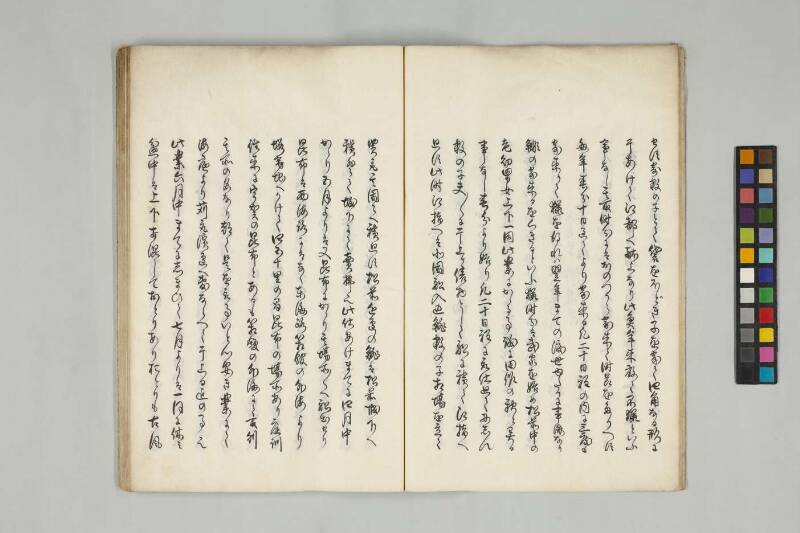
翻刻
【右丁】
せす寄数の子とて袋をほどき子を寄て四角なる形に
干あけて江都へ献上なり此魚年来敢て不猟といふ
事なし其取時分にはおのつから寄来て時節をたかへす
毎年春分十日過てより寄来る凡二十日程の内に三度も
寄来りて猟を得れは翌年まての渡世ゆたかに事済なり
鯡の寄来るをくきるといふ猟時分は武家を始め松前中の
老幼男女上下一同此業にかゝる事誠に田作の秋と異る
事なし春分より始り凡二十日程に取仕廻てにしん
数の子夫〳〵に干上ヶ俵物として船に積て江指#1へ
廻す此時江指へは北国船入込鯡数の子相場を立て
【左丁】
買取其国々へ積廻す松前近辺の鯡は松前城下へ
積とて城下にて売払也此仕あけまてに四月中
かゝり五月よりは又昆布にかゝり其場所〳〵へ船出せり
昆布は西海路にはなく東海路箱館の外海より
蝦夷地へかけて四五十里の間昆布の場所あり庭訓
往来に宇賀の昆布とあるも箱館の外海にて取則
其所の名なり都て是を取事いと心安き業にて
海底より刈取浜辺へ敷ならへて干上る迄の事也
此業六月中まてにしまひて七月よりは一同に休み
盆中は上下打混しておとりありおとりも古風
現代語訳
【右丁】
少なくない。「寄数の子」といって袋をほどいて子を寄せ集め、四角な形に干し上げて江戸へ献上する。この魚は長年にわたって決して不漁ということがない。その漁獲時期には自然に寄って来て、時節を違えることなく、毎年春分の十日過ぎから寄って来る。およそ二十日ほどの間に三度も寄って来て漁を得れば、翌年までの生計が豊かに事足りる。
鰊が寄って来ることを「くきる」という。漁の時期には武家をはじめ松前中の老若男女、身分の上下を問わず一同にこの業に従事することは、まことに田作の秋と変わることがない。春分より始まりおよそ二十日ほどで取り仕舞い、鰊・数の子それぞれに干し上げ、俵物として船に積んで江差へ回す。この時江差へは北国船が入り込み、鰊・数の子の相場を立てて
【左丁】
買い取り、その国々へ積み回す。松前近辺の鰊は松前城下へ積むとして城下で売り払う。この仕上げまでに四月中かかり、五月からはまた昆布にかかり、その場所場所へ船出する。
昆布は西海路にはなく、東海路の箱館の外海より蝦夷地にかけて四、五十里の間に昆布の場所がある。『庭訓往来』に「宇賀の昆布」とあるのも箱館の外海で取れるもので、すなわちその所の名である。すべてこれを取ることはいと心安い業で、海底より刈り取り浜辺へ敷き並べて干し上がるまでのことである。
この業は六月中までに終わり、七月からは一同に休み、盆中は上下入り混じって踊りがある。踊りも古風で
英語訳
【Right Page】
are not scarce. What is called "yori kazunoko" involves opening the egg sacs, gathering the roe together, drying it in rectangular shapes, and presenting it to Edo. This fish has never experienced a poor catch year after year. During the fishing season, they naturally gather and come without fail at the proper time, arriving every year from about ten days after the spring equinox. If they come about three times within roughly twenty days and a good catch is obtained, one's livelihood will be abundantly secured until the following year.
The gathering of herring is called "kukiru." During fishing season, from the warrior class to all people in Matsumae - old and young, men and women, high and low status alike - everyone engages in this work, which is truly no different from the autumn rice harvest. Beginning from the spring equinox and finishing the catch in about twenty days, they dry the herring and herring roe respectively, load them on ships as bagged goods (tawaramono), and send them to Esashi. At this time, ships from the northern provinces enter Esashi, establish market prices for herring and herring roe, and
【Left Page】
purchase them to transport to their respective domains. Herring from around Matsumae is loaded for Matsumae castle town and sold there. This finishing work takes until the end of the fourth month, and from the fifth month they turn to kelp harvesting, setting sail for those various locations.
Kelp does not exist in the western sea routes, but there are kelp harvesting areas extending forty to fifty ri from the outer seas of Hakodate along the eastern sea routes toward Ezo territory. What is referred to as "Uga kelp" in the Teikin Ōrai is also harvested from the outer seas of Hakodate - that is the name of that place. Altogether, harvesting this is a very easy occupation - simply cutting from the sea bottom, spreading it on the beach, and drying it.
This work finishes by the end of the sixth month, and from the seventh month everyone rests together. During the Bon festival, people of all ranks mingle and there is dancing. The dancing is also in the old style