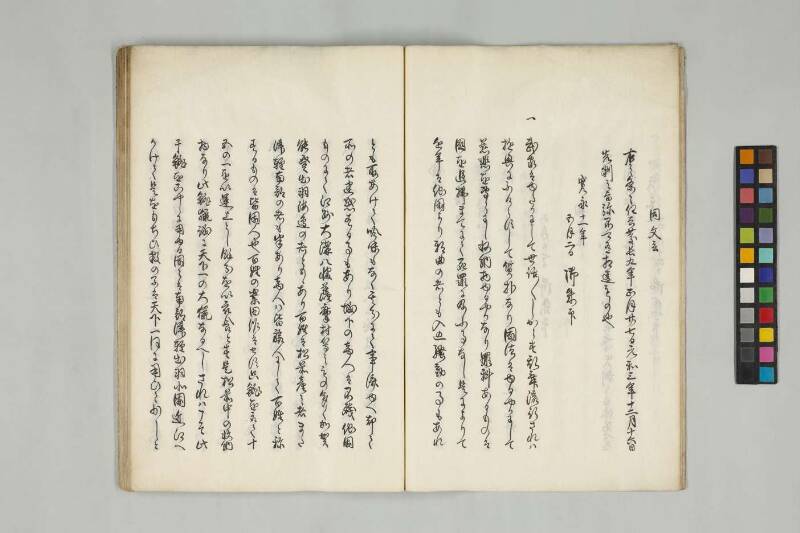
翻刻
【右丁】
同文言
右之条々任去慶長九年正月廿七日元和三年十二月十六日
先判之旨弥不可有相違もの也
寛永十一年
五月二日 御朱印
一 武家はゆたかにして世話〳〵しからす乱舞流行されは
遊興にふけらすして質朴なり国法はゆるやかにして
慈悲を専らにし収納物ゆるやかなり罪科あるものは
国を追払まてにて死罪に及ふ事なし是によりて
近年は他国より邪曲の者とも入込騒動の事もあれ
【左丁】
とも取あけて吟味もなく其分にて事済ゆへ却て
所の者迷惑する事もあり城下の商人は不残他国
ものにて江州大溝八幡薩摩村等之もの多く加賀
能登出羽海辺の者ともゝあり百姓は松前産之者また
津軽南部の者も半あり商人は皆旅人にして百姓と称
するものは皆国人也百姓の業田作はせす只鯡を取て十
五の一を以運上とし余分を以衣食とす是松前中の収納
物なり此鯡猟誠に天下一の大猟なるへしされはこそ此
干鯡をこやしに用ゆる国々は南部津軽出羽北国近江へ
かけて是をもちひ数の子は天下一同に用ひて少しと
現代語訳
【右丁】
同文言
右の条々は、去る慶長九年正月二十七日と元和三年十二月十六日の先例の判断に従い、ますます相違があってはならないものである。
寛永十一年(1634年)
五月二日 御朱印
一 武家は裕福でありながら世話焼きではなく、乱舞が流行しても遊興に耽ることなく質朴である。国法は緩やかで慈悲を第一とし、年貢の取り立ても緩やかである。罪科のある者は国外追放までで、死罪に及ぶことはない。これにより近年は他国から邪悪な者どもが入り込んで騒動を起こすこともあれ
【左丁】
ども、取り調べて吟味することもなく、そのままで事が済むため、かえって土地の者が迷惑することもある。城下の商人は残らず他国の者で、近江国大津、八幡、薩摩などの者が多く、加賀、能登、出羽の海辺の者どももいる。百姓は松前生まれの者、また津軽、南部の者も半分ある。商人はみな旅人であり、百姓と称する者はみな国の人である。百姓の業である田作はせず、ただ鰊を取って十五分の一を運上(税)とし、残りを衣食とする。これが松前中の収納物である。この鰊漁は実に天下一の大漁であろう。だからこそこの干鰊を肥料に用いる国々は、南部、津軽、出羽、北国、近江にかけてこれを用い、数の子は天下一様に用いて不足することが
英語訳
【Right Page】
Same wording
The above articles must be observed without deviation according to the precedent judgments of the 27th day of the 1st month of Keichō 9th year and the 16th day of the 12th month of Genna 3rd year.
Kan'ei 11th year (1634)
5th month, 2nd day - Imperial Seal
1. The warrior class is wealthy yet not meddlesome, and even when wild dancing becomes popular, they do not indulge in pleasure but remain simple and honest. The national laws are lenient with mercy as the priority, and tax collection is also moderate. Those who commit crimes are punished only with banishment from the domain, never extending to death sentences. Due to this, in recent years wicked people from other domains have infiltrated and caused disturbances,
【Left Page】
but since matters are settled without proper investigation or examination, the local people sometimes suffer inconvenience instead. The merchants in the castle town are all from other domains - many from Ōtsu, Hachiman, and Satsuma in Ōmi Province, and there are also people from the coastal areas of Kaga, Noto, and Dewa. Among the farmers, half are Matsumae-born, and half are from Tsugaru and Nambu. The merchants are all travelers, while those called farmers are all people of this domain. The farmers do not engage in rice cultivation as their occupation, but only catch herring, paying one-fifteenth as tax (unjō) and using the remainder for food and clothing. This constitutes the tax revenue of all Matsumae. This herring fishing is truly the greatest catch in all Japan. This is why the dried herring is used as fertilizer across domains from Nambu, Tsugaru, Dewa, northern provinces, to Ōmi, and herring roe is used uniformly throughout Japan with little shortage