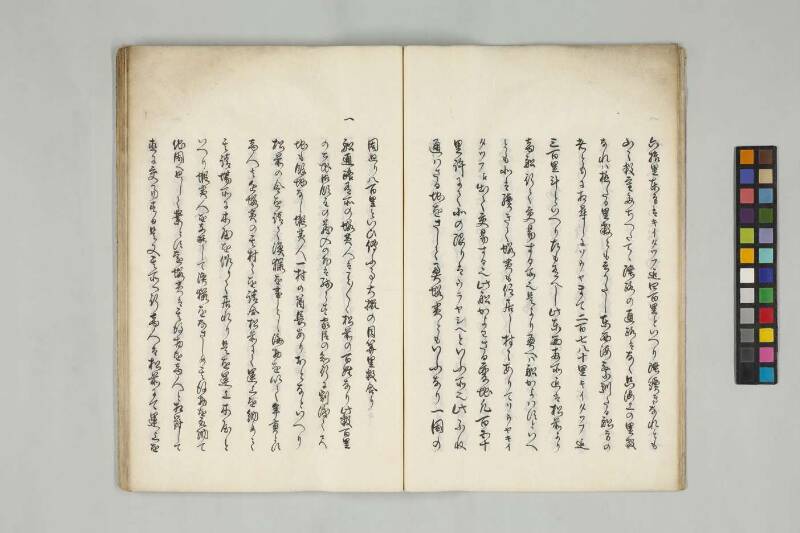
翻刻
【右丁】
六拾里東方はキイタツフ迄四百里といへり陸続きなれとも
山々数重たちへたてゝ陸路の通路はなく只海上の里数
なれは極たる里数とも云かたし東西海乗馴たる船方の
者ともに相尋しにソウヤまて二百七八十里キイタツフ迄
三百里計といへりさも有へし此東西両所迄は松前より
商船行て交易する所也是より奥へは船かよはすといへ
とも北は続きて蝦夷も住居し村々ありてソウヤキイ
タツフ《割書:江|》出て交易する也此船かよわさる変地凡百五十
里許にて北の限りはウラヤシヘといふ所也此ふね
通はさる地をさして奥蝦夷ともいふなり一国の
【左丁】
周廻り八百里といひ伝ふ事大概の目算里数合り
一 船通路有所の蝦夷人はこと〳〵く松前の百姓なり此数百里
の土地御領主の蔵入の外は残らす家臣の知行に割渡て天
地も余地なし蝦夷人一村の酋長ありおとなといへり
松前の令を請て漁猟を事とし海物を以て年貢とす
商人は近蝦夷の其村々を請合松前にて運上を納めて
其請場所に木屋を作りて居れり是を運上木屋と
いへり蝦夷人を支配して漁猟をなさしめ其得物を取納て
他国へ廻して業とす遠蝦夷は其得物を商人と相対して
直に交易する是又其所へ行商人は松前にて運上を
現代語訳
【右丁】
六十里、東方はキイタツプまで四百里と言われている。陸続きではあるが、山々が幾重にも立ちはだかって陸路の通路はなく、ただ海上の里数であるから、正確な里数とも言い難い。東西の海に乗り慣れた船乗りの者たちに尋ねたところ、ソウヤまで二百七、八十里、キイタツプまで三百里ほどと言っていた。そのようなものであろう。この東西両所までは松前より商船が行って交易する所である。これより奥へは船が通わないと言うが、北は続いて蝦夷も住居し村々があって、ソウヤ、キイタツプへ出て交易する。この船が通わない辺鄙な地はおよそ百五十里ほどで、北の限りはウラヤシベという所である。この船が通わない地を指して奥蝦夷とも言う。一国の
【左丁】
周囲は八百里と言い伝えることは、大概の目算里数と合っている。
一 船の通路がある所の蝦夷人はことごとく松前の百姓である。この数百里の土地は御領主の蔵入地の外は残らず家臣の知行に割り当てて、天地も余地がない。蝦夷人には一村の酋長がありオトナと言う。松前の命令を受けて漁猟を事とし、海産物をもって年貢とする。商人は近蝦夷のその村々を請け合い、松前にて運上を納めて、その請負場所に木屋を作って住んでいる。これを運上木屋と言う。蝦夷人を支配して漁猟をさせ、その獲物を取り納めて他国へ回して業とする。遠蝦夷はその獲物を商人と相対して直に交易する。これまたその所へ行く商人は松前にて運上を
英語訳
【Right Page】
sixty ri, and eastward to Kiitappu is said to be four hundred ri. Though connected by land, numerous mountain ranges stand as barriers and there are no overland routes, so these are only distances by sea, making it difficult to speak of precise distances. When I inquired of seafaring men experienced in sailing the eastern and western seas, they said it was about 270-280 ri to Sōya and about 300 ri to Kiitappu. This seems reasonable. These eastern and western locations are places where merchant ships from Matsumae go to trade. They say ships do not travel beyond these points, but to the north Ainu continue to dwell with villages, and they come out to Sōya and Kiitappu to trade. This remote region where ships do not travel extends about 150 ri, and the northern limit is a place called Urayashibe. This land where ships do not travel is also called Oku-Ezo (Inner Ezo). The entire country's
【Left Page】
circumference is said to be 800 ri, which roughly matches estimated distances.
1. The Ainu people in places accessible by ship are entirely subjects of Matsumae. This territory of several hundred ri, except for the lord's directly administered lands, is entirely allocated as fiefs to retainers, leaving no unused land. Among the Ainu people there is a village chief called "otona." They receive orders from Matsumae, engage primarily in fishing and hunting, and pay tribute with marine products. Merchants contract for those villages in nearby Ezo territory, pay transport fees in Matsumae, and build wooden houses at their contracted locations. These are called "unjō-koya" (transport fee houses). They control the Ainu people to make them fish and hunt, collect their catch, and make their living by shipping it to other provinces. In distant Ezo territory, they trade their catch directly with merchants. These merchants who go to such places also pay transport fees in Matsumae