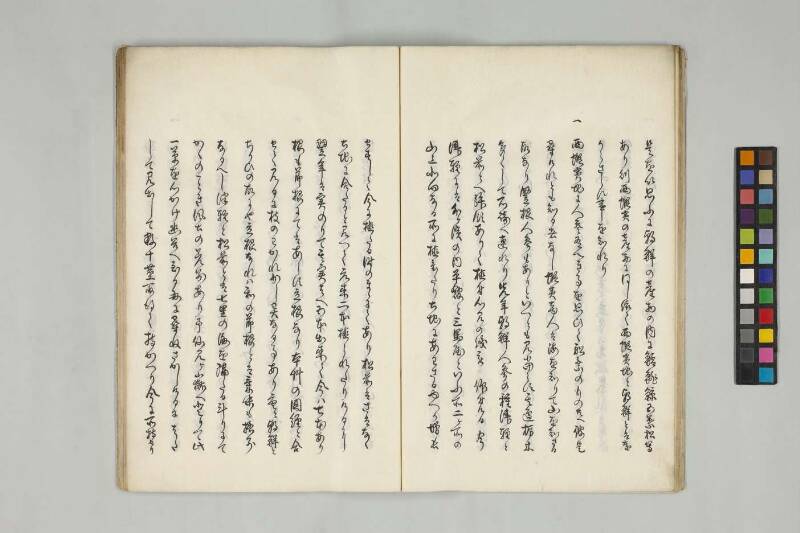
翻刻
【右丁】
是を以思ふに朝鮮の産物の内に鱈鯡鯨五葉松等
あり則西蝦夷の産物に同し依て西蝦夷地と朝鮮とは遠
からさらん事を知れり
一 西蝦夷地に人参有へき事を思ひて船乗のもの共へ彼是
尋けれとも知る者なし蝦夷商人は海を知りて山を知さる
故なり竪根人参もありといへとも見当らす其辺栃木
多くして石崎へ連れり先年朝鮮人参の種津軽と
松前とへ拝領ありて植付心見の儀被 仰付ける今
津軽には外ヶ浜の内平館と三馬屋といふ所二ヶ所の
山上北向なる所に植置たり土地にあわさるゆへか増長
【左丁】
セすして今に植たる時のまゝにてあり松前はさはなく
土地に合たると見へて元来二本植られたりけるに
翌年は実のりて其実はへ五本出来て今ハ七本あり
根も節根にてはあらす立根なり本草の図経と合
セて見るに枝のわかれ少し異なる事あり唐と朝鮮と
ちかひの故にや立根なれハ和の節根とは気味も格別
なるへし津軽と松前とは七里の海を隔たる斗りにて
かくのことき風土の差別あり予仙見ヶ嶽へ登りて此
一草を心かけ幽谷へ至る毎に尋ねさかしけるにはた
して見出して数十茎取得て持かへり今に所持セり
現代語訳
【右丁】
このことから思うに、朝鮮の産物の中に鱈、鰊、鯨、五葉松などがある。これは西蝦夷の産物と同じである。よって西蝦夷地と朝鮮とはそれほど遠くないであろうことが分かる。
一 西蝦夷地に人参があるはずだと思って、船乗りたちにあれこれ尋ねてみたが、知る者はいない。蝦夷の商人は海のことは知っているが山のことは知らないからである。竪根人参もあると言うが見つからない。その辺りは栃の木が多くて石崎まで続いている。先年、朝鮮人参の種が津軽と松前とに下賜されて、植え付けを試してみるよう命じられた。今、津軽には外ヶ浜の内、平館と三馬屋という所の二ヶ所の山上で北向きの場所に植えてある。土地に合わないためか成長
【左丁】
せずに、今も植えた時のままである。松前はそうではなく、土地に合っていると見えて、もともと二本植えられていたが、翌年は実がなり、その実から五本出来て、今は七本ある。根も節根ではなく立根である。本草の図経と照らし合わせて見ると、枝の分かれ方が少し異なることがある。唐と朝鮮との違いのためであろうか。立根なので和の節根とは薬効も格別であろう。津軽と松前とは七里の海を隔てるだけなのに、このような風土の違いがある。私は仙見ヶ嶽に登って、この一草を心がけ、幽谷に至るたびに探し求めたところ、ついに見つけ出して数十茎を取得して持ち帰り、今も所持している。
英語訳
【Right Page】
From this, one can think that among Korea's products there are codfish, herring, whales, five-needle pine, and so forth. These are the same as the products of West Ezo. Therefore, one can know that West Ezo territory and Korea are probably not very far apart.
1. Thinking that there should be ginseng in West Ezo territory, I inquired about this and that with the sailors, but none knew about it. This is because Ezo merchants know the sea but do not know the mountains. They say there is also straight-root ginseng, but it cannot be found. In that area there are many Japanese horse chestnuts extending to Ishizaki. In previous years, Korean ginseng seeds were bestowed upon Tsugaru and Matsumae, and they were ordered to try planting them experimentally. Now in Tsugaru, they are planted in two locations within Sotogahama - on the mountain tops facing north at places called Tatemachi and Sanmaya. Perhaps because the land does not suit them, they do not grow
【Left Page】
and remain as they were when first planted. Matsumae is not like this - it seems the land suits them well. Originally two plants were planted, but the following year they bore fruit, and from those seeds five plants grew, so now there are seven. The roots are also straight roots, not jointed roots. When compared with the botanical diagrams in the herbals, the branching of the stems differs somewhat. Perhaps this is due to the difference between Tang China and Korea? Since they are straight roots, their medicinal properties should be quite different from Japanese jointed roots. Tsugaru and Matsumae are separated by only seven ri of ocean, yet there is such a difference in climate and soil. I climbed Mount Senmi-ga-take with this plant in mind, and every time I reached a secluded valley I searched diligently. Finally I found some and obtained several dozen stems, which I brought back and still possess today.