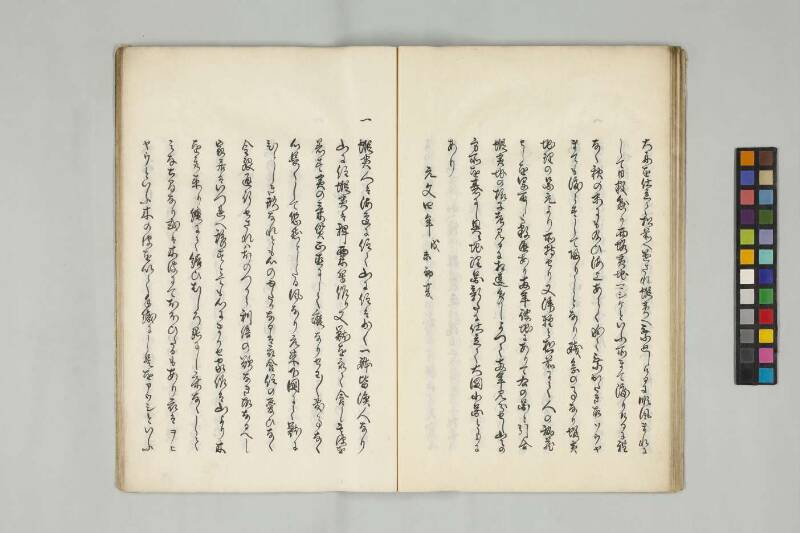
翻刻
【右丁】
大舟を仕立て松前へ遣され蝦夷へ乗廻しけるに順風まれに
して日数懸り西蝦夷地マシケといふ所まて渡りけるに程
なく秋の末にも及ひ海上あらく成て乗かたき故ソウヤ
まても渡らすして帰りしとなり残念の事なり蝦夷
地理の図元より所持セり又津軽と松前にて人の秘蔵
セしを写取しも数通あり両年彼地にありて右の図と引合
蝦夷地の様子考見るに相違多しよつて両年見分セし山々の
方所を碁#1にし具に地理図新たに仕立て大図小図ともに
あり
元文四年《割書:戊| 未》#2初夏
【左丁】
一 蝦夷人は海辺に住て山に住は少く一体皆漁人なり
山に住蝦夷は稗粟等作り又獣を取て食し其皮を
着す夷の気質正直にして痴なりセわ〳〵敷事なく
心長くして悠然としたる風なり元来下国にて獣に
ひとしき形なれとも心のゆたかなるは衣食住の憂ひなく
金銀通行セされハおのつから利倍の欲なき故なるへし
家居はいつれへ移すとても心にまかせ家作は山より木
を取来り縄にて結ひむしろ能にし床なくして
みな土間なり或は木皮にておほひたるもあり衣はヲヒ
ヤウといふ木の皮を以て手織にし是をアツシといふ
現代語訳
【右丁】
大船を仕立てて松前へ派遣され、蝦夷へ船で巡回したけれども、順風がまれで日数がかかり、西蝦夷地のマシケという所まで渡ったところ、程なく秋の終わりにも及び、海上が荒れて航行が困難になったため、ソウヤまでは渡らずに帰ったということである。残念なことである。蝦夷地理の図は元より所持していた。また津軽と松前にて人が秘蔵していたものを写し取ったのも数通ある。両年彼の地にいて右の図と照らし合わせて蝦夷地の様子を考察してみると相違が多い。よって両年見分した山々の方角を詳しく調べ、地理図を新たに仕立てて大図小図ともにある。
元文四年初夏
【左丁】
一、蝦夷人は海辺に住んで山に住むのは少なく、一体皆漁師である。山に住む蝦夷は稗や粟などを作り、また獣を取って食べ、その皮を着る。夷の気質は正直で素朴であり、せわしないことなく、心がゆったりとして悠然としている風である。元来未開の国で獣に等しき姿であるけれども、心の豊かなのは衣食住の心配がなく、金銀が流通しないので自然と利益追求の欲がないからであろう。家居はどこへ移すにしても心のままで、家作りは山より木を取って来て、縄で結んでむしろを敷き、床なくして皆土間である。あるいは木の皮で覆ったものもある。衣はオヒョウという木の皮を使って手織りにし、これをアットゥシという。
英語訳
【Right page】
A large ship was prepared and sent to Matsumae, and they sailed around Ezo territory, but favorable winds were rare and it took many days. When they reached a place called Mashike in western Ezo territory, autumn's end soon arrived and the sea became rough, making navigation difficult, so they returned without reaching Sōya. This was regrettable. I have possessed geographical maps of Ezo territory from the beginning. I also have several copies taken from maps that people in Tsugaru and Matsumae had kept as treasures. Having spent two years in that land and comparing these maps with my observations of Ezo territory, I found many discrepancies. Therefore, I carefully surveyed the directions of the mountains I had inspected over those two years and newly prepared geographical maps, creating both large and small versions.
Early summer of Genbun 4 [1739]
【Left page】
One: The Ezo people live by the seashore, with few living in the mountains; they are generally all fishermen. The Ezo who live in the mountains cultivate millet, foxtail millet and such, and also hunt animals for food and wear their hides. The temperament of the Ezo is honest and simple; they are unhurried and have a leisurely, composed manner. Originally being from an uncivilized country, they may appear beast-like in form, but their generous hearts come from having no worries about clothing, food, and shelter, and since gold and silver do not circulate, they naturally have no desire for profit. They can move their dwellings wherever they please, and their house construction involves bringing wood from the mountains, binding it with rope, and laying down mats, with no raised floors—everything is on the earthen ground. Some are covered with tree bark. For clothing, they hand-weave the bark of a tree called ohyō (Japanese elm), and this is called attush.