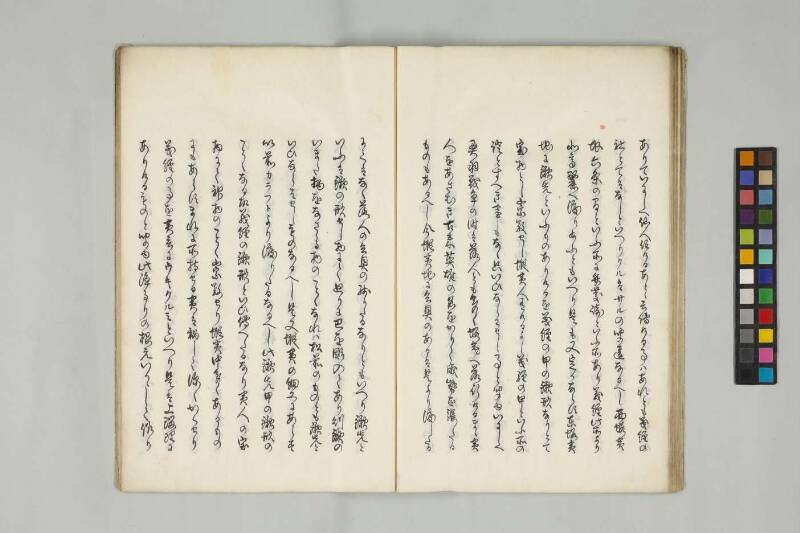
翻刻
【右丁】
ありていにしへ仙人住けるあとゝ云伝ける事ハあれとも義経の
社とてはなしといへりクルはサルの聞違なるへし西蝦夷
地六条の間といふ所に弁慶崎といふ所あり義経此所より
北高麗へ渡り給ふともいへり是も又定かならす東蝦夷
地に鍬先といふものありけるを義経の甲の鍬形なりとて
宝物とし崇敬セし蝦夷人有けるよし義経の甲といふ所の
語とすへき事もなく只いひならわセし事と聞ゆいにしへ
奥羽戦争の時は落人とも多く蝦夷へ落行けるまゝ夷
人をあさむき古来英雄の名をかりて威勢を張たる
ものもあるへし今蝦夷地に兵具のあるは是より渡したる
【左丁】
にくはなく落人の兵具の残りたるなりともいへり鍬先と
いふは鍬の形セし物にて廻りに巴を彫入てあり則鍬の
いまた独をなさゝる物のことくなれハ松前のものとも鍬先と
いひならはセしものなるへし是又蝦夷の細工にあらす
以前カラフトより渡りたるなるへし此鍬先甲の鍬形の
ことくなる故義経の鍬形といひ伝へたるなり夷人の宝
物にて神物のことく崇敬セり蝦夷中多くあるもの
にもあらすまれに所持セる夷は秘して深くかくセり
義経の事を夷言にウキクルミといへり是は上瑠理に
ありけるものと聞ゆ此浄るりの根元いかゝして作り
現代語訳
【右丁】
があって昔仙人が住んでいた跡だと言い伝える事はあるけれども、義経の社というものはないと言った。クルはサルの聞き違いであろう。西蝦夷地の六条の間という所に弁慶崎という所がある。義経はこの所から北高麗へ渡られたとも言われている。これもまた定かではない。東蝦夷地に鍬先というものがあったのを、義経の甲の鍬形であるとして宝物とし崇敬していたアイヌ人がいたということである。義経の甲というべき所以もなく、ただ言い慣らしたことと聞こえる。昔奥羽戦争の時は落武者も多く蝦夷へ落ち行ったので、アイヌ人を侮って古来の英雄の名を借りて威勢を張った者もいるだろう。今蝦夷地にある兵具は、これより渡したのでは
【左丁】
なく、落武者の兵具の残ったものだとも言われている。鍬先というのは鍬の形をした物で、回りに巴を彫り入れてある。まさに鍬がまだ柄を付けていない物のようであるので、松前の者も鍬先と言い慣らしたものであろう。これもまたアイヌの細工ではなく、以前樺太より渡って来たものであろう。この鍬先が甲の鍬形のようである故、義経の鍬形と言い伝えたのである。アイヌ人の宝物で神物のように崇敬している。蝦夷中に多くあるものでもなく、稀に所持しているアイヌは秘して深く隠している。義経の事をアイヌ語でウキクルミと言っている。これは浄瑠璃にあったものと聞こえる。この浄瑠璃の根元はいかにして作り
英語訳
【Right page】
and it is said that long ago hermits lived there, but there is no shrine to Yoshitsune, they said. Kuru is probably a mishearing of Saru. In the western Ezo territory, in a place called Rokujō-no-ma, there is a place called Benkei Cape. It is also said that Yoshitsune crossed from this place to northern Korea. This too is uncertain. There was something called a kuwa-saki (spear point) in eastern Ezo territory, which some Ainu people treasured and revered as the crest ornament from Yoshitsune's helmet. There is no particular reason to call it Yoshitsune's helmet, and it seems to be just a customary saying. Long ago during the battles in Ōshū, many fallen warriors fled to Ezo, so there were probably some who looked down on the Ainu people and borrowed the names of ancient heroes to assert their authority. The military equipment now in Ezo territory is not something brought from here,
【Left page】
but rather the remains of military equipment left by fallen warriors, it is also said. What is called kuwa-saki is shaped like a hoe, with tomoe patterns carved around it. Since it looks exactly like a hoe that has not yet been fitted with a handle, the people of Matsumae probably came to call it kuwa-saki out of custom. This too is not Ainu craftsmanship, but probably came from Sakhalin previously. Because this kuwa-saki resembles a helmet crest, it has been passed down as Yoshitsune's helmet ornament. It is an Ainu treasure, revered like a sacred object. It is not something common throughout Ezo, and the few Ainu who possess it keep it secret and deeply hidden. The Ainu call Yoshitsune "Ukikurumi" in their language. This appears to come from jōruri. How this jōruri was originally created