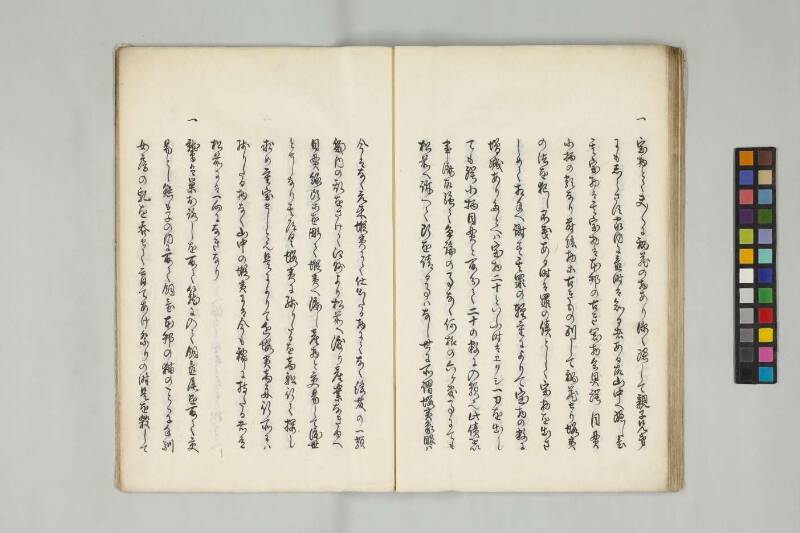
翻刻
【右丁】
一 宝物とて夫〳〵に秘蔵の物あり深く隠して親子兄弟
にも知らさす家内に置時は知る者ある故山中へ隠しひ
其宝物は其宝物は本邦の古き器物金具鍔目貫
小柄の類なり蒔絵物等古きもの別して秘蔵せり蝦夷
の法を犯し不義ある時は罪の債として宝物を出さ
しめて相手へ謝す其罪の軽重によりて宝物の数に
増減ありたとへは宝物二十といふ時はエクシ一刀を出し
ても鍔小柄目貫と取分て二十の数に入類也此債を以
事済故絶て争論の事なく何様の六ヶ敷事にても
松前へ訴へて断を請る事はなし世に所謂蝦夷象眼は
【左丁】
今はなく元来蝦夷にて仕出たる物にてなく後藤の一類
畿内の乱をさけて江州より松前へ渡り産業なきゆへ
目貫縁頭等を彫て蝦夷へ渡し産物と交易して渡世
とせしなり其道具蝦夷に残りたるを商船行て探し
求め重宝せしと也是によりて近蝦夷商舟行所には
残りたる物なく山中の蝦夷には今も稀に持たる者有
松前には一向になきなり
一 鷲は巣おろしを取て籠に入て飼置尾を取て交
易とし熊も子の内に取て飼置本邦の猫のことくに手馴
女房の乳を呑せて育てあけ祭りの時是を殺して
現代語訳
【右丁】
一 宝物として、それぞれに秘蔵の物がある。深く隠して親子兄弟にも知らせず、家内に置く時は知る者があるため山中へ隠している。その宝物は本土の古い器物、金具、鍔、目貫、小柄の類である。蒔絵物等古いものを特に秘蔵している。蝦夷の法を犯し不義がある時は、罪の償いとして宝物を出させて相手へ謝罪する。その罪の軽重によって宝物の数に増減がある。例えば宝物二十という時は、エクシ(刀)一振りを出しても、鍔、小柄、目貫と取り分けて二十の数に入れるのである。この償いをもって事が済むため、全く争論のことがなく、どのような難しい事でも松前へ訴えて裁断を請うことはない。世にいわゆる蝦夷象眼は
【左丁】
今はなく、元来蝦夷で作り出したものではなく、後藤の一族が畿内の乱を避けて近江から松前へ渡り、産業がないため目貫、縁頭等を彫って蝦夷へ渡し、産物と交易して生計としたのである。その道具が蝦夷に残ったものを商船が行って探し求め、重宝としたということである。これによって近年蝦夷への商船が行く所には残った物がなく、山中の蝦夷には今も稀に持っている者がある。松前には全くない。
一 鷲は雛を巣から取って籠に入れて飼い置き、尾を取って交易とし、熊も子の内に取って飼い置く。本土の猫のように手懐け、女房の乳を飲ませて育て、アケ祭りの時にこれを殺して
英語訳
【Right page】
1. As treasures, each person has their own precious objects. They hide them deeply, not even telling their parents, children, or siblings, and when keeping them at home where someone might know about them, they hide them in the mountains. These treasures are old utensils from the mainland: metal fittings, sword guards (tsuba), ornamental sword fittings (menuki), and small sword accessories (kozuka). They especially treasure old lacquerware and similar ancient items. When someone violates Ainu law or commits wrongdoing, they are made to present treasures as compensation to apologize to the other party. The number of treasures varies according to the severity of the offense. For example, when "twenty treasures" is specified, even if they present one sword (ekushi), the tsuba, kozuka, and menuki are counted separately to make up the number twenty. Since matters are settled with this compensation, there are absolutely no disputes, and no matter how difficult the case, they never appeal to Matsumae for judgment. The so-called "Ezo inlay work"
【Left page】
no longer exists, and it was not originally created by the Ainu. Members of the Goto family fled the civil wars in the Kinai region and crossed from Omi Province to Matsumae. Having no other means of livelihood, they carved menuki, fuchi-gashira, and other sword fittings to trade with the Ainu for local products to make their living. The tools that remained among the Ainu were sought out and collected by merchant ships and became treasured items. As a result, in places where merchant ships to Ezo have been going in recent years, no such items remain, but among the Ainu in the mountains, there are still rarely those who possess them. In Matsumae, there are none at all.
1. Eagles - they take nestlings from their nests, keep them in cages, and use their tail feathers for trade. They also capture bear cubs and raise them, taming them like cats in mainland Japan, having women nurse them with breast milk, and at the Ake festival they kill them and...