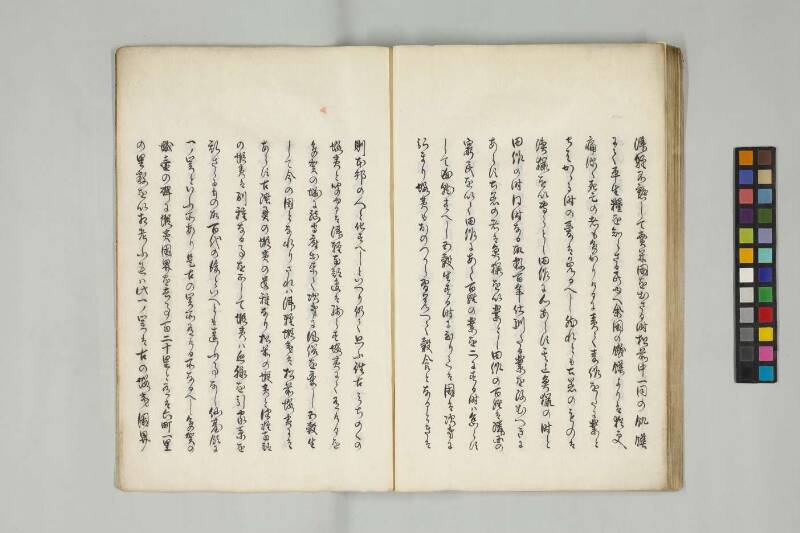
翻刻
【右丁】
津軽不熟して売米出さる時松前中一同の飢饉
にて平生糧を知らさる民ゆへ余国の饑饉よりは猶更
痛深く死亡の者も多かりけるに責て麦作をたに業と
せはかゝる時の憂は免るへし然れとも土器のものは
漁猟を以専らとし田作に心あらす其上魚猟の時と
田作の時同時なる故数百年仕馴たる業を改むへきに
あらす土器の者は魚猟を以業とし田作の百姓は隣国の
窮民を以て田作にあて百姓の業をニにする時は怠らす
して成就すへし五穀生する時に至りては国は次第に
弘まり蝦夷もおのつから習覚へて穀食となるときは
【左丁】
則本邦の人と化すへしといへり仍て思ふ往古みちのくの
蝦夷と聞ゆるは津軽南部辺は残らす蝦夷にて有けるを
多賀の城に鎮守府出来て次第に風俗を変し五穀生
して今の国となれりされは津軽蝦夷は松前蝦夷には
あらす古陸奥の蝦夷の遺種なり松前の蝦夷と津軽南部
の蝦夷は別種なる事を正して蝦夷は血脈を引家系を
乱さゝるもの故百代の後といへとも違ふ事なし仙台領に
一ノ関といふ所あり是古の関所有ける所なるへし多賀の
城壺の碑に蝦夷国界を去事百二十里と有は六町一里
の里数を以相考ふれは此一ノ関は古の蝦夷国界
現代語訳
【右丁】
津軽が不作で売米を出さなかった時、松前中一同が飢饉となり、
普段から十分な食糧を知らない民であるため、他国の飢饉よりもなお一層
痛ましく深刻で、死亡者も多かった。せめて麦作だけでも生業と
すればこのような時の憂いは免れるであろう。しかし土地の者は
漁猟を専らとして田作に心がない。その上、魚猟の時と
田作の時が同時期であるため、数百年慣れ親しんだ業を改めるべき
ではない。土地の者は魚猟を生業とし、田作の百姓は隣国の
貧民を使って田作に当て、百姓の業を二重にする時は怠らずに
成就するであろう。五穀が生産されるようになった時には国は次第に
発展し、蝦夷も自然と習い覚えて穀食となる時は
【左丁】
すなわち本邦の人と化するであろうと言われている。そこで思うに、往古みちのくの
蝦夷と聞くのは、津軽南部辺りは残らず蝦夷であったのを、
多賀城に鎮守府ができて次第に風俗を変え、五穀を生産
して今の国となったのである。だから津軽の蝦夷は松前の蝦夷では
なく、古い陸奥の蝦夷の末裔なのである。松前の蝦夷と津軽南部
の蝦夷は別種であることは確かで、蝦夷は血脈を引き家系を
乱さないものであるから、百代の後といっても違うことはない。仙台領に
一関という所がある。これは古の関所があった所であろう。多賀
城の壺の碑に「蝦夷国界を去ること百二十里」とあるのは、六町一里
の里数で相考すれば、この一関は古の蝦夷国界
英語訳
[Right page]
When Tsugaru had a poor harvest and did not release rice for sale, all of Matsumae suffered from famine.
Since the people normally did not know sufficient food supplies, it was even more
painful and severe than famines in other domains, with many deaths. If they had at least made barley cultivation their
livelihood, they could have avoided such worries during these times. However, the local people
make fishing and hunting their specialty and have no interest in rice cultivation. Moreover, since the time for fishing
and the time for rice cultivation coincide, they should not abandon
the occupation they have been accustomed to for hundreds of years. The local people should make fishing and hunting their livelihood, while for rice cultivation, farmers should use
poor people from neighboring domains for rice cultivation, and when the farming work is doubled, it will be accomplished without neglect.
When grain production develops, the domain will gradually
expand, and when the Ainu naturally learn and adopt grain eating,
[Left page]
they will become people of our realm. Therefore, I think that in ancient times, what we hear of as
Ainu of Michinoku was that the Tsugaru and Nanbu regions were entirely Ainu territory, but
when the military headquarters was established at Taga Castle, customs gradually changed, grain production
developed, and it became today's domain. Therefore, the Ainu of Tsugaru are not the same as the Ainu of Matsumae,
but are descendants of the ancient Mutsu Ainu. The Ainu of Matsumae and the Ainu of Tsugaru and Nanbu
are clearly different peoples. Since the Ainu maintain their bloodlines and do not
mix their family lineages, even after a hundred generations there is no difference. In Sendai domain there is
a place called Ichinoseki. This must be where an ancient barrier station existed. The
inscription on the Tsubo monument at Taga Castle states "120 ri from the Ainu national border," and if we
calculate using the distance measurement of six chō to one ri, this Ichinoseki was the ancient Ainu national border.