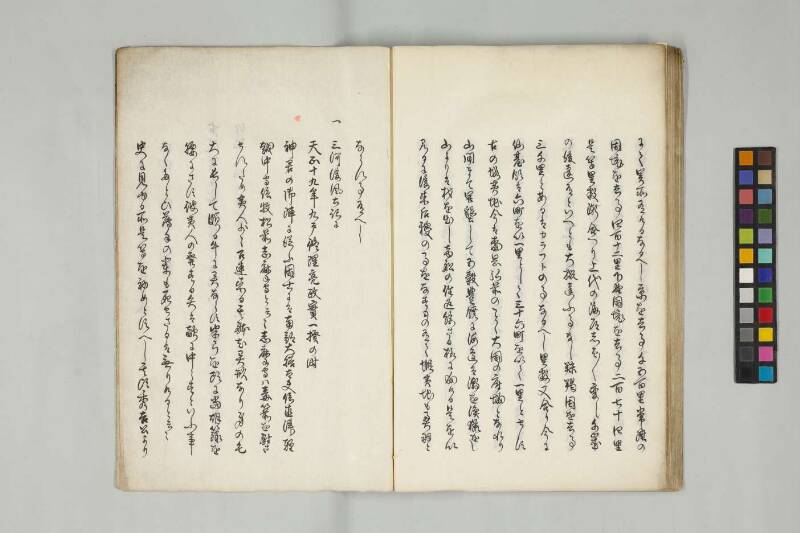
翻刻
【右丁】
にて関所有けるなるへし京を去事千五百里常陸の
国境を去事四百十二里下野国境を去事二百七十四里
是等里数漸合へり上代の海道しば〳〵変し千歳
の後違有といへとも大概違ふ事なし靺鞨国を去事
三千里とあるはカラフトの事なるへし里数又合り今に
仙台領は六町を以一里として三十六町を以て一里とせす
古の蝦夷地今は森岡弘前のことく大国の府城となれり
山間まて開墾して五穀豊饒に海辺は潮を漁猟をし
山よりは材を出し商船の往返絶さる様に成ける是を以
見るに後来后稷の事をなすもの有て蝦夷地も奥羽と
【左丁】
ならん事有へし
一 三河後風土記に
天正十九年九戸修理亮政実一揆の時
神君の御陣に従ふ国士には南部大膳太夫信直津軽
越中守信牧松前志摩守と云々志摩守は毒箭を射さ
せんため夷人少々召連来る其体尤も異形なり身の毛
大に長して頗る牛に異ならす半弓を頭に当胡籙#1を
腰にさす彼夷人の発する矢は敵に中らすといふ事
なくたとひ薄手の輩も死せさるは無りけると云々
史に見ゆる所是等を初めとすへし其頃秀吉公より
現代語訳
【右丁】
であって関所があったのであろう。京を去ること千五百里、常陸の
国境を去ること四百十二里、下野国境を去ること二百七十四里。
これらの里数はほぼ合致している。上代の海道はしばしば変わり、千年
の後には違いがあるといっても、大体は違うことがない。靺鞨国を去ること
三千里とあるのは樺太のことであろう。里数もまた合っており、今でも
仙台領は六町をもって一里として、三十六町をもって一里とはしない。
古の蝦夷地は今は盛岡・弘前のような大国の府城となった。
山間まで開墾して五穀豊饒となり、海辺では潮干狩りや漁猟をし、
山からは材木を出し、商船の往復が絶えないようになった。これを見れば
後に后稷のような事業をなす者があって、蝦夷地も奥羽と
【左丁】
同様になることがあるであろう。
一 『三河後風土記』に
天正十九年九戸修理亮政実の一揆の時、
神君(徳川家康)の御陣に従う国士には南部大膳太夫信直、津軽
越中守信牧、松前志摩守などがいたという。志摩守は毒矢を射さ
せるため蝦夷人を少々召し連れて来た。その体つきは最も異形である。身の毛が
大変長くて、かなり牛と変わらない。半弓を頭に当て、胡籙を
腰に差している。あの蝦夷人の放つ矢は敵に当たらないということは
なく、たとえ薄手を負った者でも死なない者はいなかったという。
史書に見える記述はこれらを初めとするであろう。その頃豊臣秀吉公より
英語訳
【Right page】
and there must have been a barrier station there. It is 1,500 ri from the capital, 412 ri from the border of Hitachi Province, and 274 ri from the border of Shimotsuke Province.
These distances roughly match. Although the ancient highways often changed and there are differences after a thousand years, generally there are no major discrepancies. The reference to being 3,000 ri from the Mohe kingdom probably refers to Sakhalin. The distances also match, and even today
Sendai domain uses six chō as one ri, not thirty-six chō as one ri.
The ancient Ainu lands have now become great domain castle towns like Morioka and Hirosaki.
They have cultivated even the mountain valleys, achieving abundant grain harvests, conduct shellfish gathering and fishing along the coast,
export timber from the mountains, and commercial ships come and go constantly. Seeing this,
there may later be someone who accomplishes the work of Hou Ji, and the Ainu lands may also become like Ōu.
【Left page】
One In the "Mikawa Go Fudoki":
During the rebellion of Kunohe Shurinosuke Masazane in Tenshō 19 (1591),
the domain lords who followed the divine lord's (Tokugawa Ieyasu's) forces included Nanbu Daizen-tayū Nobunao, Tsugaru
Etchū-no-kami Nobumaki, and Matsumae Shima-no-kami, among others. Shima-no-kami brought along
a few Ainu to shoot poisoned arrows. Their appearance was most unusual. Their body hair was
extremely long, quite similar to that of cattle. They placed half-bows against their heads and wore quivers
at their waists. The arrows shot by those Ainu never
failed to hit their enemies, and even those who suffered light wounds invariably died.
Historical records probably begin with accounts like these. Around that time, from Toyotomi Hideyoshi...