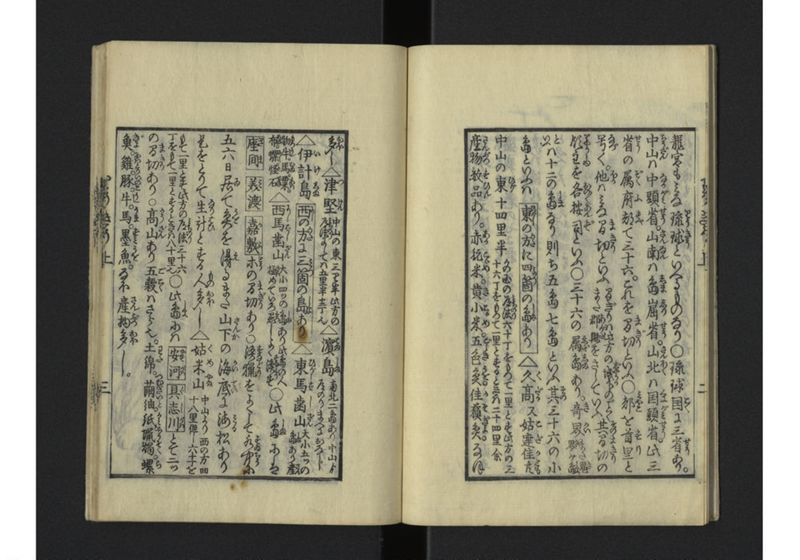
翻刻
【囲われている部分は「」でくくりました】
竜宮もみな琉球(りうきう)といへるものなり○琉球 国(こく)に三 省(せう)あり。
中山(ちうざん)は中頭省(なかがみせう)。山南(さんなん)は島崫省(しましりせう)。山北(さんほく)は国頭省(くにがみせう)。此三
省(せう)の属府(ぞくふ)都(すべ)て三十六。これを間切(まぎり)といふ○都(みやこ)を首里(すり)と
号(なづ)く。他(ほか)はみな間切(まきり)といふ《割書:間ぎりは此方の城下(じやうか)のごとく|郡県(あがた)をさしていふ》其(その)間切(まきり)の
領主(りやうしゆ)を各(おの〳〵)按司(あんじ)といふ○三十六の属島(ゑだしま)あり。奇界(きかい)《割書:また鬼(き)|界(かい)が島(しま)》
《割書:と|いふ》は十二の島(しま)なり則ち五島七島といふ其(その)三十六の小
島といふは「東(ひがし)の方(かた)に四箇(よつ)の島(しま)あり」△久高(くだか)又姑達佳(こだか)共(とも)
中山の東(ひがし)十四里半《割書:かの国の道法(みちのり)六十丁をもつて一里とす此方の三|十六丁をもつて一里とするときは二十四里余》
産物(さんぶつ)数品(すひん)あり。赤(あか)祝米(こゞめ)。黄(き)小米(こゞめ)。五色(ごしき)魚(うを)。佳蘇魚。なほ
多(おほ)し△津堅(つけん)《割書:中山の東三里半此方の|道法(みちのり)にしては五里半十二丁也》△浜島(はましま)《割書:南北二島あり中山ゟ|道のりまへにおなじ》
△伊計島(いけしま)「西(にし)の方(かた)に三箇(みつ)の島あり」△東馬歯山(ひがしばしざん)《割書:大小五ツの|島(しま)あり産(さん)》
《割書:物(もつ)牛(うし)。馬(むま)。粟(あは)。|布(ぬの)。螺(にし)。怪石(かせき)》△西馬歯山(にしばしざん)《割書:大小四ツの島(しま)あり此島の人|極(きは)めていろ黒(くろ)しよく漁(すなどり)す》○此 島(しま)には
「座間(ざま)」「美渡(みと)」「嘉敷(かふ)」等(とう)の間切(まぎり)あり○漁猟(すなどり)をよくして
水中(すゐちう)に
五六日 居(ゐ)て魚(うを)を得(え)るまた山下(さんか)の海底(かいてい)に海松(みる)あり
是をとりて生計(なりはい)とする人(もの)多(おほ)し△姑米山(くめやま)《割書:中山より西の方四|十八里但し六十丁を》
《割書:もて一里とす此方の三十六|丁をもて一里とするときは八十里也》○此 島(しま)には「安河(やすがは)」「具志川(ぐしがは)」とて二ツ
の間切(まきり)あり○高山(かうざん)あり五穀(ごこく)はさら也。土綿(わた)。繭紬(つむぎいと)。紙(かみ)。蝋燭(ろうそく)。螺(ら)
魚(ぎょ)。雞(にはとり)。豚(いのこ)。牛(うし)。馬(うま)。墨魚(すみうを)。なほ産物(さんぶつ)多(おほ)し。
現代語訳
竜宮もみな琉球というものである。○琉球国には三つの省がある。中山は中頭省、山南は島尻省、山北は国頭省である。この三省の属府は全部で三十六あり、これを間切という。○都を首里と号する。他はみな間切という《注記:間切はこちらの城下のような郡県を指していう》その間切の領主をそれぞれ按司という。○三十六の属島がある。奇界《注記:また鬼界が島ともいう》は十二の島である。すなわち五島七島というその三十六の小島というのは「東の方に四つの島がある」△久高(またの名を姑達佳)は中山の東十四里半《注記:かの国の道法は六十丁をもって一里とする。こちらの三十六丁をもって一里とするときは二十四里余》にある。
産物は数品ある。赤祝米、黄小米、五色魚、佳蘇魚など、なお多い。△津堅《注記:中山の東三里半、こちらの道法にしては五里半十二丁である》△浜島《注記:南北二島あり、中山からの道のりは前と同じ》△伊計島「西の方に三つの島がある」△東馬歯山《注記:大小五つの島があり、産物は牛、馬、粟、布、螺、怪石》△西馬歯山《注記:大小四つの島がある。この島の人は極めて色が黒く、よく漁をする》○この島には「座間」「美渡」「嘉敷」等の間切がある。○漁猟をよくして水中に五六日いて魚を得る。また山下の海底に海松があり、これを取って生計とする人が多い。△姑米山《注記:中山より西の方四十八里。ただし六十丁をもって一里とする。こちらの三十六丁をもって一里とするときは八十里である》○この島には「安河」「具志川」という二つの間切がある。○高山があり、五穀はもちろんのこと、土綿、繭紬、紙、蝋燭、螺、魚、鶏、豚、牛、馬、墨魚など、なお産物が多い。
英語訳
The Dragon Palace are all what is called Ryukyu. ○Ryukyu Kingdom has three provinces. Chuzan is Nakagami Province, Sannan is Shimajiri Province, and Sanhoku is Kunigami Province. The subordinate districts of these three provinces total thirty-six, which are called magiri. ○The capital is called Shuri. The others are all called magiri《Note: magiri refers to counties like the castle towns here》The lords of those magiri are each called aji. ○There are thirty-six subordinate islands. Kikai《Note: also called Kikaigashima》consists of twelve islands. That is, what are called the five islands and seven islands, those thirty-six small islands are "There are four islands to the east" △Kudaka (also called Kodaka) is fourteen and a half ri east of Chuzan《Note: That country's road measurement takes sixty cho as one ri. When using our thirty-six cho as one ri, it is over twenty-four ri》
There are several products: red celebratory rice, yellow small rice, five-colored fish, kasuo fish, and many more. △Tsuken《Note: Three and a half ri east of Chuzan, which is five ri and twelve cho by our road measurement》△Hamajima《Note: There are two islands, north and south, the distance from Chuzan is the same as before》△Ikeshima "There are three islands to the west" △Higashibashizan《Note: There are five large and small islands, products include cattle, horses, millet, cloth, shells, and strange stones》△Nishibashizan《Note: There are four large and small islands. The people of this island are extremely dark-skinned and are good at fishing》○This island has magiri such as "Zama," "Mito," and "Kafushi." ○They are good at fishing and hunting, staying underwater for five or six days to catch fish. Also, there is sea lettuce on the seabed below the mountains, and many people make their living by gathering this. △Kumeyama《Note: Forty-eight ri west of Chuzan, but taking sixty cho as one ri. When using our thirty-six cho as one ri, it is eighty ri》○This island has two magiri called "Yasugaha" and "Gushigaha." ○There are high mountains, and besides the five grains, there are many products: native cotton, silk thread from cocoons, paper, candles, shellfish, fish, chickens, pigs, cattle, horses, cuttlefish, and many more products.