翻刻
殻、泥金扇、紅銅、錫、夏布、牛皮檀香、黄熟香、蘇木、烏木、胡椒、
硫黄、磨石等、爾後多クハ馬、硫黄ナリ、賜物ハ、大抵、衣冠、
綾、羅、綢、緞、幣、暦、銭等ナリ、」明滅スル後、更ニ前印ヲ繳シ、
清ニ聘ス、清主乃チ鍍金銀印ヲ給シ封冊ス、後相継テ
亦聘貢絶エズ、始ハ、金銀匣、盃、囲屛、扇、蕉布、麻布、胡椒、蘇
木、刀、鎗、甲冑、鞍、糸、綿、螺盤等ヲ貢ス、後ハ、硫黄一万二千
六百斤、螺殻三千斤、紅銅三千斤、錫千斤ト、定ム、賜物ハ
大抵綾羅錦鏽等ナリ、」明ノ時、三王並ビ封ズルニ因リ、
中山王ノ号ヲ以テ分別ス、後三山ヲ一統スト雖トモ、冊
封印璽、共ニ琉球国中山王ト称ス、清ニ至テハ、印文ハ、
只琉球国王之印トシ、冊封書ニ中山王トス、」明ニ在テ
ハ、正ニ品、皇子
新王ヲ降ルヿ
一等、弁冠、蟒服、
白玉犀帯ナリ、
清ニ在テハ、品
位ヲ定メズ、衣
冠旧ニ依リ、列
ハ朝鮮ノ下、安
南 緬甸(ビルマ)ノ上ニ
在リ、二年ニ一
貢シ、其間年ニ
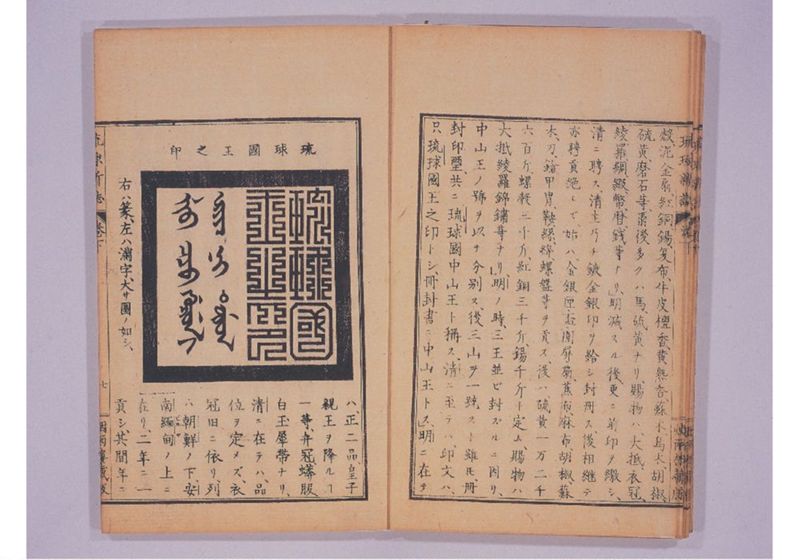
【国王の印の図】
【図の上に横書きで】琉球国王之印
【図の左に】右ハ篆、左ハ満字、大サ図ノ如シ、
現代語訳
殻、泥金扇、紅銅、錫、夏布、牛皮、檀香、黄熟香、蘇木、烏木、胡椒、硫黄、磨石等であった。それ以後は多くは馬、硫黄であった。賜物は、大抵、衣冠、綾、羅、綢、緞、幣、暦、銭等であった。明が滅んだ後、さらに前の印を返還し、清に使者を派遣した。清の皇帝はそこで鍍金銀印を給して冊封した。後も相継いで聘貢を絶やさなかった。始めは、金銀匣、盃、囲屏、扇、蕉布、麻布、胡椒、蘇木、刀、槍、甲冑、鞍、糸、綿、螺盤等を貢いだ。後には、硫黄一万二千六百斤、螺殻三千斤、紅銅三千斤、錫千斤と定めた。賜物は大抵綾羅錦繍等であった。明の時、三王並んで封じるため、中山王の号をもって区別した。後に三山を統一したといえども、冊封印璽は、共に琉球国中山王と称した。清に至っては、印文は、ただ琉球国王之印とし、冊封書に中山王とした。明においては、正二品、皇子より新王を降すこと一等、弁冠、蟒服、白玉犀帯であった。清においては、品位を定めず、衣冠は旧に依り、序列は朝鮮の下、安南・緬甸(ビルマ)の上に在った。二年に一貢し、その間年に
【国王の印の図】
【図の上に横書きで】琉球国王之印
【図の左に】右は篆書、左は満州文字、大きさは図の通り。
英語訳
shells, gold-painted fans, red copper, tin, summer cloth, cowhide, sandalwood, turmeric fragrance, sappanwood, ebony, pepper, sulfur, grindstones, and other items. Thereafter, most tribute consisted of horses and sulfur. The gifts received were generally court dress, silk fabrics (aya, ra, chō, dan), currency, calendars, coins, and such. After the fall of Ming, [Ryukyu] further returned the previous seal and sent envoys to Qing. The Qing emperor then granted a gold-plated silver seal and performed the investiture. Subsequently, diplomatic tribute continued without interruption. Initially, they offered gold and silver boxes, cups, folding screens, fans, banana fiber cloth, hemp cloth, pepper, sappanwood, swords, spears, armor, saddles, thread, cotton, shell dishes, and other items. Later, it was fixed at 12,600 jin of sulfur, 3,000 jin of shells, 3,000 jin of red copper, and 1,000 jin of tin. The gifts received were mostly silk brocades and embroideries. During the Ming period, because the three kings were invested simultaneously, they were distinguished by the title "King of Chūzan." Even after the three kingdoms were unified, both the investiture seal and documents referred to "King of Chūzan of Ryukyu Kingdom." Under the Qing, the seal inscription was simply "Seal of the King of Ryukyu Kingdom," while investiture documents used "King of Chūzan." Under Ming, [the king held] the rank of junior second grade, one rank below imperial princes when a new king was invested, with a court cap, python robe, and white jade rhinoceros belt. Under Qing, no specific rank was assigned, court dress followed the old system, and in the hierarchy [Ryukyu] was placed below Korea and above Annam and Burma. Tribute was sent once every two years, and in the intervening years...
[Royal Seal Illustration]
[Written horizontally above the illustration] Seal of the King of Ryukyu Kingdom
[To the left of the illustration] The right side shows seal script, the left shows Manchu characters, size as shown in the diagram.