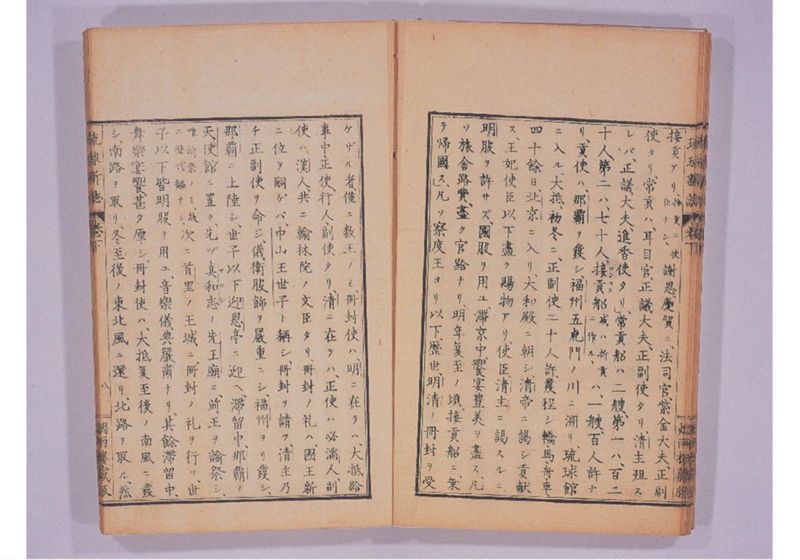
翻刻
接貢アリ、《割書:接貢ニ使|臣ナシ、》謝恩、慶賀ニ、法司官、紫金大夫、正副
使タリ、常貢ハ、耳目官、正議大夫、正副使タリ、清主殂ス
レバ、正議大夫、進香使タリ、」常貢船ハ二艘、第一ハ、百二
十人、第二ハ、七十人、接貢(ツンコン)船《割書:或ハ折貢|ニ作ル、》ハ、一艘、百人許ナ
リ、貢使ハ、那覇ヲ発シ、福州五虎門ノ川ニ溯リ、琉球館
ニ入ル、大抵、初冬ニ、正副使二十人許、発程シ轎、馬、舟、車、
四十余日、北京ニ入リ、大和殿ニ朝シ、清帝ニ謁シ貢献
ス、王妃使臣以下尽ク賜物アリ、使臣清主ニ謁スルニ
明服ヲ許サズ、国服ヲ用ユ、滞京中、饗宴豊美ヲ尽ス、凡
ソ旅舎路費、尽ク官給ナリ、明年夏至ノ頃、接貢船ニ、乗
テ帰国ス、」凡ソ察度王ヨリ以下、歴世、明清ノ冊封ヲ受
ケザル者、僅ニ数王ノミ、冊封使ハ、明ニ在テハ、大抵給
事中、正使、行人、副使タリ、清ニ在テハ、正使ハ必満人、副
使ハ漢人、共ニ翰林院ノ文臣タリ、冊封ノ礼ハ、国王新
ニ位ヲ嗣ゲバ、中山王世子ト称シ、冊封ヲ請フ、清主乃
チ正副使ヲ命ジ、儀衛服飾ヲ厳重ニシ、福州ヨリ発シ、
那覇ニ上陸シ、世子以下迎恩亭ニ迎ヘ、滞留中、那覇ノ
天使館ニ置ク、先ヅ真和志(マワシ)ノ先王廟ニ、前王ヲ諭祭シ、
《割書:唯諭祭ノミ、故|ニ歴代諡ナシ、》次ニ首里ノ王城ニ、冊封ノ礼ヲ行フ、世
子以下皆明服ヲ用ユ、音楽儀典厳粛ナリ、其余滞留中、
舞楽宴饗甚タ厚シ、冊封使ハ、大抵夏至後ノ南風ニ発
シ、南路ヲ取リ、冬至後ノ東北風ニ還リ、北路ヲ取ル、然
現代語訳
接貢がある。《割書:接貢に使臣なし》謝恩、慶賀には、法司官、紫金大夫が正副使となる。常貢は、耳目官、正議大夫が正副使となる。清の皇帝が崩御すれば、正議大夫が進香使となる。常貢船は二隻、第一船は百二十人、第二船は七十人である。接貢(ツンコン)船《割書:或いは折貢に作る》は一隻、百人ほどである。貢使は那覇を出発し、福州五虎門の川を遡り、琉球館に入る。大抵、初冬に正副使二十人ほどが出発し、駕籠、馬、舟、車で四十余日をかけて北京に入り、太和殿で朝見し、清帝に謁見して貢献する。王妃、使臣以下すべてに賜物がある。使臣が清の皇帝に謁見する際は明服を許されず、国服を用いる。滞京中は饗宴で豊美を尽くし、およそ旅舎路費はすべて官給である。翌年夏至の頃、接貢船に乗って帰国する。およそ察度王より以下、歴代で明清の冊封を受けなかった者は、わずかに数王のみである。冊封使は、明においては大抵給事中が正使、行人が副使であった。清においては正使は必ず満人、副使は漢人で、共に翰林院の文臣である。冊封の礼は、国王が新たに位を継げば、中山王世子と称して冊封を請う。清の皇帝はそこで正副使を命じ、儀衛服飾を厳重にし、福州より出発して那覇に上陸する。世子以下は迎恩亭で迎え、滞留中は那覇の天使館に置く。まず真和志(マワシ)の先王廟で前王を諭祭し《割書:ただ諭祭のみ、故に歴代諡なし》、次に首里の王城で冊封の礼を行う。世子以下は皆明服を用いる。音楽儀典は厳粛である。その他滞留中は、舞楽宴饗が甚だ厚い。冊封使は大抵夏至後の南風で出発し南路を取り、冬至後の東北風で帰還し北路を取る。しかし
英語訳
There were also supplementary tribute missions. <<Marginal note: Supplementary tribute missions had no envoys>> For expressions of gratitude and congratulations, the Hōshi officials and Purple Gold Grand Masters served as chief and vice envoys. For regular tribute, Jimoku officials and Senior Deliberation Grand Masters served as chief and vice envoys. When the Qing emperor passed away, a Senior Deliberation Grand Master served as incense-offering envoy. Regular tribute ships numbered two vessels: the first with 120 people, the second with 70 people. Supplementary tribute (tsunkon) ships <<Marginal note: Sometimes written as setsukon>> numbered one vessel with about 100 people. The tribute envoys departed from Naha, sailed up the river to Wuhu Gate at Fuzhou, and entered the Ryukyu Hall. Generally, in early winter, about twenty chief and vice envoys would depart, traveling by palanquin, horse, boat, and cart for over forty days to enter Beijing, where they would have an audience at the Hall of Supreme Harmony, meet the Qing emperor, and present tribute. The queen consort, envoys, and all others received gifts. When envoys had an audience with the Qing emperor, Ming-style clothing was not permitted; they wore national dress. During their stay in the capital, banquets were sumptuous, and all lodging and travel expenses were provided by the government. Around the summer solstice of the following year, they would return home aboard supplementary tribute ships. From King Satto onward, among successive rulers, only a few kings did not receive investiture from Ming or Qing. Investiture envoys under Ming were generally Secretariat Drafting Officials as chief envoys and Court of Imperial Sacrifices officials as vice envoys. Under Qing, the chief envoy was necessarily a Manchu, the vice envoy a Han Chinese, both being civil officials from the Hanlin Academy. The investiture ceremony proceeded as follows: when a king newly succeeded to the throne, he would be called Crown Prince of Chūzan and request investiture. The Qing emperor would then appoint chief and vice envoys, arrange elaborate ceremonial guards and dress, depart from Fuzhou, and land at Naha. The crown prince and others would welcome them at the Geion Pavilion, and during their stay, they would be housed at the Celestial Envoys' Hall in Naha. First, they would conduct a memorial service for the previous king at the former royal mausoleum in Mawashi <<Marginal note: Only memorial services, hence no posthumous titles for successive generations>>, then conduct the investiture ceremony at the royal castle in Shuri. The crown prince and others all wore Ming-style clothing. The music and ceremonies were solemn. During the rest of their stay, dance, music, and banquets were extremely lavish. Investiture envoys generally departed on southern winds after the summer solstice, taking the southern route, and returned on northeastern winds after the winter solstice, taking the northern route. However