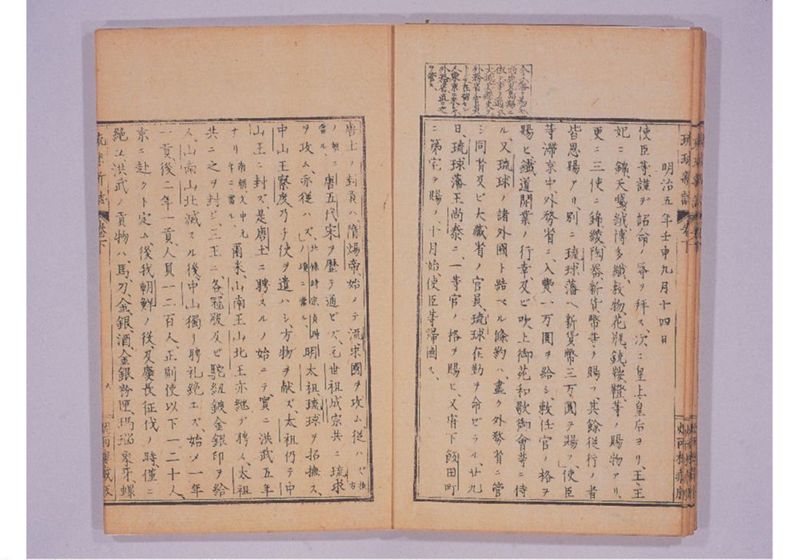
翻刻
明治五年壬申九月十四日
使臣等、謹デ詔命ノ辱ヲ拝ス、次ニ皇上、皇后ヨリ、王、王
妃ニ錦、天鵞絨、博多織、敷物、花瓶、銃、鞍、□、等ノ賜物アリ、
更ニ三使ニ錦、綾、陶器、新貨幣等ヲ賜フ、其余従行ノ者
皆恩賜アリ、別ニ琉球藩ヘ新貨幣三万円ヲ賜フ、」使臣
等滞京中、外務省ニ、入費一万円ヲ給シ、勅任官ノ格ヲ
賜ヒ、鉄道開業ノ行幸、及ビ吹上御苑和歌御会等ニ侍
ル、又琉球ノ諸外国ト結ベル条約ハ、尽ク外務省ニ管
シ同省及ビ大蔵省ノ官員、琉球在勤ヲ命ゼラル、廿九
日、琉球藩王尚泰ニ、一等官ノ格ヲ賜ヒ、又府下飯田町
ニ第宅ヲ賜フ、十月始、使臣等帰国ス、
【枠外上部】今ハ、藩ト為ルモ、尚鹿児島県ニ依テ、事ヲ通ジ、大抵、其県吏ヲ、外務省ノ官員トシテ、在留セシメ、東京ニ来レバ、外務省、直ニ之ヲ管ス、
唐土ノ封貢ハ、隋煬帝、始メテ流求国ヲ攻ム、従ハズ《割書:推|古》
《割書:ノ朝ニ|当ル、》唐五代宋ヲ歴テ通ゼズ、元世祖成宗共ニ琉求
ヲ攻ム、亦従ハズ、」《割書:北条時宗貞時|ノ頃ニ当ル、》明太祖、琉球ヲ招撫ス、
中山王察度、乃チ使ヲ遣ハシ、方物ヲ献ズ、太祖仍テ中
山王ニ封ズ、是唐土ニ聘スルノ始ニテ、実ニ洪武五年
ナリ《割書:南朝、文中元|年ニ当ル、》爾来、山南王山北王亦継デ聘ス、太祖
共ニ之ヲ封ジ、三王ニ、各、冠服及ビ駝紐鍍金銀印ヲ給
ス、山南山北滅スル後、中山独リ聘礼絶エズ、始メ一年
一貢、後二年一貢、人員一二百人、正副使以下一二十人、
京ニ赴クト定ム、後我朝鮮ノ役、及慶長征伐ノ時、僅ニ
絶ユ、洪武ノ貢物ハ、馬、刀、金、銀、酒、金銀粉匣、瑪瑙象牙、螺
現代語訳
明治五年壬申九月十四日
使臣らは、謹んで詔命の光栄を拝受した。次に皇上、皇后より、王、王妃に錦、天鵞絨(ビロード)、博多織、敷物、花瓶、銃、鞍、□等の賜物があった。さらに三使に錦、綾、陶器、新貨幣等を賜った。その他随行の者皆に恩賜があった。別に琉球藩へ新貨幣三万円を賜った。使臣らの滞京中、外務省に入費一万円を給し、勅任官の格を賜り、鉄道開業の行幸及び吹上御苑和歌御会等に侍った。また琉球が諸外国と結んだ条約は、すべて外務省が管轄し、同省及び大蔵省の官員が琉球在勤を命じられた。二十九日、琉球藩王尚泰に一等官の格を賜い、また府下飯田町に邸宅を賜った。十月初め、使臣らは帰国した。
【枠外上部】今は藩となったものの、なお鹿児島県を通じて事を処理し、大抵その県の役人を外務省の官員として在留させ、東京に来れば、外務省が直接これを管轄する。
中国への封貢について:隋の煬帝が初めて流求国を攻めたが、従わなかった(推古朝に当たる)。唐・五代・宋を経ても通じなかった。元の世祖・成宗ともに琉求を攻めたが、また従わなかった(北条時宗・貞時の頃に当たる)。明の太祖が琉球を招撫した。中山王察度が使者を遣わし、方物を献じた。太祖はそのまま中山王に封じた。これが中国に使者を派遣する始まりで、実に洪武五年のことである(南朝文中元年に当たる)。それ以来、山南王・山北王も続いて使者を派遣した。太祖は共にこれを封じ、三王に各々冠服及び駝紐鍍金銀印を給した。山南・山北が滅んだ後、中山独りが聘礼を絶やさなかった。始めは一年一貢、後に二年一貢、人員一二百人、正副使以下一二十人が京に赴くと定めた。後に我が朝鮮の役及び慶長征伐の時、わずかに絶えた。洪武の貢物は、馬、刀、金、銀、酒、金銀粉匣、瑪瑙、象牙、螺
英語訳
Meiji 5, year of the Water Monkey, 9th month, 14th day
The envoys respectfully received the honor of the imperial edict. Next, from His Majesty and the Empress, the King and Queen received gifts of brocade, velvet, Hakata textiles, floor coverings, flower vases, guns, saddles, □, and other items. Furthermore, the three envoys were granted brocade, silk, ceramics, new currency, and other items. All others in the retinue also received imperial gifts. Separately, 30,000 yen in new currency was granted to Ryukyu Domain. During the envoys' stay in the capital, the Foreign Ministry provided 10,000 yen for expenses, granted them the status of imperial appointees, and they attended the imperial visit for the railway opening ceremony and the poetry gathering at Fukiage Imperial Garden. Moreover, all treaties that Ryukyu had concluded with foreign countries were placed under the jurisdiction of the Foreign Ministry, and officials from that ministry and the Treasury Ministry were ordered to serve in Ryukyu. On the 29th day, Ryukyu Domain King Shō Tai was granted first-class official status, and was also granted a residence in Iidamachi in the capital. At the beginning of the 10th month, the envoys returned to their country.
【Outside the frame, upper section】Now that it has become a domain, [Ryukyu] still conducts affairs through Kagoshima Prefecture, generally having that prefecture's officials remain as Foreign Ministry personnel, and when they come to Tokyo, the Foreign Ministry directly supervises them.
Regarding tribute relations with China: Emperor Yang of Sui first attacked the Liuqiu kingdom, but it did not submit (corresponding to the reign of Empress Suiko). Through the Tang, Five Dynasties, and Song periods, there was no communication. Both Emperor Shizu and Emperor Chengzong of Yuan attacked Liuqiu, but it also did not submit (corresponding to the time of Hōjō Tokimune and Sadatoki). Emperor Taizu of Ming invited Ryukyu to submit. King Satto of Chūzan then sent envoys and offered local products. Taizu thereupon invested him as King of Chūzan. This was the beginning of sending envoys to China, actually in the 5th year of Hongwu (corresponding to the 1st year of Bunchū of the Southern Court). From then on, the Kings of Nanzan and Hokuzan also successively sent envoys. Taizu invested them all, giving each of the three kings court dress and gold-plated silver seals with camel-shaped knobs. After Nanzan and Hokuzan were destroyed, Chūzan alone did not cease diplomatic ceremonies. Initially it was tribute once a year, later once every two years, with a retinue of 100-200 people, and 10-20 people from chief and vice envoys down going to the capital. Later, during our Korean campaigns and the Keichō conquest, [tribute] briefly ceased. The Hongwu tribute items were horses, swords, gold, silver, wine, gold and silver powder boxes, agate, ivory, shells