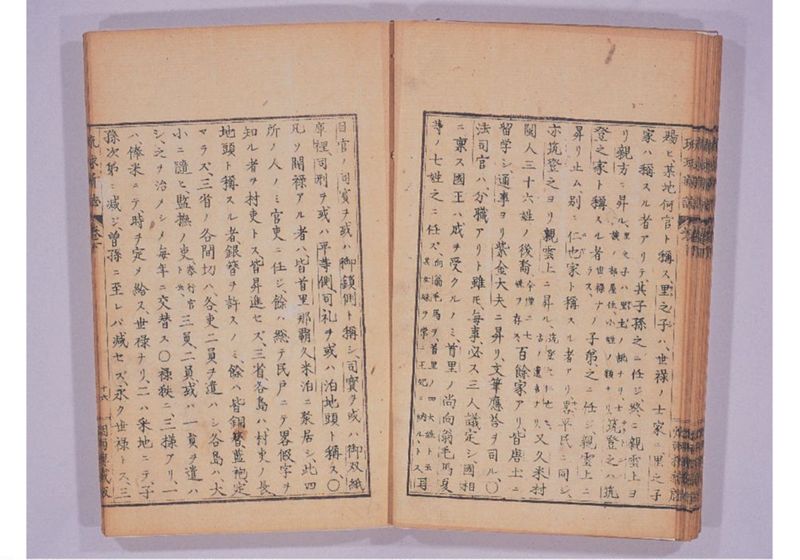
翻刻
賜ヒ、某地何官ト称ス、里之子(サトノシ)ハ、世禄ノ士家ニ、里之子
家ハ称スル者アリテ、其子孫之ニ任ジ、終ニ親雲上ヨ
リ親方ニ昇ル、《割書:里之子ハ里主(サトヌシ)ノ訛ナリ、士|族ノ部屋住、小姓ノ類ナリ、》筑登之(チクドン)ハ筑
登之家ト称スル者《割書:世禄ナ|ラス、》ノ子弟、之ニ任ジ、親雲上ニ
昇リ止ム、別ニ仁也(ニヤ)家ト称スル者アリ、略(ホヽ)、平民ニ同ジ、
亦筑登之ヨリ親雲上ニ昇ル、《割書:筑登之仁也モ、|古ノ遺言ナリ、》又久米村
閩人三十六姓ノ後裔、《割書:今僅ニ七|姓ヲ存ス、》百余家アリ、皆唐土ニ
留学シ、通事ヨリ紫金大夫ニ昇リ、文筆応答ヲ司ル、○
法司官ハ、分職アリト雖トモ、毎事、必ス三人議定シ、国相
ニ稟ス国王ハ成ヲ受クルノミ、首里ノ尚向翁毛馬夏
等ノ七姓之ニ任ズ、《割書:向翁毛馬ヲ、首里ノ四大姓ト云|其女妹ヲ常ニ王妃ニ納ルヽトス、》耳
目官ノ司賓ヲ或ハ御鎖側ト称シ、司宝ヲ或ハ御双紙
庫裡、司刑ヲ或ハ平等側、司礼ヲ或ハ泊地頭ト称ス、○
凡ソ閥禄アル者ハ、皆首里那覇久米泊ニ聚居シ、此四
所ノ人ノミ官吏ニ任ジ、余ハ総テ民戸ニテ、略仮字ヲ
知ル者ヲ村吏トス、皆昇進セズ、三省、各島ハ、村吏ノ長
地頭ト称スル者、銀簪ヲ許スノミ、余ハ皆銅簪、藍袍、定
マラズ、三省ノ各間切ハ、各、吏二員ヲ遣ハシ、各島ハ、大
小ニ随ヒ、監撫ノ吏、《割書:奉行官|ト云、》三員、二員、或ハ一員ヲ遣ハ
シ、之ヲ治メシメ毎年ニ交替ス○禄秩ニ、三様アリ、一
ハ、俸米ニテ、時ヲ定メ給ス、世禄ナリ、二ハ采地ニテ、子
孫次第ニ減ジ、曾孫ニ至レバ減セズ、永ク世禄トス、三
現代語訳
賜り、某地何官と称する。里之子(サトノシ)は、世禄の士家に里之子家と称する者があって、その子孫がこれに任じられ、最終的に親雲上より親方に昇進する。《里之子は里主(サトヌシ)の訛りである。士族の部屋住み、小姓の類である。》筑登之(チクドン)は筑登之家と称する者《世禄ではない。》の子弟がこれに任じられ、親雲上に昇進して止まる。別に仁也(ニヤ)家と称する者があり、ほぼ平民と同じで、また筑登之より親雲上に昇進する。《筑登之・仁也も、古い遺語である。》また久米村の閩人三十六姓の後裔《今はわずかに七姓を残すのみ》が百余家あり、皆唐土に留学し、通事より紫金大夫に昇進し、文筆応答を司る。○
法司官は、分掌があるといえども、毎事、必ず三人で議定し、国相に稟議する。国王は承認を与えるのみである。首里の尚・向・翁・毛・馬・夏等の七姓がこれに任じられる。《向・翁・毛・馬を、首里の四大姓という。その女妹を常に王妃に納めるとする。》耳目官の司賓を或いは御鎖側と称し、司宝を或いは御双紙庫裡、司刑を或いは平等側、司礼を或いは泊地頭と称する。○
およそ閥禄ある者は、皆首里・那覇・久米・泊に集居し、この四箇所の人のみが官吏に任じられ、その他は総て民戸で、ほぼ仮名を知る者を村吏とする。皆昇進しない。三省の各島は、村吏の長である地頭と称する者に、銀簪を許すのみで、その他は皆銅簪、藍袍で、定まらない。三省の各間切は、各々吏二員を派遣し、各島は、大小に随い、監撫の吏《奉行官という》三員、二員、或いは一員を派遣し、これを治めさせ、毎年交替する。○俸禄には、三様がある。一つは、俸米で、時を定めて給する世禄である。二つは采地で、子孫次第に減じ、曾孫に至れば減せず、永く世禄とする。三つ
英語訳
granted, and they are called "[Location] [Rank] Officer." Village Sons (Satonoshi) are those among hereditary warrior families called "Village Son Houses," whose descendants are appointed to these positions and eventually rise from Foster Parent of the Clouds to Foster Parent. [Village Son is a corruption of Village Master (Satonushi). They are like retainers living in the family compound and pages of warrior families.] Chikudun are the children and younger brothers of those called "Chikudun Houses" [not hereditary stipend holders] who are appointed to these positions and rise only to Foster Parent of the Clouds before stopping. Separately, there are those called "Niya Houses," who are almost the same as commoners and also rise from Chikudun to Foster Parent of the Clouds. [Both Chikudun and Niya are also ancient remnant terms.] Additionally, there are over one hundred households of descendants of the thirty-six Chinese surnames from Kume village [now only seven surnames remain], all of whom study in China, rise from interpreters to Purple and Gold Doctors, and handle written correspondence. ○
Although the Legal Officers have divided responsibilities, in all matters they must deliberate as three people and report to the National Minister. The king only gives approval. The seven surnames of Shuri - Shō, Shō, Ō, Mō, Ba, Ka, etc. - are appointed to these positions. [Shō, Ō, Mō, and Ba are called the Four Great Surnames of Shuri. Their daughters and sisters are customarily taken as queens.] The Superintendent of Guests among the Supervision Officers is sometimes called "御鎖側," the Superintendent of Treasures is sometimes called "御双紙庫裡," the Superintendent of Punishments is sometimes called "平等側," and the Superintendent of Ceremonies is sometimes called "泊地頭." ○
Generally, those with hereditary stipends all live concentrated in Shuri, Naha, Kume, and Tomari, and only people from these four places are appointed as government officials. All others are civilian households, and those who know basic writing are made village officials. None advance in rank. In each island of the three provinces, only those called District Heads, who are chiefs of village officials, are permitted silver hairpins; all others have copper hairpins and blue robes, without fixed rules. Each district (magiri) of the three provinces sends two officials each, and each island, according to its size, sends three, two, or one supervising official [called "magistrate officers"] to govern it, with yearly rotation. ○ There are three types of stipends. First is salary rice, given at fixed times as hereditary stipend. Second is fief land, which decreases generation by generation among descendants, but stops decreasing at great-grandchildren and becomes permanent hereditary stipend. Third