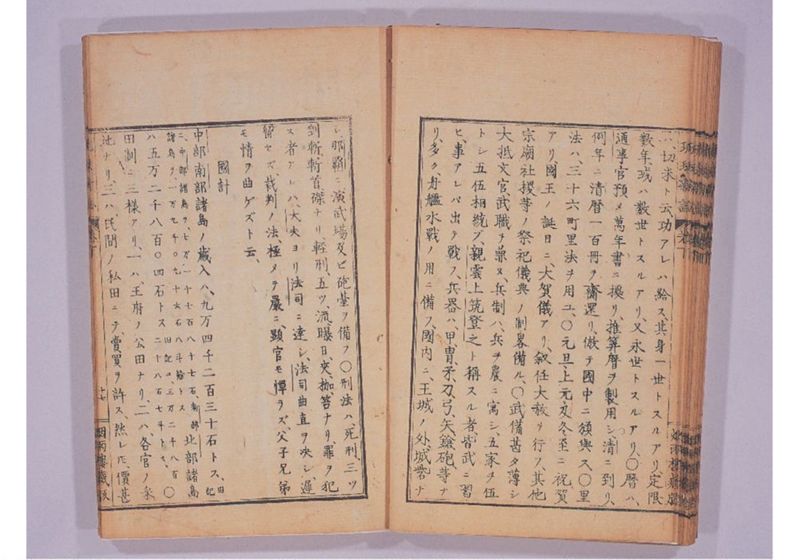
翻刻
ハ、切米ト云、功アレハ給ス、其身一世トスルアリ、定限
数年、或ハ数世トスルアリ、又永世トスルアリ、○暦ハ、
通事官預メ万年書ニ拠リ、推算暦ヲ製用シ、清ニ到リ、
例年ニ清暦一百冊ヲ齎還リ、倣テ国中ニ領与ス、○里
法ハ、三十六町里法ヲ用ユ、○元旦、上元、及冬至ニ祝賀
アリ、国王ノ誕目ニ、大賀儀アリ、叙任大赦ヲ行フ、其他
宗廟社稷等ノ祭祀儀典ノ制略備ル、○武備甚タ薄シ
大抵文官、武職ヲ兼ヌ、兵制ハ、兵ヲ農ニ寓シ、五家ヲ伍
トシ五伍相統ブ、親雲上筑登之ト称スル者、皆武ニ習
ヒ、事アレバ出テ戦フ、兵器ハ、甲、冑、矛、刀、弓、矢、鎗、砲、等ナ
リ、多ク、舟艦水戦ノ用ニ備フ、国内ニ、王城ノ外、城砦ナ
シ、那覇ニ、演武場及ビ砲台ヲ備フ○刑法ハ、死刑、三ツ
剉斬、斬首、磔ナリ、軽刑、五ツ、流、曝日、夾、枷、笞ナリ、罪ヲ犯
ス者アレハ、大夫ヨリ法司ニ達シ、法司曲直ヲ決シ、遅
留セズ、裁判ノ法、極メテ厳ニ、顕官モ憚ラズ、父子兄弟
モ情ヲ曲ゲズト云、
国計
中部南部諸島ノ歳入ハ、九万四千二百三十石トス、《割書:旧|記》
《割書:ニ、中部諸島ヲ、七万一千七百八十七石、南部|諸島ヲ、一万九千〇九十六石八斗余トス》北部諸島
ハ五万二千八百〇四石トス《割書:旧記ニ、三万二千八百|二十八石七斗トス、》○
田制ニ三様アリ、一ハ、王府ノ公田ナリ、二ハ、各官ノ采
地ナリ、三ハ、民間ノ私田ニテ、売買ヲ許ス、然レトモ、価甚
現代語訳
三つは、切米という。功績があれば給与し、その身一世とするものがあり、定められた限りの数年、或いは数世とするものがあり、また永世とするものがある。○暦は、通事官があらかじめ万年書に基づき、推算暦を製作使用し、清国に到ると、例年清暦一百冊を持ち帰り、それに倣って国中に配布する。○里法は、三十六町里法を用いる。○元旦、上元、及び冬至に祝賀があり、国王の誕生日に、大賀儀があり、叙任大赦を行う。その他宗廟社稷等の祭祀儀典の制度がほぼ備わっている。○武備は甚だ薄い。大抵文官が武職を兼ねる。兵制は、兵を農に寓し、五家を伍とし五伍が相統ぶ。親雲上・筑登之と称する者は、皆武に習い、事があれば出て戦う。兵器は、甲、冑、矛、刀、弓、矢、鎗、砲等である。多くは、舟艦水戦の用に備える。国内に、王城の外、城砦はない。那覇に、演武場及び砲台を備える。○刑法は、死刑が三つ、剉斬、斬首、磔である。軽刑が五つ、流、曝日、夾、枷、笞である。罪を犯す者があれば、大夫より法司に達し、法司が曲直を決し、遅滞させない。裁判の法は、極めて厳格で、顕官も憚らず、父子兄弟も情を曲げないという。
国計
中部南部諸島の歳入は、九万四千二百三十石とする。《旧記に、中部諸島を、七万一千七百八十七石、南部諸島を、一万九千九十六石八斗余とする》北部諸島は五万二千八百四石とする《旧記に、三万二千八百二十八石七斗とする》○
田制に三様がある。一つは、王府の公田である。二つは、各官の采地である。三つは、民間の私田で、売買を許す。しかしながら、価格は甚だ
英語訳
Third is called "cut rice" (kirimai). It is granted for meritorious service - some for one lifetime, some for a fixed number of years or generations, and some permanently. ○ For the calendar, interpreter officials prepare and use calculated calendars based on perpetual almanacs in advance, and when they go to Qing China, they bring back one hundred copies of the Qing calendar each year, following which they distribute them throughout the country. ○ For distance measurements, they use the thirty-six chō-ri system. ○ There are celebrations on New Year's Day, the Lantern Festival, and the winter solstice. On the king's birthday, there is a grand celebration ceremony with appointments and general amnesty. Other ritual ceremonies for ancestral temples, altars of state, and similar institutions are substantially established. ○ Military preparedness is quite weak. Generally, civil officials concurrently hold military positions. The military system integrates soldiers with farmers - five households form a squad (go), and five squads are linked together. Those called Foster Parents of the Clouds and Chikudun all train in military arts and go out to fight when there are incidents. Weapons include armor, helmets, spears, swords, bows, arrows, lances, and cannons. Most are prepared for naval warfare with ships. Within the country, there are no fortresses outside the royal castle. Naha has training grounds and gun batteries. ○ For criminal law, there are three death penalties: dismemberment, beheading, and crucifixion. There are five light punishments: exile, exposure to sun, pressing between boards, cangue, and flogging. When someone commits a crime, officials report it to the Legal Officers, who decide right from wrong without delay. The judicial system is extremely strict, not avoiding even high officials, and is said not to bend justice even for fathers, sons, and brothers.
National Finance
The annual income from the central and southern islands is 94,230 koku. [According to old records, the central islands produced 71,787 koku, and the southern islands 19,096.8 koku] The northern islands produce 52,804 koku [according to old records, 32,828.7 koku]. ○
There are three types of land systems. First is public land of the royal government. Second is fief land of various officials. Third is private land of civilians, for which buying and selling is permitted. However, the prices are extremely