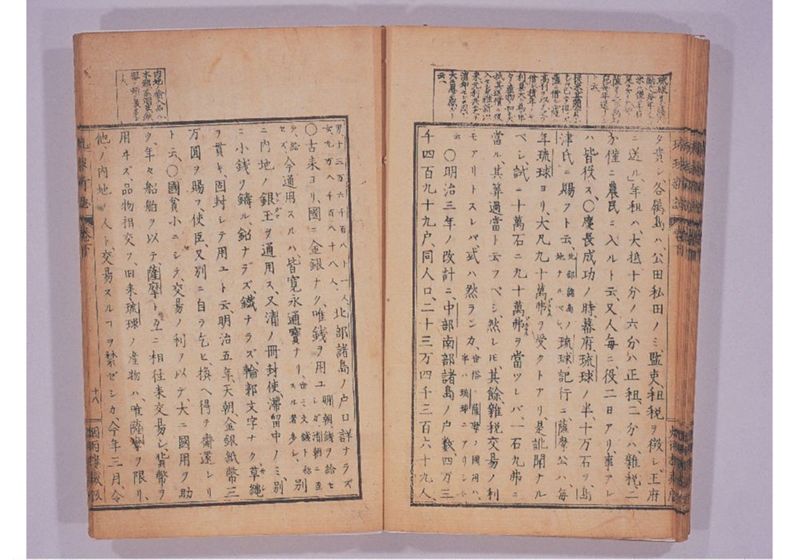
翻刻
【枠外上部】琉球ヨリ、薩州ニ納ルヽ、毎年ノ貢米ハ、僅二千石ニ足ラズシテ、却テ薩ヨリニ三万石宛、毎年送リシト云、
【枠外上部】従来、其国貧小ナレバ、已ムヲ得ズ、薩ニ借ルニ、薩ハ高利ヲ以テ、之ヲ借シ、積年ノ元利、莫大ト為リ、年々ノ産物ノ如キ、大抵其返償ニ没入セシガ、維新以来、元利共ニ、之ヲ消却セシニ因リ、大ニ恩ニ感ズト云、
タ貴シ、各属島ハ、公田私田ノミ、監吏、租税ヲ徴シ、王府
ニ送ル、」年租ハ、大抵十分ノ六分ハ正租、二分ハ、雑税、ニ
分僅ニ農民ニ入ルト云、又人毎ニ、役二日アリ、事アレ
ハ皆役ス、○慶長成功ノ時、幕府、琉球ノ半、十万石ヲ、島
津氏ニ賜フト云、《割書:北部諸島ノ|地ナルベシ、》琉球記行ニ、薩摩公ハ、毎
年琉球ヨリ、大凡九十万 弗(ドルラル)ヲ受クトアリ、是訛聞ナル
ベシ、試ニ十万石ニ九十万 弗(ドルラル)ヲ当ツレバ、一石九弗ニ
当ル、其算過当ト云フベシ、然レトモ、其余、雑税交易ノ利
モアリトスレバ、或ハ然ランカ、《割書:世俗ニ薩摩ノ国用ハ、|半ハ琉球ニアリシト》
《割書:云|》○明治三年ノ改計ニ、中部南部諸島ノ戸数、四万三
千四百九十九戸、同人口、二十三万四千三百六十九人、
《割書:男、十三万六千百八十一人、|女、九万八千百八十八人、》北部諸島ノ戸口詳ナラズ
○古来ヨリ、国ニ金銀ナク、唯銭ヲ用ユ《割書:明朝、銭ヲ給セ|シガ、清朝ニ至》
《割書:テ、給|セズ、》今通用スルハ、皆寛永通宝ナリ、《割書:世ニ文銭ト称|スル者多シ、》別
ニ内地ノ銀玉(ギンダマ)ヲ通用ス、又清ノ冊封使、滞留中ノミ、別
ニ小銭ヲ鋳ル、鉛ナラズ、鉄ナラズ、輪郭文字ナク、草縄(サシ)
ヲ貫キ、固封シテ用ユト云、明治五年、天朝、金銀紙幣三
万円ヲ賜フ、使臣、又別ニ自ラ乞ヒ、換ヘ得テ齎還レリ
ト云、○国貧小ニシテ、交易ノ利ヲ以テ、大ニ国用ヲ助
ク、年々船舶ヲ以テ、薩摩ト互ニ相往来交易シ、貨幣ヲ
用ヰズ、品物相交フ、旧来琉球ノ産物ハ、唯薩摩ヲ限リ、
他ノ内地ノ人ト、交易スルヿヲ禁ゼシカ、今年三月、令
【枠外上部】内地ノ輸入品ハ、木綿、茶、煙草、鉄器ノ類ヲ最多シトス、
現代語訳
【枠外上部】琉球から薩州に納める毎年の貢米は、僅か二千石に足らず、かえって薩摩から三万石ずつ毎年送っていたという。
【枠外上部】従来、その国が貧しく小さいため、やむを得ず薩摩に借りるのに、薩摩は高利でこれを貸し、積年の元利が莫大となり、年々の産物のようなものは、大抵その返済に没入してしまったが、維新以来、元利ともにこれを消却したため、大いに恩に感じているという。
だ高価である。各属島は、公田私田のみで、監督吏が租税を徴収し、王府に送る。年租は、大抵十分の六分は正租、二分は雑税、二分がわずかに農民に入るという。また人ごとに、役二日があり、事があれば皆役に服する。○慶長の役の成功の時、幕府は琉球の半分、十万石を島津氏に賜ったという。《北部諸島の地であろう》『琉球記行』に、薩摩公は毎年琉球より、大凡九十万ドルを受けるとあるが、これは誤聞であろう。試しに十万石に九十万ドルを当てれば、一石九ドルに当たり、その計算は過当というべきである。しかしながら、その余、雑税交易の利もあるとすれば、あるいはそうかもしれない。《世俗に薩摩の国用は、半分は琉球にあったという》○明治三年の改計に、中部南部諸島の戸数四万三千四百九十九戸、同人口二十三万四千三百六十九人、《男十三万六千百八十一人、女九万八千百八十八人》北部諸島の戸口は詳細でない。○古来より、国に金銀なく、ただ銭を用いる《明朝は銭を給したが、清朝に至って給さず》今通用するのは、皆寛永通宝である。《世に文銭と称するものが多い》別に内地の銀玉を通用させる。また清の冊封使滞留中のみ、別に小銭を鋳る。鉛でもなく、鉄でもなく、輪郭文字なく、草縄を貫き、固封して用いるという。明治五年、天朝は金銀紙幣三万円を賜い、使臣はまた別に自ら乞い、換えて得て持ち帰ったという。○国が貧しく小さく、交易の利をもって、大いに国用を助ける。年々船舶をもって、薩摩と互いに相往来交易し、貨幣を用いず、品物を相交わす。旧来琉球の産物は、ただ薩摩を限り、他の内地の人と交易することを禁じていたが、今年三月、令
【枠外上部】内地の輸入品は、木綿、茶、煙草、鉄器の類を最も多くする。
英語訳
[Marginal note] The annual tribute rice that Ryukyu paid to Satsuma was less than a mere 2,000 koku, while conversely Satsuma sent 30,000 koku each year to Ryukyu.
[Marginal note] Traditionally, because that country was poor and small, it had no choice but to borrow from Satsuma, which lent at high interest rates. The accumulated principal and interest over the years became enormous, and most of the annual produce was confiscated for repayment. However, since the Meiji Restoration, both principal and interest have been cancelled, for which they are said to be greatly grateful.
...extremely expensive. Each tributary island has only public and private fields, where supervisory officials collect taxes and send them to the royal government. Annual rent is generally six-tenths regular tax, two-tenths miscellaneous taxes, with only two-tenths barely going to farmers. Also, each person has two days of corvée labor, and when there are matters, all serve. ○ When Keichō campaigns succeeded, the bakufu is said to have granted half of Ryukyu, 100,000 koku, to the Shimazu clan. [This would be the northern islands' territory] In "Ryukyu Kikō," it states that the Lord of Satsuma receives approximately 900,000 dollars annually from Ryukyu, but this is probably false information. If we calculate 900,000 dollars for 100,000 koku, it equals nine dollars per koku, which should be called excessive calculation. However, if there are also profits from miscellaneous taxes and trade, it might perhaps be so. [It is popularly said that half of Satsuma's national expenses came from Ryukyu] ○ In the Meiji 3 recalculation, the central and southern islands had 43,499 households and a population of 234,369 people [136,181 men, 98,188 women]. The household and population figures for the northern islands are not detailed. ○ Since ancient times, the country has had no gold or silver, using only coins [The Ming dynasty provided coins, but the Qing dynasty ceased to provide them]. What is currently in circulation is all Kan'ei Tsūhō. [Many are commonly called "mon coins"] Separately, domestic silver coins are also in circulation. Also, only during the stay of Qing investiture envoys, special small coins are minted. Neither lead nor iron, without rim inscriptions, strung with straw rope and sealed for use. In Meiji 5, the Imperial Court granted 30,000 yen in gold, silver, and paper currency, and envoys also separately requested and obtained exchanges to bring back. ○ The country being poor and small, greatly assists national expenses through trading profits. Each year, ships travel back and forth trading with Satsuma, not using currency but exchanging goods. Traditionally, Ryukyu's products were limited only to Satsuma, prohibiting trade with other domestic people, but in March this year, an order...
[Marginal note] The most common imports from the mainland are cotton, tea, tobacco, and iron goods.