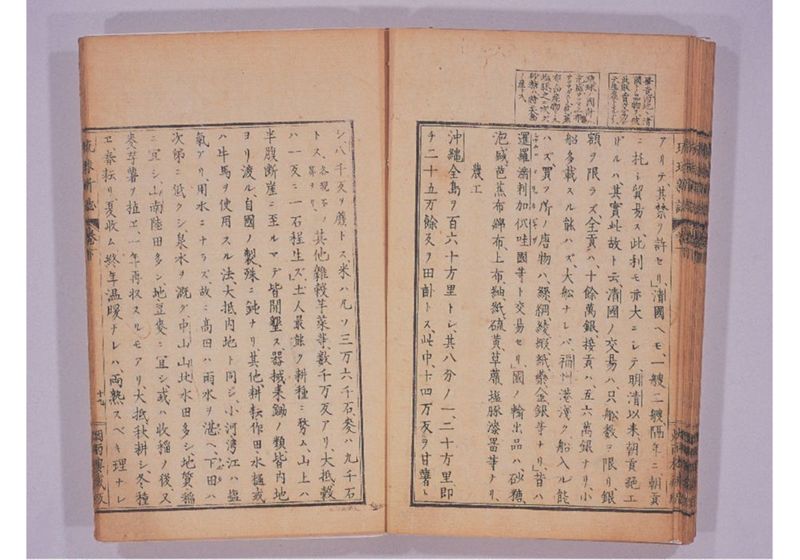
翻刻
アリテ、其禁ヲ許セリ、」清国ヘモ、一艘二艘、隔年ニ、朝貢
ニ托シ貿易ス、此利モ亦大ニシテ、明清以来、朝貢絶エ
ザルハ、其実此故ト云、清国ノ交易ハ、只船数ヲ限リ、銀
額ヲ限ラズ、全貢ハ、十余万銀、接貢ハ、五六万銀ナリ、小
船多載スル能ハズ、大船ナレバ、福州港浅ク、船入ル能
ハズ、買フ所ノ唐物ハ、糸、綢、綾、緞、紙、薬、金、銀等ナリ、」昔ハ
暹羅(シヤムロ)満剌加(マラツカ)爪哇(ジヤヷ)国等ト交易セリ、」国ノ輸出品ハ、砂糖、
泡盛、芭蕉布綿布、上布、紬、紙、硫黄、草蓆、塩豚漆器等ナリ、
【枠外上部】畢竟、内地ト、清国トノ品物ヲ、彼此販売交易シテ、生産トセルナリ、
【枠外上部】琉球ノ国計ハ、泡盛、サツマ上布、サツマガスリ、芭蕉布ノ四産物トス、塩豚、之ニ次グ、砂糖ハ、特ニ大島ノ産トス、
農工
沖縄全島ヲ百六十方里トシ、其八分ノ一、二十方里、即
チ二十五万余反ヲ田畝トス、此中、十四万反ヲ甘薯ト
シ、八千反ヲ蔗トス、米ハ凡ソ三万六千石、麦ハ九千石
トス、《割書:各現石ノ|算ナリ、》其他雑穀芋菜等、数千万反アリ、大抵、穀
ハ一反ニ一石程生ズ、」土人最能ク耕種ニ務ム、山上ハ
半腹断崖ニ至ルマデ皆開墾ス、器械耒鋤ノ類、皆内地
ヨリ渡ル、自国ノ製、殊ニ鈍ナリ、其他、耕耘、作田、水樋或
ハ牛馬ヲ使用スル法、大抵内地ト同ジ、小河湾江ハ塩
気アリ、用水ニナラズ、故ニ高田ハ雨水ヲ湛(タヾ)ヘ、下田(クボタ)ハ
次第ニ低クシ、泉水ヲ漑グ、中山山北水田多シ、地質、稲
ニ宜シ、山南陸田多シ、地、豆麦ニ宜シ、或ハ収稲ノ後、又
麦芋薯ヲ植ヱ、一年再収スルモアリ、大抵、秋耕シ、冬種
ヱ、春耘リ、夏収ム、終年温暖ナレハ、両熟スベキ理ナレ
現代語訳
があって、その禁を許した。清国へも、一艘二艘、隔年に、朝貢に託して貿易する。この利益もまた大きく、明清以来、朝貢が絶えないのは、その実この理由によるという。清国との交易は、ただ船数を限り、銀額を限らず、全貢は十余万銀、接貢は五六万銀である。小船では多く積載することができず、大船であれば、福州港が浅く、船が入ることができない。買う所の唐物は、糸、綢、綾、緞、紙、薬、金、銀等である。昔は暹羅(シャム)、満刺加(マラッカ)、爪哇(ジャワ)国等と交易した。国の輸出品は、砂糖、泡盛、芭蕉布、綿布、上布、紬、紙、硫黄、草蓆、塩豚、漆器等である。
【枠外上部】結局、内地と清国との品物を、相互に販売交易して、生産としているのである。
【枠外上部】琉球の国家財政は、泡盛、薩摩上布、薩摩がすり、芭蕉布の四産物とする。塩豚がこれに次ぐ。砂糖は、特に大島の産とする。
農工
沖縄全島を百六十方里とし、その八分の一、二十方里、すなわち二十五万余反を田畑とする。この中、十四万反を甘薯とし、八千反を蔗(サトウキビ)とする。米は凡そ三万六千石、麦は九千石とする。《各現石の算である》その他雑穀芋菜等、数千万反ある。大抵、穀物は一反に一石程度生じる。土人は最もよく耕種に務める。山上は半腹断崖に至るまで皆開墾する。器械、耒鋤の類は、皆内地より渡る。自国の製は、殊に劣る。その他、耕耘、作田、水樋あるいは牛馬を使用する法は、大抵内地と同じである。小河湾江は塩気があり、用水にならない。故に高田は雨水を湛え、下田は次第に低くし、泉水を漑ぐ。中山山北は水田が多く、地質が稲に適している。山南は陸田が多く、地が豆麦に適している。あるいは稲を収穫した後、また麦芋薯を植え、一年再収することもある。大抵、秋に耕し、冬に種え、春に耘り、夏に収む。終年温暖であれば、二毛作すべき理である。
英語訳
There was [an order] that permitted this prohibition. To Qing China as well, one or two ships engage in trade under the pretext of tribute missions every other year. This profit is also great, and it is said that the real reason tribute has not ceased since the Ming and Qing dynasties is precisely this. Trade with Qing China only limits the number of ships but not the silver amount; full tribute is over 100,000 taels of silver, and partial tribute is 50,000-60,000 taels of silver. Small ships cannot carry much cargo, and if large ships are used, Fuzhou port is shallow and ships cannot enter. The Chinese goods purchased include silk thread, silk fabric, twilled silk, satin, paper, medicine, gold, silver, etc. In the past, they traded with Siam, Malacca, Java, and other countries. The country's exports are sugar, awamori (distilled liquor), banana fiber cloth, cotton cloth, fine cloth, pongee, paper, sulfur, grass mats, salted pork, lacquerware, etc.
[Marginal note] Ultimately, they make their livelihood by buying and selling goods between the mainland and Qing China.
[Marginal note] Ryukyu's national finances depend on four products: awamori, Satsuma fine cloth, Satsuma kasuri (ikat), and banana fiber cloth. Salted pork comes next. Sugar is particularly a product of Oshima.
Agriculture and Crafts
Taking all of Okinawa island as 160 square ri, one-eighth of this, 20 square ri, or over 250,000 tan, constitutes farmland. Of this, 140,000 tan are for sweet potatoes and 8,000 tan for sugarcane. Rice produces about 36,000 koku, and wheat 9,000 koku. [These are calculations in actual koku] In addition, there are several million tan of other miscellaneous grains, potatoes, vegetables, etc. Generally, grains produce about one koku per tan. The natives are most diligent in cultivation. They clear land on mountains up to halfway up cliff faces. Agricultural implements like plows and hoes all come from the mainland; their domestic products are particularly inferior. Other methods of cultivation, rice farming, irrigation, or using cattle and horses are generally the same as on the mainland. Small rivers and bay inlets contain salt and cannot be used for irrigation. Therefore, highland fields collect rainwater, while lowland fields are made progressively lower to irrigate with spring water. In Chuzan's northern mountains, there are many rice paddies, and the soil quality suits rice. In the south, there are many dry fields, and the land suits beans and wheat. Sometimes after harvesting rice, they plant wheat, potatoes, and sweet potatoes again, harvesting twice a year. Generally, they plow in autumn, plant in winter, weed in spring, and harvest in summer. Since it is warm year-round, it makes sense that double cropping is possible.