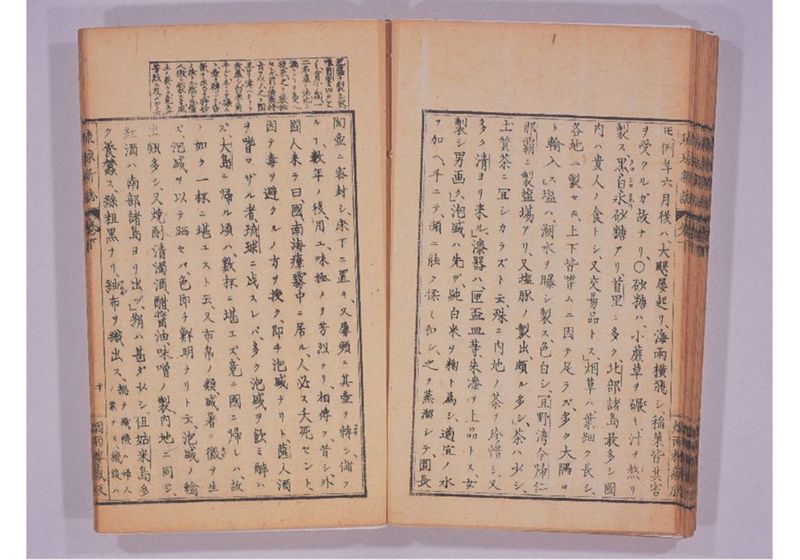
翻刻
トモ、例年六月後ハ、大颶屡起リ、海雨横飛シ、稲菓皆其害
ヲ受クルガ故ナリ、○砂糖ハ、小蔗草ヲ碾(ヒ)キ、汁ヲ熬(イ)リ
製ス、黒(クロ)白(シロ)氷(コホリ)砂糖アリ、首里ニ多ク、北部諸島最多シ国
内ハ貴人ノ食トシ、又交易品トス、」煙草ハ、葉細ク長シ、
各地ニ製セトモ、上下皆嗜ムニ因テ足ラズ、多ク大隅ヨ
リ輸入ス」塩ハ、潮水ヲ曝シ製ス、色白シ、宜野湾今帰仁
那覇ニ製塩場アリ、又塩豚ノ製出、頗ル多シ、」茶ハ少シ、
土質茶ニ宜シカラズト云、殊ニ内地ノ茶ヲ珍惜シ、又
多ク清ヨリ来ル、」漆器ハ、匣盃皿等、朱漆ヲ上品トス、女
製シ男画ク、」泡盛ハ先ヅ、純白米ヲ粷ト為シ、適宜ノ水
ヲ加ヘ、手ニテ、頻ニ能ク揉ミ和シ、之ヲ蒸溜シテ、円長
陶壺ニ密封シ、床下ニ置キ、又屢頻ニ其壺ヲ転(コロガ)シ、儲フ
ルヿ、数年ノ後、用ユ、味極メテ芳烈ナリ、相伝フ、昔シ、外
国人来テ曰、国、南海瘴霧中ニ居ル、人必ス夭死セント、
因テ毒ヲ避クルノ方ヲ授ク、即チ泡盛ナリト、薩人酒
ヲ嗜マザル者、琉球ニ戌スレバ、多ク泡盛ヲ飲ミ酔ハ
ズ、大島ニ帰ル頃ハ、数杯ニ堪エズ、竟ニ国ニ帰レハ、故
ノ如ク一杯ニ堪ユスト云、又布帛ノ類、盛暑ニ黴(カビ)ヲ生
ズ、泡盛ヲ以テ晒セバ、色即チ鮮明ナリト云、泡盛ノ輸
出頗多シ、又焼酎清濁酒、醋、醤油、味噌ノ製、内地ニ同ジ、
紅酒ハ南部諸島ヨリ出ヅ、」絹ハ甚ダ少シ、但姑米島多
ク養蚕ス、糸粗黒ナリ、紬(ツムギ)布ヲ織出ス、《割書:総テ織機ハ婦人|ノ業ナリ、機梭ハ》
【枠外上部】泡盛ヲ製スル家、唯首里ニ四戸アルノミ、貧小ノ国、一二名産ノ法、他ニ漏レンヿヲ憂ヘ、従来、之ヲ厳秘セシガ、前薩侯、特旨ヲ以テ、之ノ国王ヨリ伝ヘタリト云、蓋シ、白米ヲ用ヰルト、手ニテ揉ムト、壺ヲ転ンテ、香気ヲ出ストヲ、特妙ノ法トス、然レトモ、薩人倣ヒ製スルモ、風土ノ異ルカ、竟ニ其芳烈ニ及バズト云、
現代語訳
しかし、例年六月後は、大きな台風がしばしば起こり、海水を含んだ雨が横に飛び、稲や果物が皆その害を受けるためである。○砂糖は、サトウキビを搾り、汁を煮詰めて製造する。黒砂糖、白砂糖、氷砂糖がある。首里に多く、北部諸島が最も多い。国内では貴人の食べ物とし、また交易品とする。煙草は、葉が細く長い。各地で製造するが、身分の上下を問わず皆が嗜むため足りず、多くは大隅より輸入する。塩は、海水を蒸発させて製造する。色は白く、宜野湾、今帰仁、那覇に製塩場がある。また塩豚の製造も、かなり多い。茶は少なく、土質が茶に適さないという。特に内地の茶を珍重し、また多くは清国より来る。漆器は、箱、盃、皿等で、朱漆を上品とする。女性が製作し男性が絵付けをする。泡盛は、まず純白米を麹とし、適宜の水を加え、手で頻繁によく揉み混ぜ、これを蒸留して、円形で長い陶製の壺に密封し、床下に置き、また度々その壺を転がし、貯蔵すること数年の後、用いる。味は極めて芳醇である。言い伝えによると、昔、外国人が来て言うには、この国は南海の瘴気ある霧の中にあるため、人は必ず早死にするだろうと。そこで毒を避ける方法を授けた、それが泡盛であるという。薩摩の人で酒を嗜まない者でも、琉球に駐在すれば、多く泡盛を飲んでも酔わない。大島に帰る頃には、数杯に堪えられず、ついに国に帰れば、元のように一杯で酔うという。また布帛の類は、盛暑に黴を生じるが、泡盛で晒せば、色がすぐに鮮明になるという。泡盛の輸出はかなり多い。また焼酎、清酒、濁酒、酢、醤油、味噌の製造は、内地と同じである。紅酒は南部諸島より出る。絹は甚だ少ないが、ただ久米島では多く養蚕する。糸は粗く黒い。紬布を織り出す。《総て織機は婦人の業である、機織りの道具は》
【枠外上部】泡盛を製造する家は、ただ首里に四戸あるのみである。貧小の国で、一、二の名産の製法が他に漏れることを憂い、従来、これを厳重に秘匿していたが、前薩摩藩主が、特別の意向をもって、これを国王より伝えさせたという。思うに、白米を用いることと、手で揉むことと、壺を転がして香気を出すことを、特別に巧妙な方法とする。しかしながら、薩摩の人が真似て製造しても、風土が異なるためか、ついにその芳醇さには及ばないという。
英語訳
However, every year after the sixth month, great typhoons frequently arise, rain mixed with seawater flies horizontally, and rice and fruits all suffer damage from this. ○ Sugar is made by crushing sugarcane and boiling down the juice. There are brown sugar, white sugar, and rock sugar. There is much in Shuri, and the northern islands have the most. Within the country, it serves as food for nobles and also as a trade item. Tobacco has thin, long leaves. Though produced in various places, it is insufficient because people of all social ranks enjoy it, so much is imported from Osumi. Salt is made by evaporating seawater. The color is white, and there are salt-making facilities in Ginowan, Nakijin, and Naha. Also, the production of salted pork is quite substantial. Tea is scarce, as the soil quality is said to be unsuitable for tea. They particularly prize tea from the mainland, and much also comes from Qing China. For lacquerware such as boxes, cups, and dishes, red lacquer is considered superior. Women make them and men paint them. Awamori is made by first making pure white rice into koji, adding appropriate water, frequently kneading and mixing well by hand, then distilling this and sealing it in round, elongated ceramic jars, placing them under the floor, and frequently rolling these jars. After storing for several years, it is used. The taste is extremely fragrant and strong. According to tradition, long ago a foreigner came and said that since this country lies amid the miasmic mists of the southern seas, people would surely die young. Therefore, he taught a method to avoid poison - this was awamori. Even Satsuma people who do not usually drink alcohol, when stationed in Ryukyu, can drink much awamori without getting drunk. By the time they return to Oshima, they cannot handle several cups, and when they finally return to their home country, they return to being able to handle only one cup as before. Also, textiles develop mold in the intense heat, but if bleached with awamori, the colors immediately become bright. The export of awamori is quite substantial. The production of shochu, clear sake, cloudy sake, vinegar, soy sauce, and miso is the same as on the mainland. Red wine comes from the southern islands. Silk is very scarce, but only Kume Island practices much sericulture. The thread is coarse and black. They weave pongee cloth from it. 《Generally, weaving is women's work, and the loom implements are》
[Marginal note] There are only four households in Shuri that manufacture awamori. Being a poor, small country, they worried that the methods for their one or two specialty products would leak to others, so they had strictly kept these secret from old times. However, it is said that the former Satsuma lord, with special intent, had this transmitted from the king. Presumably, using white rice, kneading by hand, and rolling the jars to bring out the aroma are considered particularly skillful methods. Nevertheless, even when Satsuma people imitate and manufacture it, perhaps because the climate and soil are different, it ultimately does not match that fragrant intensity.