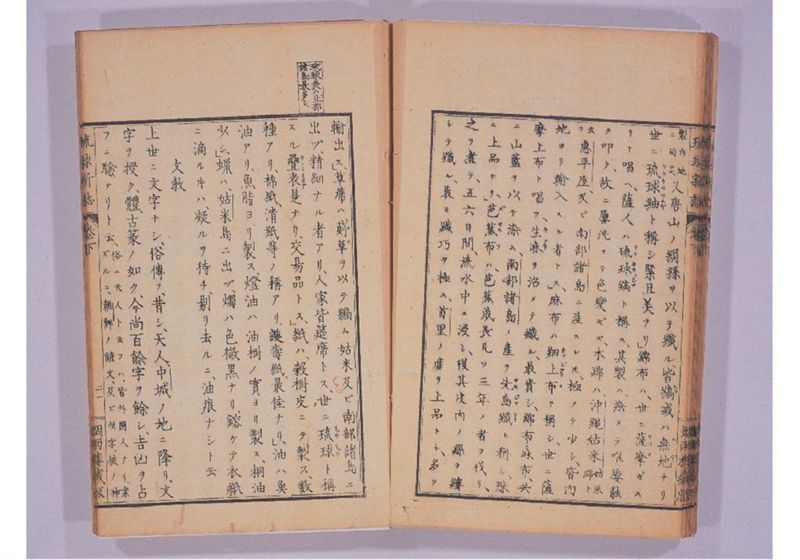
翻刻
《割書:製内地|ニ同ジ、》又唐山ノ絹糸ヲ以テ織ル、皆 縞(シマ)或ハ無地(ムヂ)ナリ
世ニ琉球紬(リウキウツムギ)ト称シ緊且美ナリ」綿布ハ、世ニ薩摩(サツマ)ガス
リト唱ヘ、薩人ハ琉球縞(リウキウジマ)ト称ス、其製ハ、染メテ唯屡能
ク叩ク、故ニ屡洗フテ色変ゼズ、木綿ハ、沖縄姑米《割書:姑米|綿ト》
《割書:云|フ》恵平屋、及ビ南部諸島ニ産ズレトモ、極メテ少シ、皆内
地ヨリ輸入スル者トス、」麻布ハ細上布(ホソジヨウフ)ト称シ、世ニ薩
摩上布ト唱フ、生麻(キアサ)ヲ治メテ織ル、最貴シ、綿布、麻布、共
ニ山藍ヲ以テ染ム、南部諸島ノ産ヲ先島織(サキジマオリ)ト称シ、殊
ニ上品ナリ、」芭蕉布(バセウフ)ハ、芭蕉成長凡ソ三年ノ者ヲ伐リ、
之ヲ煮テ、五六日間、流水中ニ浸シ、後其皮内ノ糸ヲ縷
シテ織ル、最モ繊巧テ極ム、首里ノ産ヲ上品トシ、多ク
輸出ス、」草蓆ハ、□(ク)草(ヾ)ヲ以テ編ム姑米及ビ南部諸島ニ
出ヅ、精細ナル者アリ、人家皆筵席トス、世ニ琉球(リユウキユウ)ト称
スル畳表(タヽミオモテ)是ナリ、交易品トス、」紙ハ、穀樹皮ニテ製ス、数
種アリ、棉紙、清紙等ノ称アリ、護寿紙、最佳ナリ、」油ハ魚
油アリ、魚脂ヨリ製ス、灯油ハ油樹ノ実ヨリ製ス、桐油
少シ、」蝋ハ、姑米島ニ出ヅ、燭ハ色微黒ナリ、鎔ケテ衣紙
ニ滴ルトキハ、凝ルヲ待チ、剔リ去ルニ、油痕ナシト云
【枠外上部】琉球表ハ、北部諸島最多シ、
文教
上世ニ文字ナシ、俗伝フ、昔シ、天人、中城ノ地ニ降リ、文
字ヲ授ク、体、古篆ノ如ク、今尚百余字ヲ余シ、吉凶ヲ占
フニ験アリト云、《割書:俗ニ天人云フハ、皆外国人ナリ、案|ズルニ、朝鮮ノ諺文、及ビ此字、彼ノ神》
現代語訳
《製造は内地と同じである。》また唐山(中国)の絹糸を使って織る。皆縞模様または無地である。世に琉球紬と称し、丈夫で美しい。綿布は、世に薩摩絣と唱え、薩摩の人は琉球縞と称す。その製法は、染めてただひたすらよく叩く。故に何度洗っても色が変わらない。木綿は、沖縄、久米《久米綿と言う》恵平屋、および南部諸島に産するが、極めて少なく、皆内地より輸入するものとする。麻布は細上布と称し、世に薩摩上布と唱う。生麻を加工して織る。最も貴重である。綿布、麻布、共に山藍で染める。南部諸島の産を先島織と称し、特に上品である。芭蕉布は、芭蕉がおよそ三年成長したものを伐り、これを煮て、五、六日間、流水中に浸し、後にその皮内の糸を紡いで織る。最も繊細で精巧である。首里の産を上品とし、多く輸出する。草蓆は、〔ク〕草を使って編む。久米および南部諸島に出る。精細なものがある。人家は皆筵席とする。世に琉球と称する畳表がこれである。交易品とする。紙は、穀樹皮で製造する。数種あり、棉紙、清紙等の名称がある。護寿紙が最も良い。油は魚油があり、魚脂より製造する。灯油は油樹の実より製造する。桐油は少ない。蝋は、久米島に出る。燭は色が微かに黒い。溶かして衣紙に滴らすときは、凝るのを待ち、削り去ると、油痕がないという。
【枠外上部】琉球表は、北部諸島が最も多い。
文教
上世には文字がなかった。俗伝によると、昔、天人が中城の地に降り、文字を授けた。字体は古篆のようで、今なお百余字を残し、吉凶を占うのに効験があるという。《俗に天人と言うのは、皆外国人である。考えるに、朝鮮の諺文、およびこの字、かの神》
英語訳
《The manufacturing is the same as on the mainland.}} They also weave with silk thread from Tang-shan (China). All are striped or plain. Known in the world as Ryukyu pongee, it is strong and beautiful. Cotton cloth is called Satsuma kasuri in the world, while Satsuma people call it Ryukyu-jima. Its manufacturing method involves dyeing and then persistently beating it well. Therefore, the color does not change no matter how many times it is washed. Cotton is produced in Okinawa, Kume {{called Kume cotton}}, Heshikiya, and the southern islands, but it is extremely scarce, so it is all imported from the mainland. Hemp cloth is called fine jōfu (fine cloth), known in the world as Satsuma jōfu. Raw hemp is processed and woven. It is most precious. Both cotton cloth and hemp cloth are dyed with mountain indigo. Products from the southern islands are called Sakishima-ori and are particularly fine. Bashōfu (banana fiber cloth) is made by cutting banana plants that have grown for about three years, boiling them, soaking them in running water for five to six days, then spinning the fibers from within the bark to weave. It is most delicate and skillful. Products from Shuri are considered superior and are exported in large quantities. Grass mats are woven with [] grass. They are produced in Kume and the southern islands. Some are very fine. All households use them as floor mats. The tatami covers called Ryukyu in the world are these. They serve as trade goods. Paper is made from paper mulberry bark. There are several types, with names like cotton paper and fine paper. Goju paper is the best. For oil, there is fish oil made from fish fat. Lamp oil is made from the seeds of oil trees. Tung oil is scarce. Wax is produced on Kume Island. Candles are slightly black in color. When melted and dropped onto clothing or paper, after waiting for it to solidify and scraping it away, it is said there are no oil stains.
[Marginal note] Ryukyu matting covers are most abundant in the northern islands.
Literature and Education
In ancient times there were no written characters. According to popular tradition, long ago heavenly beings descended to the land of Nakagusuku and bestowed written characters. The script resembles ancient seal script, and over one hundred characters still remain today, said to be effective for divining good and bad fortune. {{What the common people call heavenly beings are all foreigners. Considering Korean vernacular script and these characters, those deities}}