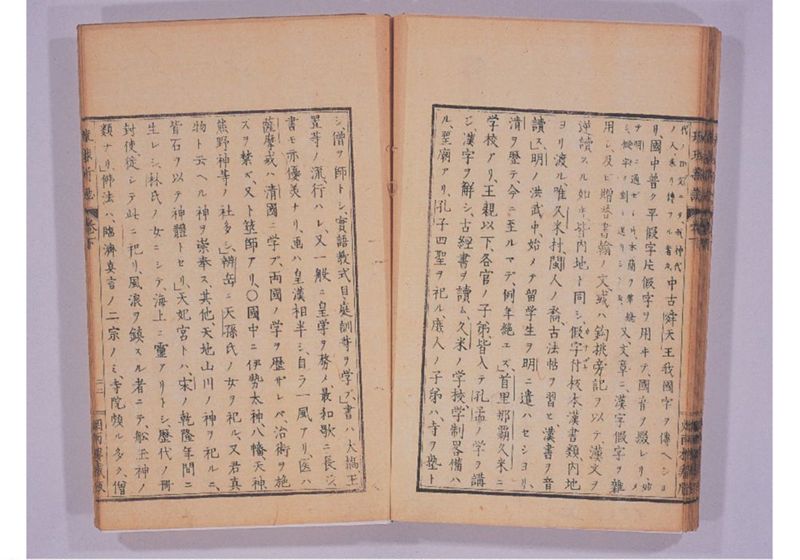
翻刻
《割書:代ノ日文(ヒブミ)ニテ、我神代|ノ人、来リ伝フル者カ、》中古舜天王我国字ヲ伝ヘシヨ
リ、国中普ク平仮字片仮字ヲ用ヰテ、国音ヲ綴レリ、《割書:始|メ》
《割書:テ明ニ通ゼシトキ、木簡ヲ革縫|シ、仮字(カナ)ヲ刻シ送リシト云、》又、文章ニ、漢字仮字ヲ雑
用シ、及ビ贈答書翰ノ文、或ハ鉤挑旁記ヲ以テ、漢文ヲ
逆読スル如キ、皆内地ト同シ、仮字付(カナヅキ)板本漢書類、内地
ヨリ渡ル、唯久米村、閩人ノ裔、古法帖ヲ習ヒ、漢書ヲ音
読ス、」明ノ洪武中、始メテ留学生ヲ明ニ遣ハセシヨリ、
清ヲ歴テ、今ニ至ルマデ、例年絶エズ、」首里那覇久米ニ
学校アリ、王親以下、各官ノ子弟、皆入テ孔孟ノ学ヲ講
ジ、漢字ヲ鮮シ、古経書ヲ読ム、久米ノ学校、学制略備ハ
ル、聖廟アリ、孔子四聖ヲ祀ル、庶人ノ子弟ハ、寺ヲ塾ト
シ、僧ヲ師トシ、実語教式目、庭訓等ヲ学ブ、」書ハ大橋、玉
置等ノ流、行ハレ、又一般ニ皇学ヲ務メ、最和歌ニ長ジ、
書モ亦優美ナリ、画ハ皇漢相半シ、自ラ一風アリ、医ハ
薩摩或ハ清国ニ学ブ、両国ノ学ヲ歴ザレバ、治術ヲ施
スヲ禁ズ、又卜筮師アリ、○国中ニ伊勢太神、八幡、天神、
熊野神等ノ社多シ、」弁岳ニ天孫氏ノ女ヲ祀ル、又君真
物ト云ヘル神ヲ崇奉ス、其他、天地山川ノ神ヲ祀ルニ、
皆石ヲ以テ神体トセリ、」天妃宮トハ、宋ノ乾隆年間ニ
生レシ、林氏ノ女ニシテ、海上ニ霊アリトシ、歴代ノ冊
封使、従シテ此ニ祀リ、風浪ヲ鎮スル者ニテ、船玉神ノ
類ナリ、」仏法ハ、臨済真言ノ二宗ノミ、寺院頗ル多ク、僧
現代語訳
《神代の日文(ひぶみ)で、我が神代の人が来て伝えたものであろうか。》中古の舜天王が我が国字を伝えてから、国中広く平仮名片仮名を用いて、国音を綴るようになった。《始めて明に通じたとき、木簡を革で縫い、仮名を刻して送ったという。》また、文章に漢字仮名を混用し、および贈答書翰の文、或いは返り点傍記を以て漢文を逆読するようなことは、皆内地と同じである。仮名付きの板本漢書類が内地より渡る。ただ久米村の閩人の子孫は、古法帖を習い、漢書を音読する。明の洪武年間に、初めて留学生を明に派遣してから、清朝を経て今に至るまで、例年絶えることがない。首里・那覇・久米に学校があり、王親以下、各官の子弟は皆入って孔孟の学を講じ、漢字を学び、古経書を読む。久米の学校は、学制がほぼ整備され、聖廟があり、孔子四聖を祀る。庶人の子弟は、寺を塾とし、僧を師として、実語教・式目・庭訓等を学ぶ。書は大橋、玉置等の流派が行われ、また一般に皇学(国学)を務め、最も和歌に長じ、書もまた優美である。画は皇漢相半ばし、自ずから一風がある。医学は薩摩或いは清国に学ぶ。両国の学を修めなければ、治術を施すことを禁じる。また卜筮師がいる。○国中に伊勢太神、八幡、天神、熊野神等の社が多い。弁岳に天孫氏の女を祀る。また君真物という神を崇拝している。その他、天地山川の神を祀るのに、皆石を以て神体としている。天妃宮とは、宋の乾隆年間に生まれた林氏の女で、海上に霊験があるとして、歴代の冊封使が従ってここに祀り、風浪を鎮める者で、船玉神の類である。仏法は、臨済・真言の二宗のみで、寺院は頗る多く、僧
英語訳
{{These are the Hibumi (divine writings) of the age of gods, perhaps transmitted by people from our age of gods who came here.}} From the time when the medieval King Shunten transmitted our national script, the entire country widely used hiragana and katakana to transcribe the national pronunciation. {{When they first established communication with Ming, they sewed wooden tablets with leather and carved kana characters to send them.}} Also, the mixed use of Chinese characters and kana in writing, as well as correspondence and the practice of reading Chinese texts in reverse order using return marks and marginal notes, are all the same as on the mainland. Block-printed Chinese books with kana annotations are brought from the mainland. Only the descendants of Fujian people in Kume village study ancient calligraphy models and read Chinese books with Chinese pronunciation. From when they first sent students to study in Ming during the Hongwu era, through the Qing dynasty to the present day, this has continued without interruption every year. There are schools in Shuri, Naha, and Kume, where royal relatives and children of various officials all enter to study the teachings of Confucius and Mencius, learn Chinese characters, and read ancient classics. The school in Kume has a nearly complete educational system, with a Confucian shrine that enshrines Confucius and the Four Sages. Children of commoners use temples as schools and monks as teachers, studying the Jitsugokyo (True Word Teaching), regulations, and family instructions. In calligraphy, the schools of Ohashi, Tamaki and others are practiced, and they generally pursue imperial learning (national studies), excelling particularly in waka poetry, with calligraphy that is also elegant and beautiful. In painting, imperial and Chinese styles are about equal, naturally forming their own distinctive style. For medicine, they study in Satsuma or Qing China. Without studying in both countries, they are forbidden to practice medical treatment. There are also diviners. ○Throughout the country there are many shrines to Ise Daijin, Hachiman, Tenjin, Kumano deities, etc. On Ben-dake they enshrine a daughter of the Tenson clan. They also worship and revere a deity called Kimamono. For other deities of heaven and earth, mountains and rivers, they all use stones as sacred objects. Tenpi-gū (Mazu Temple) enshrines a daughter of the Lin family who was born during the Qianlong era of Song, believed to have spiritual power over the seas. Successive investiture envoys have accordingly enshrined her here as one who calms wind and waves, similar to ship guardian deities. Buddhism consists only of the Rinzai and Shingon sects, with quite many temples and monks