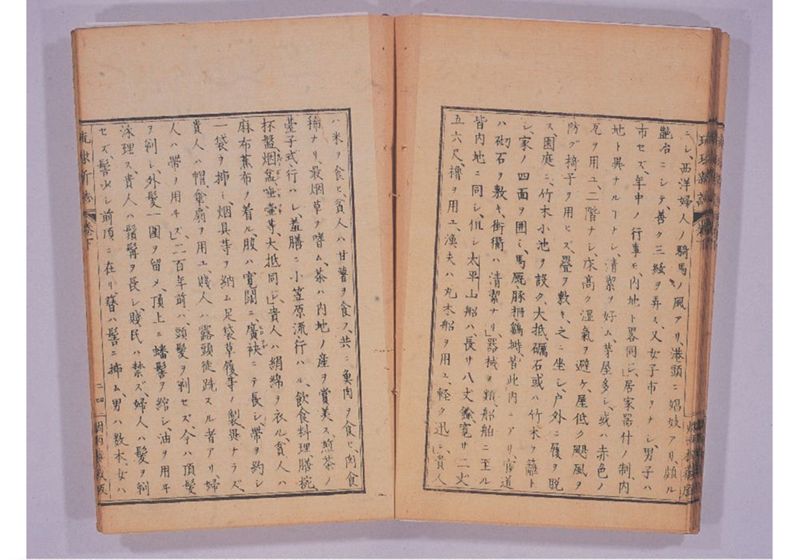
翻刻
ニシ、西洋婦人ノ騎馬ノ風アリ、港頭ニ娼妓アリ、頗ル
艶冶ニシテ、善ク三絃ヲ弄ス、又女子市ヲナシ、男子ハ
市セズ、年中ノ行事モ、内地ト略同ジ、」居家器什ノ制、内
地ト異ナルヿナシ、清潔ヲ好ム、茅屋多シ、或ハ赤色ノ
瓦ヲ用ユ、二階ナシ、床高ク湿気ヲ避ケ、屋低ク颶風ヲ
防グ椅子ヲ用ヒズ、畳ヲ敷キ、之ニ坐シ、戸外ニ履ヲ脱
ス、園庭ニ、竹木小池ヲ設ク、大抵、礪石或ハ竹木ヲ籬ト
シ、家ノ四面ヲ囲ミ、馬厩、豚柵、鶏塒、皆此内ニアリ、官道
ハ砌石ヲ敷キ、街衢ハ清潔ナリ、」器械ノ類、船舶ニ至ル
皆内地ニ同シ、但シ太平山船ハ、長サ八丈余、寛サ二丈
五六尺、櫓ヲ用ユ、漁夫ハ丸木船ヲ用ユ、軽ク迅シ、」貴人
ハ米ヲ食ヒ、貧人ハ甘薯ヲ食フ、共ニ魚肉ヲ食ヒ、肉食
稀ナリ、最煙草ヲ嗜ム、茶ハ内地ノ産ヲ賞美ス、煎茶ノ
台子式、行ハレ、羞膳ニ小笠原流、行ハル、飲食料理、膳椀、
杯盤、煙盆(タバコボン)、唾壺(ハヒフキ)等、大抵同ジ、」貴人ハ絹綿ヲ衣ル、貧人ハ
麻布蕉布ヲ着ル、服ハ寛闊ニ、広袂(ヒロソデ)ニテ長シ、帯ヲ約シ
一袋ヲ挿ミ、煙具等ヲ納ム足袋草履等ノ製、異ナラズ、
貴人ハ帽、傘、扇ヲ用ユ、賤人ハ露頭徒跣スル者アリ、婦
人ハ帯ヲ用ヰズ、」二百年前ハ、頭髪ヲ剃セズ、今ハ頂髪
ヲ剃シ、外髪一囲ヲ留メ、頂上ニ蟠髻ヲ綰シ、油ヲ用ヰ
沐理ス、貴人ハ鬚髯ヲ長シ、賤民ハ禁ズ、婦人ハ髪ヲ剃
セズ、髻少シ前頂ニ在リ、簪ハ髻ニ挿ム、男ハ数本、女ハ
現代語訳
にして、西洋婦人の騎馬の風がある。港頭に娼妓がおり、頗る艶やかで美しく、よく三線を奏でる。また女子が市を成し、男子は市をしない。年中の行事も、内地とほぼ同じである。住居や家具の制度は、内地と異なることはない。清潔を好む。茅屋が多く、或いは赤色の瓦を用いる。二階はなく、床を高くして湿気を避け、屋根を低くして颶風(台風)を防ぐ。椅子を用いず、畳を敷いてそこに座り、戸外で履を脱ぐ。庭園には、竹木や小池を設ける。大抵、礪石或いは竹木を垣根として家の四面を囲み、馬小屋、豚小屋、鶏小屋は皆この内にある。官道は敷石を敷き、街路は清潔である。器械の類や船舶に至るまで皆内地と同じである。ただし太平山船は、長さ八丈余り、幅二丈五、六尺で、櫓を用いる。漁夫は丸木船を用い、軽くて速い。貴人は米を食べ、貧人は甘薯を食べる。共に魚肉を食べるが、肉食は稀である。最も煙草を嗜む。茶は内地の産を賞美する。煎茶の台子式が行われ、食事には小笠原流が行われる。飲食料理、膳椀、杯盤、煙盆、唾壺等は、大抵同じである。貴人は絹綿を着、貧人は麻布や芭蕉布を着る。服は寛闊で、広袖にて長く、帯を締めて一袋を挿み、煙具等を納める。足袋や草履等の製法は異ならず、貴人は帽子、傘、扇を用いる。賤人は頭を露出し裸足で歩く者がいる。婦人は帯を用いない。二百年前は、頭髪を剃らなかったが、今は頂髪を剃し、外髪一囲を留めて、頂上に蟠髻を結い、油を用いて髪を整える。貴人は鬚髯を長くし、賤民は禁じられる。婦人は髪を剃らず、髻を少し前頂に結う。簪は髻に挿す。男は数本、女は
英語訳
and they have the custom of women riding horses like Western women. There are courtesans at the harbor who are quite elegant and beautiful, and skillfully play the sanshin (three-stringed instrument). Also, women conduct markets, while men do not engage in commerce. Annual events are also roughly the same as on the mainland. The system of housing and household furniture is no different from the mainland. They favor cleanliness. There are many thatched houses, or they use red tiles. There are no second floors; floors are raised high to avoid moisture, and roofs are kept low to protect against hurricanes. They do not use chairs, but spread tatami mats and sit on them, removing footwear outside the door. In gardens, they set up bamboo, trees, and small ponds. Generally, they use grinding stones or bamboo and wood as fences to surround the four sides of houses, with stables, pig pens, and chicken coops all within this enclosure. Official roads are paved with stones, and streets are clean. All types of implements and ships are the same as on the mainland. However, Taiheizan ships are over eight jō long and two jō five to six shaku wide, using sculling oars. Fishermen use dugout canoes, which are light and fast. Noble people eat rice, while poor people eat sweet potatoes. Both eat fish and meat, but meat consumption is rare. They are most fond of tobacco. For tea, they prize products from the mainland. The daisu style of tea preparation is practiced, and the Ogasawara school is followed for formal dining. Food and cooking, serving bowls, cups and plates, tobacco trays, spittoons, etc. are mostly the same. Noble people wear silk and cotton, while poor people wear hemp cloth and banana fiber cloth. Clothing is loose-fitting, with wide sleeves and long length, with a sash tied and a pouch inserted to hold tobacco implements and such. The manufacture of tabi socks and sandals is no different. Noble people use hats, umbrellas, and fans. Some common people go bareheaded and barefoot. Women do not use sashes. Two hundred years ago, they did not shave their hair, but now they shave the crown hair, leave the outer hair around the perimeter, tie a coiled topknot on the crown, and use oil to groom it. Noble people grow long beards and mustaches, while commoners are forbidden to do so. Women do not shave their hair, and wear their topknots positioned slightly forward on the crown. Hairpins are inserted in the topknot. Men wear several, women wear