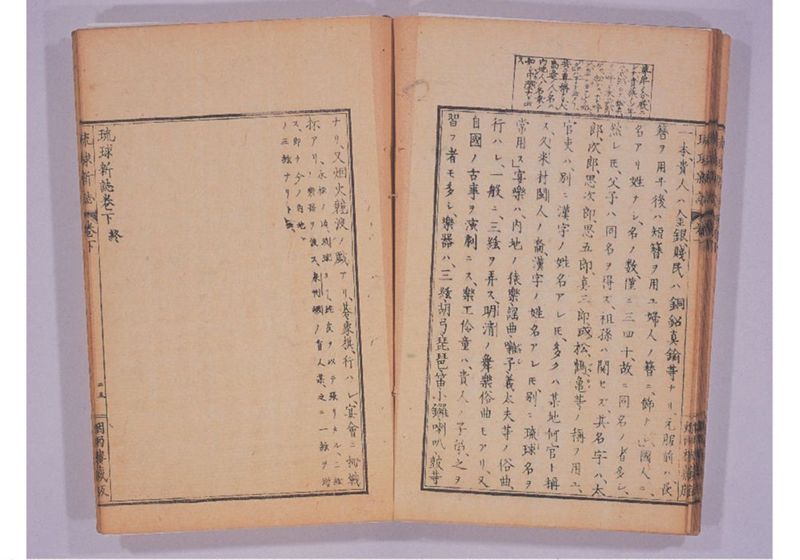
翻刻
一本、貴人ハ金銀賤民ハ銅鉛真鍮等ナリ、元服前ハ、長
簪ヲ用ヰ、後ハ短簪ヲ用ユ婦人ノ簪ニ、飾ナシ、」国人ニ、
名アリ姓ナシ、名ノ数、僅ニ三四十、故ニ同名ノ者多シ、
然レトモ、父子ハ同名ヲ得ズ、祖孫ハ関セズ、其名字ハ、太
郎、次郎、思次郎、思五郎、真三郎、或 ̄ハ松、鶴(ツル)、亀(カメ)等ノ称ヲ用ユ、
官吏ハ、別ニ漢字ノ姓名アレトモ、多クハ某地何官ト称
ス、久米村閩人ノ裔、漢字ノ姓名アレトモ、別ニ琉球名ヲ
常用ス」宴楽ハ、内地ノ猿楽、謡曲、囃子(ハヤシ)、義太夫等ノ俗曲、
行ハレ、一般ニ、三絃ヲ弄ス、明清ノ舞楽俗曲モアリ、又
自国ノ古事ヲ演劇ニス、楽工伶童ハ、貴人ノ子弟、之ヲ
習フ者モ多シ、楽器ハ、三絃、胡弓、琵琶、笛、小鑼、喇叭、鼓等
ナリ、又煙火競渡ノ戯アリ、碁、象棋、行ハレ、宴会ニ拇戦
抔アリ、《割書:永禄ノ頃、琉球ヨリ、蛇皮ヲ以テ張リタル、二絃|ノ楽器ヲ渡ス、泉州堺ノ盲人某、之ニ一絃ヲ増》
《割書:ス、即チ今ノ内地|ノ三絃ナリト云、》
【枠外上部】尊卑ノ分、厳ニシテ、貴族ノ少年ハ、太郎カナ、松カナ、ナド呼ビ、次ハ、太郎グヮ、松グヮ、ナド呼ブ、「カナ」ハ「カナシ」ノ略、「グヮ」ハ、子ト云フヿ、共ニ尊称ナリ、大島辺ノ人ノ名ハ、内地人ノ名乗ノ如シ、中栄(ナカエイ)ナド云フ、
琉球新誌巻下《割書:終|》
現代語訳
一本で、貴人は金銀、賤民は銅鉛真鍮等を用いる。元服前は長簪を用い、後は短簪を用いる。婦人の簪には飾りがない。
国人には名があるが姓がない。名の数はわずかに三、四十で、故に同名の者が多い。しかしながら、父子は同名を得ず、祖孫は関係ない。その名字は、太郎、次郎、思次郎、思五郎、真三郎、或いは松、鶴、亀等の称を用いる。官吏は別に漢字の姓名があるが、多くは某地何官と称する。久米村の閩人の裔は漢字の姓名があるが、別に琉球名を常用する。
宴楽は、内地の猿楽、謡曲、囃子、義太夫等の俗曲が行われ、一般に三線を奏でる。明清の舞楽俗曲もある。また自国の古事を演劇にする。楽工や伶童は、貴人の子弟でこれを習う者も多い。楽器は、三線、胡弓、琵琶、笛、小鑼、喇叭、鼓等である。また花火や競渡の戯がある。碁、将棋が行われ、宴会に指相撲などもある。
[注記:永禄の頃、琉球より蛇皮を以て張った二絃の楽器を渡した。泉州堺の盲人某がこれに一絃を増し、即ち今の内地の三線であるという。]
[枠外上部]身分の上下の区別は厳格で、貴族の少年は「太郎カナ」「松カナ」などと呼び、次は「太郎グヮ」「松グヮ」などと呼ぶ。「カナ」は「カナシ(愛し)」の略、「グヮ」は子ということで、共に尊称である。大島辺の人の名は、内地人の名乗りのようで、中栄(ナカエイ)などという。
琉球新誌巻下[終]
英語訳
one, with nobles using gold and silver, while commoners use copper, lead, brass, etc. Before coming of age, they use long hairpins, and afterwards they use short hairpins. Women's hairpins have no decorations.
The people of the country have given names but no family names. The number of names is merely thirty to forty, so there are many people with the same name. However, fathers and sons cannot have the same name, though there is no restriction between grandfathers and grandsons. Their names include Tarō, Jirō, Omojirō, Omogorō, Shinsaburō, or they use appellations like Matsu (Pine), Tsuru (Crane), Kame (Turtle), etc. Officials have separate Chinese character surnames and given names, but are mostly called by titles like "so-and-so official of such-and-such place." The descendants of Fujian people in Kume village have Chinese character surnames and given names, but separately use Ryukyuan names in daily life.
For entertainment, popular songs from the mainland such as sarugaku, noh chanting, hayashi music, and gidayū are performed, and the three-stringed instrument is generally played. There are also dance music and popular songs from the Ming and Qing dynasties. They also dramatize ancient stories of their own country. Many children of nobles study to become court musicians and child performers. Musical instruments include the three-stringed instrument, kokyū (bowed string instrument), biwa (lute), flute, small gong, trumpet, drums, etc. There are also entertainments of fireworks and boat races. Go and chess are played, and at banquets there are thumb wrestling matches and such.
[Note: Around the Eiroku period (1558-1570), Ryukyu introduced a two-stringed instrument covered with snakeskin. A certain blind person from Sakai in Izumi Province added one string to it, which is said to be the current three-stringed instrument of the mainland.]
[Outside the frame, upper section] The distinction between high and low status is strict. Noble boys are called "Tarō-kana," "Matsu-kana," etc., and next rank are called "Tarō-gwa," "Matsu-gwa," etc. "Kana" is an abbreviation of "kanashi" (beloved), and "gwa" means child - both are honorific terms. The names of people from the Ōshima area are like the names of mainland people, such as Nakaei.
Ryukyu Shinshi, Volume Two [End]