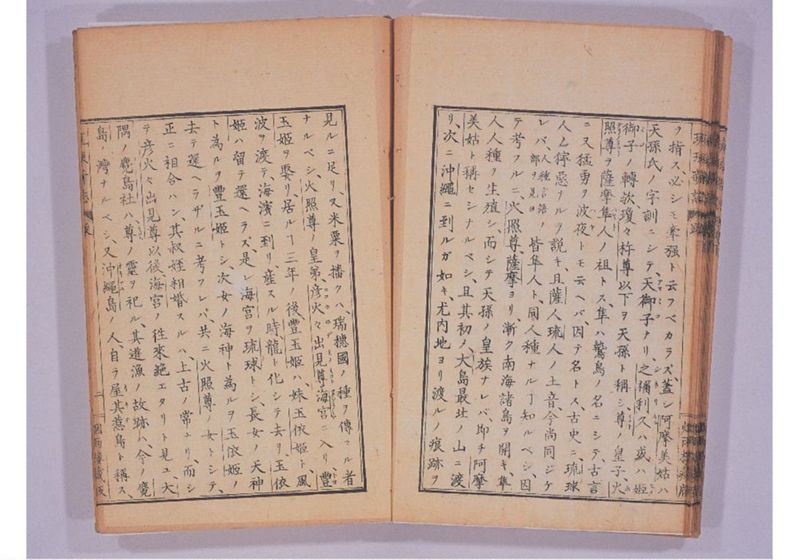
翻刻
ヲ指ス、必シモ牽強ト云フベカラズ、蓋シ阿摩美姑ハ
天孫氏ノ字訓ニシテ、天御子(アマミコ)ナリ、之禰利久(シネリキユ)ハ或ハ姫(ヒメ)
御子(ミコ)ノ転歟、瓊々杵尊以下ヲ天孫ト称シ、尊(ミコト)ノ皇子、火(ホ)
照尊(デリノミコト)ヲ薩摩 隼人(ハヤト)ノ祖トス、隼ハ鷙鳥ノ名ニシテ、古言
ニ又猛勇ヲ波夜(ハヤ)トモ云ヘバ、因テ名トス、古史ニ、琉球
人ノ獰悪ナルヲ説キ、且薩人琉人ノ土音、今尚同ジケ
レバ、《割書:人種言語ノ|部ヲ見ヨ》皆隼人ト、同人種ナルヿ知ルベシ、因
テ考フルニ、火照尊、薩摩ヨリ、漸ク南海諸島ヲ開キ、隼
人人種ヲ生殖シ、而シテ天孫ノ皇族ナレバ、即チ阿摩
美姑ト称セシナルベシ、且其初メ、大島最北ノ山ニ渡
リ、次ニ沖縄ニ到ルガ如キ、尤内地ヨリ渡ルノ痕跡ヲ
見ルニ足リ、又米粟ヲ播クハ、瑞穂国ノ種ヲ伝フル者
ナルベシ、火照尊ノ皇弟、彦火々出見尊(ヒコホホデミノミコト)、海宮(ワタツミノミヤ)ニ入リ、豊(トヨ)
玉姫ヲ娶リ、居ルヿ三年ノ後、豊玉姫ハ、妹玉依姫ト、風
波ヲ渡テ、海浜ニ到リ、産スル時、竜ト化シテ去リ、玉依
姫ハ留テ還ヘラズ、是レ海宮ヲ琉球トシ、長女ノ天神
ト為ルヲ豊玉姫トシ、次女ノ海神ト為ルヲ玉依姫ノ
去テ還ヘラザルニ考フレバ、共ニ火照尊ノ女トシテ、
正ニ相合ハン、其叔姪相婚スルハ、上古ノ常ナリ、而シ
テ彦火々出見尊以後、海宮ノ往来絶エタリト見ユ、大
隅ノ麑島社ハ、尊(ミコト)ノ霊ヲ祀ル、其遊漁ノ故跡ハ、今ノ鹿児
島ノ湾ナルベシ、又 沖縄(オキナハ)島ノ人、自ラ屋其惹(オキナ)島ト称ス、
現代語訳
を指すのであり、必ずしも牽強付会というべきではない。おそらく阿摩美姑は天孫氏の字訓であって、天御子(アマミコ)である。之禰利久(シネリキユ)はあるいは姫御子の転訛であろうか。瓊々杵尊以下を天孫と称し、尊の皇子である火照尊を薩摩隼人の祖とする。隼は猛禽類の名であり、古語でまた猛勇を波夜(ハヤ)とも言うので、これによって名とした。古史では、琉球人の獰悪なることを説き、かつ薩摩人と琉球人の土着の言葉が今なお同じであるので、[注記:人種言語の部を見よ]皆隼人と同じ人種であることを知るべきである。
これによって考えるに、火照尊が薩摩より漸次南海諸島を開き、隼人人種を繁殖させ、そして天孫の皇族であるから、すなわち阿摩美姑と称したのであろう。かつその初め、大島最北の山に渡り、次に沖縄に到るようなことは、まことに内地より渡った痕跡を見るに足る。また米粟を播くのは、瑞穂国の種を伝える者であろう。
火照尊の皇弟である彦火々出見尊は、海宮に入り、豊玉姫を娶り、三年間住んだ後、豊玉姫は妹の玉依姫と風波を渡って海浜に到り、出産の時に竜と化して去り、玉依姫は留まって帰らなかった。これは海宮を琉球とし、長女の天神となったのを豊玉姫とし、次女の海神となったのを玉依姫の去って帰らないことに照らし合わせれば、ともに火照尊の女として、まさに符合するであろう。その叔父と姪が結婚するのは、上古の常であった。そして彦火々出見尊以後、海宮への往来は絶えたと見える。
大隅の麑島社は、尊の霊を祀る。その遊漁の故跡は、今の鹿児島の湾であろう。また沖縄島の人は、自ら屋其惹(オキナ)島と称する。
英語訳
refers to this, and it should not necessarily be called far-fetched reasoning. Probably Amamiko is the character interpretation of Tensōshi, being Amamiko (Heavenly Prince). Shinerikyu might perhaps be a phonetic transformation of Hime-miko (Princess).
Ninigi-no-Mikoto and his descendants are called Tensō (Heavenly Grandsons), and Hoteri-no-Mikoto, a prince of the deity, is made the ancestor of the Satsuma Hayato people. "Haya" is the name of a bird of prey, and in ancient language, fierce bravery was also called "haya," hence the name. Ancient histories describe the fierce nature of Ryukyu people, and since the indigenous dialects of Satsuma people and Ryukyu people are still the same today [Note: See the section on race and language], we should understand that they are all of the same race as the Hayato.
From this consideration, Hoteri-no-Mikoto gradually opened the southern sea islands from Satsuma, propagated the Hayato race, and being of the Tensō imperial family, was probably called Amamiko. Moreover, the fact that he initially crossed to the northernmost mountain of Ōshima and then arrived at Okinawa is truly sufficient evidence of crossing over from the mainland. Also, the sowing of rice and millet would be from one who transmitted the seeds of the Land of Abundant Rice Ears.
Hikohohödemi-no-Mikoto, the imperial younger brother of Hoteri-no-Mikoto, entered the sea palace, married Toyotama-hime, and after residing there for three years, Toyotama-hime crossed wind and waves with her younger sister Tamayori-hime, arrived at the seashore, transformed into a dragon at the time of childbirth and departed, while Tamayori-hime remained and did not return. If we consider the sea palace as Ryukyu, the eldest daughter who became a heavenly deity as Toyotama-hime, and the second daughter who became a sea deity as Tamayori-hime who departed and did not return, both being daughters of Hoteri-no-Mikoto would perfectly correspond. The marriage between uncle and niece was common in ancient times. And after Hikohohödemi-no-Mikoto, travel to and from the sea palace appears to have ceased.
The Kagoshima Shrine in Ōsumi enshrines the spirit of the deity. The remains of his fishing expeditions would be in present-day Kagoshima Bay. Also, the people of Okinawa Island call it Okina Island themselves.