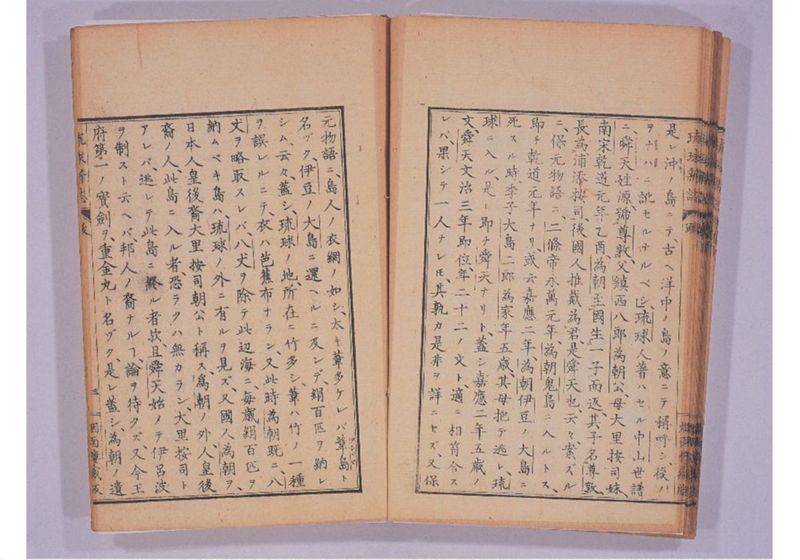
翻刻
是レ沖(オキ)ノ島ニテ、古ヘ洋中ノ島ノ意ニテ称呼シ、後ノ
ヲナハニ訛セルナルベシ、」琉球人著ハセル中山世譜
ニ、舜天姓源、号_二尊敦_一、父鎮西八郎為朝公、母大里按司妹、
南宋乾道元年乙酉、為朝至_レ国生_二 一子_一而返、其子名_二尊敦_一、
長為_二浦添按司_一、後国人推戴為_レ君、是舜天也、云々、案ズル
ニ、保元物語ニ、二条帝永万元年、為朝鬼島ニ入ルトス、
即チ乾道元年ナリ、或云嘉応二年、為朝伊豆ノ大島ニ
死スル時、季子大島二郎為家年五歳、其母抱テ逃レ、琉
球ニ入ル、是レ即チ舜天ナリト、蓋シ嘉応二年五歳ノ
文、舜天文治三年即位、年二十二ノ文ト、適ニ相符合ス
レバ、果シテ一人ナレトモ、其孰カ是非ヲ詳ニセズ、又保
元物語ニ、島人ノ衣網ノ如シ、太キ葦多ケレバ葦島(アシヾマ)ト
名ヅク、伊豆ノ大島ニ還ヘルニ及ンデ、絹百匹ヲ納レ
シム、云々、蓋シ、琉球ノ地、所在ニ竹多シ、葦ハ竹ノ一種
ヲ誤レルニテ、衣ハ芭蕉布ナラン、又此時為朝既ニ、八
丈ヲ略取スレバ、八丈ヲ除テ此辺海ニ、毎歳絹百匹ヲ
納ムベキ島ハ、琉球ノ外ニ有ルヲ見ズ、又国人為朝ヲ、
日本人皇後裔大里按司朝公ト称ス、為朝ノ外、人皇後
裔ノ人、此島ニ入ル者、恐ラクハ無カラン、大里按司ト
アレバ、逃レテ此島ニ終ル者歟、且舜天始メテ伊呂波
ヲ制スト云ヘバ、邦人ノ裔ナルヿ、論ヲ待タズ、又今王
府第一ノ宝剣ヲ、重金丸ト名ヅク、是レ蓋シ、為朝ノ遺
現代語訳
これは沖(オキ)の島であって、古くは洋中の島という意味で称呼し、後の「おなは」に訛ったのであろう。
琉球人が著した中山世譜には、「舜天姓は源、号を尊敦という。父は鎮西八郎為朝公、母は大里按司の妹。南宋乾道元年乙酉、為朝が国に至り一子を生んで帰った。その子の名を尊敦という。成長して浦添按司となり、後に国人が推戴して君主とした。これが舜天である」云々とある。
考えてみるに、保元物語では、二条帝永万元年、為朝が鬼島に入ったとしており、これはまさに乾道元年である。あるいは嘉応二年、為朝が伊豆の大島で死んだ時、末子の大島二郎為家が五歳で、その母が抱いて逃れ、琉球に入った、これがすなわち舜天であるという説もある。思うに嘉応二年に五歳という記述と、舜天が文治三年に即位し年二十二という記述が、ちょうど符合するので、果たして一人の人物であろうが、そのどちらが正しいかは詳らかでない。
また保元物語には、「島人の衣は網のようである。太い葦が多いので葦島(アシシマ)と名づく。伊豆の大島に帰るに及んで、絹百匹を納めさせた」云々とある。おそらく琉球の地は所々に竹が多く、葦は竹の一種を誤ったもので、衣は芭蕉布であろう。またこの時為朝はすでに八丈島を略取しているので、八丈島を除いてこの辺りの海で、毎年絹百匹を納めるべき島は、琉球の外には見当たらない。また国人は為朝を「日本人皇後裔大里按司朝公」と称する。為朝の外、人皇後裔の人でこの島に入った者は、おそらくいないであろう。「大里按司」とあるので、逃れてこの島で最期を迎えた者であろうか。かつ舜天が初めて伊呂波を制定したというので、日本人の後裔であることは論を待たない。また今王府第一の宝剣を重金丸と名づけるが、これはおそらく為朝の遺物
英語訳
This is Oki (offshore) Island, which in ancient times was called with the meaning of "island in the ocean," and later became corrupted to "Onaha."
In the Chuzan Seifu written by Ryukyu people, it states: "Shunten's surname was Minamoto, his title was Sonton. His father was Chinzei Hachirō Tametomo-kō, his mother was the younger sister of Ōzato Aji. In the first year of Qiandao of the Southern Song (1165), Tametomo came to the country, had a son, and returned. The child's name was Sonton. He grew up to become Urasoe Aji, and later the people elevated him to be their lord. This was Shunten," and so forth.
Upon examination, the Hōgen Monogatari states that in the first year of Eiman of Emperor Nijō, Tametomo entered Oni Island, which corresponds exactly to the first year of Qiandao. Alternatively, it is said that in the second year of Kaō, when Tametomo died on Izu Ōshima, his youngest son Ōshima Jirō Tameie was five years old, and his mother fled carrying him and entered Ryukyu - this was Shunten. Indeed, the account of being five years old in Kaō 2 and Shunten ascending the throne at age twenty-two in Bunji 3 coincide perfectly, so they are indeed the same person, though which account is correct in detail is unclear.
Also in the Hōgen Monogatari it states: "The islanders' clothing is like nets. Because there are many thick reeds, it is called Ashi Island (Reed Island). When returning to Izu Ōshima, he made them pay tribute of one hundred bolts of silk," and so forth. Probably in Ryukyu there are many bamboos everywhere, and "reeds" was a mistake for a type of bamboo, while the clothing would be banana fiber cloth. Also, since Tametomo had already conquered Hachijō at this time, excluding Hachijō, there is no other island in these waters that should pay annual tribute of one hundred bolts of silk except Ryukyu. Moreover, the people call Tametomo "Japanese Imperial Descendant Ōzato Aji Tomo-kō." Besides Tametomo, there probably was no other person of imperial lineage who entered this island. Since he is called "Ōzato Aji," he was perhaps one who fled and ended his life on this island. Furthermore, since Shunten first established the iroha syllabary, there is no question that he was a descendant of Japanese people. Also, the royal government's most treasured sword is now called Jūkinmaru, which is probably a relic of Tametomo