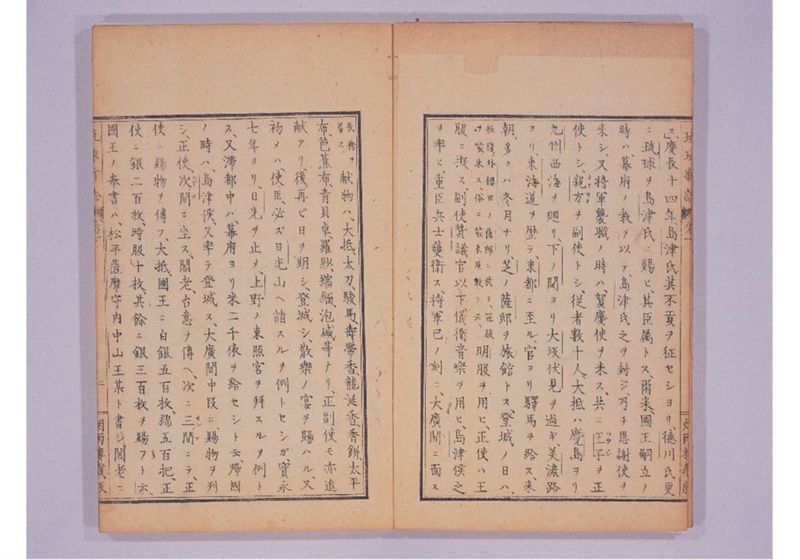
翻刻
ス、」慶長十四年、島津氏其不貢ヲ征セシヨリ、徳川氏更
ニ琉球ヲ島津氏ニ賜ヒ、其臣属トス、爾来、国王嗣立ノ
時ハ、幕府ノ教ヲ以テ、島津氏之ヲ封ジ、乃チ恩謝使ヲ
来シ、又将軍襲職ノ時ハ、賀慶使ヲ来ス、共ニ王子(ワウジ)ヲ正
使トシ、親方(オヤカタ)ヲ副使トシ、従者数十人、大抵ハ鹿児島ヲリ
九州西海ヲ廻リ、下ノ関ヨリ大坂伏見ヲ過ギ、美濃路
ヨリ、東海道ヲ歴テ、東都ニ至ル、官ヨリ駅馬ヲ給ス、来
朝、多クハ冬月ナリ、芝ノ薩邸ヲ旅館トス、登城ノ日ハ、
《割書:往復、外桜田ノ薩邸ニ於テ、冠服|ヲ装束ス、俗ニ装束屋敷ト云、》明服ヲ用ヒ、正使ハ王
服ニ擬ス、副使賛議官以下、儀衛音楽ヲ用ヒ、島津侯之
ヲ率ヒ、重臣兵士護衛ス、将軍巳ノ刻ニ、大広間ニ面ス
《割書:長袴ヲ|着ス、》献物ハ、大抵太刀、駿馬、寿帯香、竜涎香、香餅、太平
布、芭蕉布、青貝卓、羅紗、縮緬、泡盛等ナリ、正副使モ亦進
献アリ、後、再ビ日ヲ期シ、登城シ、散楽ノ宴ヲ賜ハル、又
初メハ、使臣、必ズ日光山ヘ詣スルヲ例トセシガ、宝永
七年ヨリ、日光ヲ止メ、上野ノ東照宮ヲ拝スルヲ例ト
ス、又滞都中ハ、幕府ヨリ米二千俵ヲ給セシト云、帰国
ノ時ハ、島津侯、又率テ登城ス、大広間中段ニ、賜物ヲ列
シ、正使 次(ツギ) ̄ノ間(マ)ニ坐ス、閣老、台意ヲ伝ヘ、次ニ三(サン) ̄ノ間(マ)ニテ、正
使ニ賜物ヲ伝フ、大抵、国王ニ白銀五百枚、綿五百把、正
使ニ銀二百枚、時服十枚、其余ニ銀三百枚ヲ賜フト云、
国王ノ奉書ハ、松平薩摩守内中山王某ト書シ、閣老ニ
現代語訳
慶長十四年、島津氏がその不貢を征伐して以来、徳川氏は改めて琉球を島津氏に与え、その臣属とした。それ以来、国王が即位する時には、幕府の命令により、島津氏がこれを封じ、そこで恩謝使を派遣してくる。また将軍が就任する時には、賀慶使を派遣してくる。いずれも王子を正使とし、親方を副使とし、従者数十人で、大抵は鹿児島から九州西海を回り、下関から大坂・伏見を過ぎ、美濃路から東海道を経て、江戸に至る。官から駅馬を支給される。来朝は、多くの場合冬である。芝の薩摩藩邸を宿舎とする。登城の日には、明服を用い、正使は王服に準じる。副使・賛議官以下は、儀礼・音楽を用い、島津侯がこれを率い、重臣・兵士が護衛する。将軍は午前十時頃に、大広間で対面する。献上品は、大抵太刀、駿馬、寿帯香、龍涎香、香餅、太平布、芭蕉布、青貝卓、羅紗、縮緬、泡盛等である。正副使もまた進献がある。後に、再び日を定めて登城し、散楽の宴を賜る。また初めは、使臣は必ず日光山へ参詣することを例としていたが、宝永七年より、日光をやめ、上野の東照宮を拝することを例とする。また滞在中は、幕府より米二千俵を支給されたという。帰国の時には、島津侯が、また率いて登城する。大広間中段に、賜物を並べ、正使は次の間に座る。老中が、将軍の意向を伝え、次に三の間にて、正使に賜物を伝える。大抵、国王に白銀五百枚、綿五百把、正使に銀二百枚、時服十枚、その他に銀三百枚を賜うという。国王の奉書には、松平薩摩守内中山王某と書し、老中に
英語訳
Since the 14th year of Keichō, when the Shimazu clan conquered [Ryukyu] for its failure to pay tribute, the Tokugawa granted Ryukyu anew to the Shimazu clan, making it their vassal. Since then, when a king ascends the throne, the Shimazu clan invests him by order of the bakufu, and [Ryukyu] sends envoys to express gratitude. Also, when a shogun takes office, [Ryukyu] sends congratulatory envoys. In both cases, a prince serves as the chief envoy and an oyakata as the vice-envoy, with several dozen attendants. They generally travel from Kagoshima around the western seas of Kyushu, pass through Shimonoseki, Osaka, and Fushimi, then proceed via the Mino route and the Tōkaidō to reach Edo. The government provides post horses. Their arrival at court is usually in winter. They use the Satsuma domain residence in Shiba as their lodging. On the day of castle audience, they wear Ming-style clothing, with the chief envoy dressed in quasi-royal garments. The vice-envoy, councillors, and others employ ceremonial guards and music, led by the Shimazu lord and escorted by senior retainers and soldiers. The shogun receives them around 10 AM in the great hall. The tribute goods generally include swords, fine horses, longevity incense, ambergris, incense cakes, Taihei cloth, banana fiber cloth, mother-of-pearl tables, woolen cloth, silk crepe, awamori, etc. The chief and vice envoys also present their own offerings. Later, they set another date to visit the castle and are granted a banquet with entertainment. Initially, the envoys were required to visit Nikkō-san, but from the 7th year of Hōei, they ceased going to Nikkō and instead made it customary to worship at the Tōshōgū shrine in Ueno. During their stay in the capital, the bakufu reportedly provided 2,000 bales of rice. When returning home, the Shimazu lord again leads them to the castle. Gifts are arranged in the middle level of the great hall, and the chief envoy sits in the next room. The senior councillors convey the shogun's intentions, then in the third room, they present gifts to the chief envoy. Generally, the king receives 500 pieces of silver and 500 bundles of cotton, the chief envoy receives 200 pieces of silver and ten sets of seasonal clothing, and the others receive 300 pieces of silver. The king's formal letter is addressed as "Matsudaira Satsuma-no-kami-nai Chūzan-ō [name]" and [sent] to the senior councillors