翻刻
異産有_二海帯菜、女旁辣蕎茯苓菜壅菜_一、又
有_二松露_一、土 ̄ニ音 ̄ス称_二蓄蘿 ̄ハ_一、九十月中 ̄ニ生 ̄ス_二大松樹
下土中 ̄ニ_一、実円 ̄ニノ白色、菌類味鮮美、産 ̄スル_二具志頭_一
者尤良灰色 ̄ナル者 ̄ハ生 ̄ス_二牛糞中 ̄ニ_一、不_レ可_レ食、 《割書:海菜 ̄ニ有|海帯_一、一》
名 ̄ハ昆布、又有_二紅菜_一、類 ̄ノ_二石花菜 ̄ニ_一而少
匾、出 ̄ツ_二海灘中 ̄ニ_一、又有_二雞脚菜麒麟菜_一、
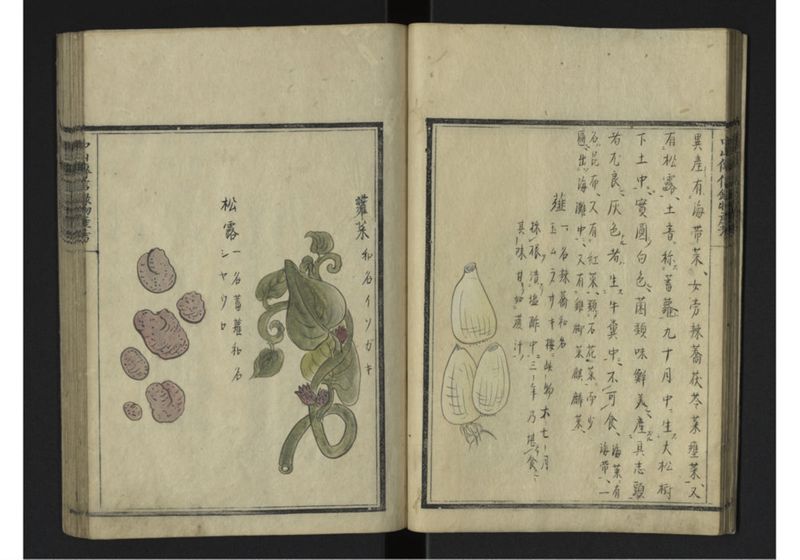
薤《割書:一名辣蕎和名|玉ムラサキ按此物六七月》
採_レ根 ̄ヲ漬 ̄スフ_二塩酢中 ̄ニ_一 三年乃堪 ̄タリ_レ食 ̄スルニ
其味甘 ̄キフ如_二蔗汁 ̄ノ_一
蕹菜《割書:海和名イソガキ》
松露《割書:一名蓄蘿和名|シヤウロ》
現代語訳
特産品として海帯菜、女旁辣蕎、茯苓菜、壅菜などがある。また松露もあり、土地の言葉では蓄蘿と呼ばれる。九月十月頃に大きな松の木の下の土中に生える。実は円形で白色、きのこ類で味は鮮美である。具志頭で産するものが最も良い。灰色のものは牛糞の中に生えるので食用には適さない。《海菜には海帯があり、昆布という名前もある。また紅菜もあり、石花菜に似ているがやや平たく、海辺に生える。また雞脚菜、麒麟菜もある。》
薤《別名辣蕎、和名:玉ムラサキ。この植物は六月七月に根を採取し、塩酢に漬ける。三年でようやく食べられるようになる。その味は砂糖きびの汁のように甘い。》
蕹菜《海、和名:イソガキ》
松露《別名蓄蘿、和名:シャウロ》
英語訳
Special products include sea kelp vegetables, women's spicy buckwheat, poria vegetable, and yong vegetable. There is also matsutake (pine mushroom), called chikura in the local language. It grows in the soil under large pine trees during the ninth and tenth months. The fruit is round and white in color, a type of mushroom with delicious fresh taste. Those produced in Gushikami are the best quality. Gray-colored ones grow in cow dung and are not edible. 《Among sea vegetables, there is sea kelp, also called kombu. There is also red vegetable, similar to gracilaria seaweed but somewhat flatter, growing on seashores. There are also chicken-foot vegetable and qilin vegetable.》
Shallot 《Also called spicy buckwheat, Japanese name: tama-murasaki. This plant has its roots harvested in June and July and pickled in salt and vinegar. After three years it finally becomes edible. Its taste is sweet like sugarcane juice.》
Water spinach 《Sea, Japanese name: iso-gaki》
Matsutake 《Also called chikura, Japanese name: shauro》