翻刻
鉄樹即鳳尾蕉《割書:之》、一名 ̄ハ海稷、櫚 ̄ノ身蕉 ̄ノ葉、葉勁
挺 ̄ニシテ対 ̄シテ出 ̄スヿ_二䙰褷 ̄ヲ_一如_二鳳尾 ̄ノ_一、映 ̄ルニ_二日中 ̄ニ_一、心一線虚明 ̄ニシテ
無 ̄シ_レ影、四時不_レ凋、処々 ̄ニ植_レ之 ̄ヲ、 《割書:図見|_レ前 ̄ニ》
烏木 ̄ハ、葉如 ̄ク_レ桂 ̄ノ直上 ̄ス、外与_二常木_一不_レ異、中心 ̄ノ木
質黒色《割書:也》、然 ̄トモ亦有 ̄リ_二白理 ̄ナル者_一、又有_二紅木_一、 《割書:図見|_レ前 ̄ニ》
油樹、葉似 ̄タリ_レ橘 ̄ニ、実似 ̄テ_レ橘大、不_レ可_レ食、用 ̄テ以 ̄テ搾 ̄ル_レ油《割書:也》、
又有 ̄リ_二福満木_一、樹 ̄ノ高 ̄サ数尺、葉似 ̄テ_二木槿 ̄ニ_一差小《割書:之》、花
如 ̄ク_レ橘 ̄ノ子累々 ̄ニシテ紅色《割書:也》、可_レ食 ̄フ、又有_レ樹葉似 ̄テ_二冬青 ̄ニ_一、
高 ̄サ丈余、花如 ̄ク_レ棗子累々 ̄ニシテ生 ̄ス、如 ̄シ_二 中国 ̄ノ女貞子 ̄ノ_一、
甘酸 ̄ニシテ可_レ食 ̄フ、亦可_レ染_レ物 ̄ヲ、作_二青連色 ̄ヲ_一、名 ̄ク_二山米 ̄ト_一、又
名 ̄ク_二野麻姑 ̄ハ_一、当 ̄シ_二即青精 ̄ナル_一、
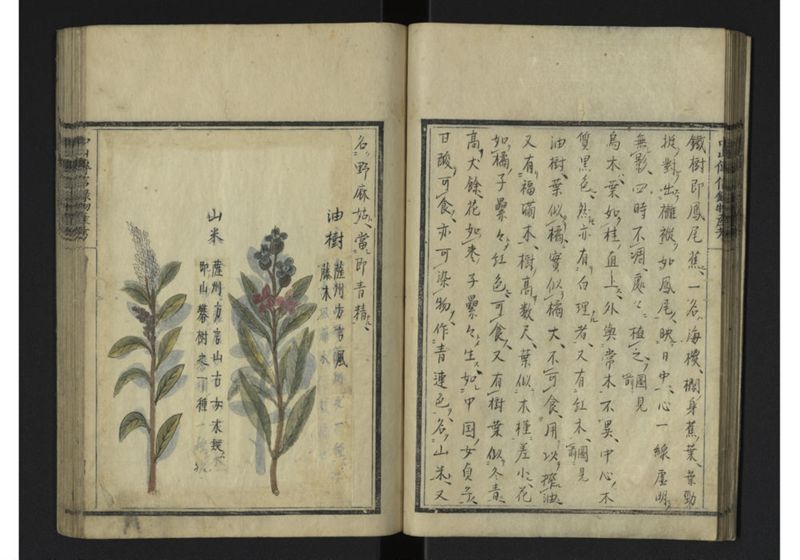
油樹 《割書:薩州方言風|藤木》
山米 《割書:薩州方言山古女木疑 ̄クハ|即山礬樹之一種》
現代語訳
鉄樹は即ち鳳尾蕉である。別名を海稷という。棕櫚の幹と蕉(バナナ)の葉を持つ。葉は強くてまっすぐで、対になって羽状複葉を出し、鳳凰の尾のようである。日光に照らされると、中心の一筋が透明に見えて影がない。四季を通じて枯れることがなく、各所に植えられている。《図は前を見よ》
烏木は、葉が桂のようでまっすぐに上に伸びる。外見は普通の木と変わらないが、中心部の木質は黒色である。しかし白い木理を持つものもある。また紅木もある。《図は前を見よ》
油樹は、葉が橘に似ていて、実は橘に似て大きく、食べることはできない。搾って油を取るのに用いる。また福満木があり、樹の高さは数尺で、葉は木槿に似てやや小さく、花は橘のようで実が累々と付いて紅色である。食べることができる。また樹があって葉が冬青に似て、高さ一丈余り、花は棗のようで実が累々と生じ、中国の女貞子のようである。甘酸っぱくて食べることができ、また物を染めることもでき、青藍色を作る。山米と名付け、また野麻姑とも名付ける。これは即ち青精である。
油樹《薩州の方言では風藤木》
山米《薩州の方言では山古女木。おそらく即ち山礬樹の一種》
英語訳
The tetsu-ju (iron tree) is the hōbi-sō (phoenix-tail cycad). It is also called kai-shoku (sea millet). It has the trunk of a palm and the leaves of a plantain. The leaves are strong and upright, growing in pairs to form pinnate compound leaves like a phoenix's tail. When illuminated by sunlight, the central vein appears transparent with no shadow. It does not wither throughout the four seasons and is planted in various places. 《See the illustration above》
The karasu-gi (crow wood) has leaves like those of the katsura tree and grows straight upward. Its exterior appearance is no different from ordinary trees, but the wood quality at its center is black. However, there are also those with white grain. There is also red wood. 《See the illustration above》
The abura-gi (oil tree) has leaves resembling those of oranges, and fruit similar to but larger than oranges, which cannot be eaten. It is used to extract oil by pressing. There is also the fukuman-gi, a tree several shaku in height with leaves resembling but slightly smaller than those of the rose of Sharon, flowers like oranges, and numerous red-colored fruits that are edible. There is also a tree with leaves resembling winterberry holly, over one jō in height, with flowers like jujube that produce numerous fruits resembling Chinese privet berries from China. They are sweet and sour and edible, and can also be used to dye things, producing an indigo-blue color. It is called yama-kome (mountain rice) and also called no-mago (wild mago). This is precisely sei-sei (blue essence).
Oil tree 《In Satsuma dialect: kaze-fujiki》
Mountain rice 《In Satsuma dialect: yama-kome-gi. Presumably a type of mountain alum tree》