翻刻
獸 ̄ニ有_二牛馬羊豕犬猫鹿猿山豬_一、《割書:明 ̄ノ一統志 ̄ニ|言其土産》
《割書:有_二 ̄ト羆豹狼_一、|今考 ̄ルニ皆無_レ之》
畜 ̄ニ有_二雞鴨鵝_一、異畜 ̄ニ有太和雞、比_二 ̄レハ常雞_一 ̄ニ特 ̄ニ小《割書:也》
短足 ̄ニシテ長尾《割書:也》、種出_二 ̄ツ七嶋_一 ̄ニ、
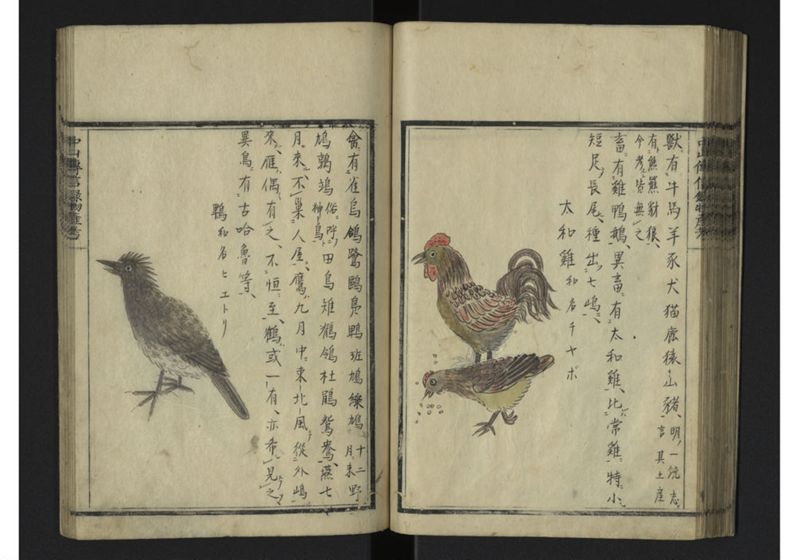
太和雞《割書:和名チヤボ》
禽 ̄ニ有_二雀鳥鴿鷺鷗鳬鵯班鳩線鳩 《割書:十二|月 ̄ニ来》野
鳩鶉鴗《割書:俗 ̄ニ呼_二 ̄フ|神鳥_一 ̄ト》田鳥雉鶺鴒杜鵑鴛鴦_一、燕七
月 ̄ニ来 ̄ル、不_レ巢_二 人屋_一 ̄ニ、鷹 ̄ハ九月中 ̄ニ東北風 ̄ニテ從_二外嶋_一
來 ̄ル、雁 ̄ハ遇《割書:〱》有_レ之、不_二恒 ̄ニ至_一、鶴 ̄ハ或一有、亦希_レ ̄シ見_レ ̄ルフ之 ̄ヲ、
異鳥 ̄ニ有_二古哈魯等_一、
鵯《割書:和名ヒエトリ》
現代語訳
獣には牛、馬、羊、豚、犬、猫、鹿、猿、山猪がいる。《明の一統志にはその土産として熊、豹、狼がいると言うが、今考えるに皆これなし》
家畜には鶏、鴨、鵝がいる。異畜には太和鶏があり、常鶏に比べて特に小さく、短足で長尾である。種は七島より出る。
太和鶏《和名はチャボ》
禽には雀、鳥、鳩、鷺、鷗、鳬、鵯、班鳩、線鳩《十二月に来る》、野鳩、鶉、鴗《俗に神鳥と呼ぶ》、田鳥、雉、鶺鴒、杜鵑、鴛鴦がいる。燕は七月に来るが、人家には巣を作らない。鷹は九月中に東北風で外島から来る。雁は時々いるが、常に至るわけではない。鶴はたまにいるが、これを見ることも稀である。異鳥には古哈魯等がいる。
鵯《和名はヒエトリ》
英語訳
Among beasts, there are cattle, horses, sheep, pigs, dogs, cats, deer, monkeys, and wild boars. (The Ming Dynasty's Yitongzhi states that local products include bears, leopards, and wolves, but upon current examination, none of these exist.)
Among livestock, there are chickens, ducks, and geese. Among exotic livestock, there is the Taihe chicken, which is particularly small compared to ordinary chickens, with short legs and a long tail. This breed comes from the Seven Islands.
Taihe chicken (Japanese name: Chabo)
Among birds, there are sparrows, birds, pigeons, herons, gulls, wild ducks, bulbuls, turtle doves, streptopelia (which come in the twelfth month), wild doves, quails, shrikes (commonly called "divine birds"), field birds, pheasants, wagtails, cuckoos, and mandarin ducks. Swallows come in the seventh month but do not nest in human dwellings. Hawks come from outer islands with northeast winds in the middle of the ninth month. Geese are occasionally present but do not arrive regularly. Cranes sometimes appear, but it is rare to see them. Among exotic birds, there are koharu and others.
Bulbul (Japanese name: Hietori)