翻刻
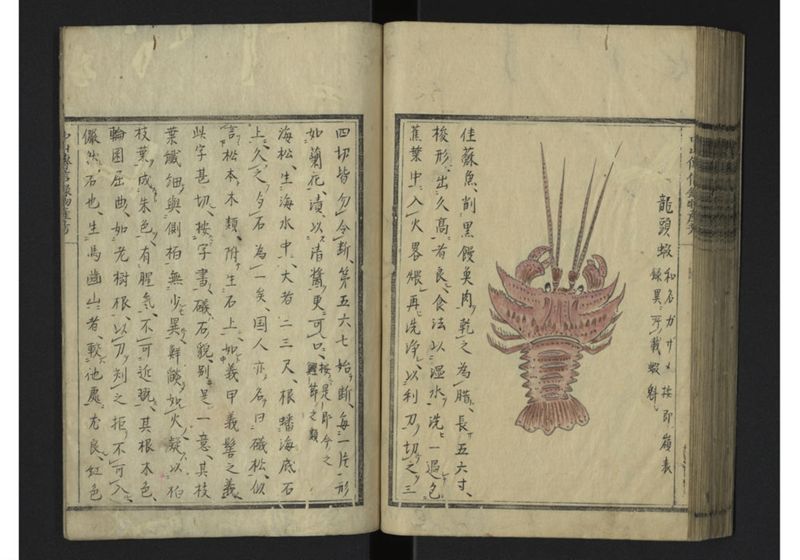
竜頭蝦《割書:和名ガザメ按即嶺表|録異 ̄ニ所_レ ̄ノ載蝦魁《割書:也》》
佳蘇魚、削_二黒饅𩵋肉_一 ̄ヲ、乾_レ之為_レ腊 ̄ト、長 ̄サ五六寸、
梭形 ̄ハ出_二久髙_一 ̄ニ者良 ̄シ、食法以_二温水_一 ̄ヲ洗 ̄ヒ一過 ̄シテ色_二 ̄ニ
蕉葉中_一 ̄ニ入_レ火畧煨 ̄シ再 ̄ヒ洗浄 ̄シ、以_二利刀_一 ̄ヲ切_レ ̄ルヿ之 ̄ヲ三
四切皆勿_レ令_レ断、第五六七始 ̄テ断、毎_二 一片_一形
如_二蘭花_一、漬 ̄ニ以_二 ̄ス清醤_一 ̄ヲ更 ̄ニ可_レ ̄シ口 ̄ニ、《割書:按 ̄スルニ是即今之|鰹節 ̄ノ之類》
海松、生_二海水中_一 ̄ニ、大者二三尺、根蟠_二海底石
上_一 ̄ニ、久_レ ̄シテ之 ̄ヲ与_レ石為_一矣、国人亦 ̄タ名 ̄テ曰_二礒松_一、似
_レ言_下 ̄フニ松本 ̄ト木類、附 ̄テ生_二石上_一 ̄ニ、如_中 ̄レト義甲義䯻之義_上 ̄ノ、
此字甚切《割書:也》、按_二 ̄ルスニ字書_一 ̄ヲ、礒 ̄ハ石 ̄ノ貌、別 ̄ニ是 ̄レ一意、其枝
葉纎細 ̄ニシテ與_二側栢_一無_二少 ̄シモ異_一 ̄ルヿ鮮燄 ̄ニシテ如_レ ̄シ火 ̄ノ、疑 ̄クハ以_二柏
枝葉_一 ̄ヲ成_二 ̄スカト朱色_一 ̄ヲ、有_二腥気_一、不_レ可_二近翫_一 ̄ス、其根木色、
輪囷屈曲 ̄シテ、如_二老樹根_一、以_レ刀 ̄ヲ刻_レ之拒 ̄テ不_レ可_レ入 ̄ル、
儼然 ̄トシテ石也、生_二馬齒山_一 ̄ニ者、較_二 ̄レハ他處_一 ̄ニ尤良《割書:也》、紅色
現代語訳
龍頭蝦《和名:ガザメ 按ずるに、即ち嶺表録異に載せる所の蝦魁である》
佳蘇魚は、黒い皮と肉を削り取り、これを乾燥させて腊(干し肉)とする。長さは五、六寸で、梭(シャトル)の形をしている。久高に産するものが良い。食べ方は、温水で一度洗い、バナナの葉に包んで火で軽く煨し、再び洗浄し、利刀で切ること三、四回は皆切り離さないようにし、第五、六、七回目で初めて切り離す。一片ごとの形は蘭の花のようで、清醤に漬けると更に美味である。《按ずるに、これは即ち今の鰹節の類である》
海松は、海水中に生え、大きいものは二、三尺になる。根は海底の石の上に蟠り、久しくすると石と一体となる。国人もまた礒松と名付ける。これは松が本来木類であるが、石の上に附着して生えることを言うもので、甲、髻の義のようなものである。この字は非常に適切である。字書を按ずるに、礒は石の貌である。別にこれは一つの意味である。その枝葉は繊細で側柏と少しも異ならず、鮮やかで火のようである。疑うらくは柏の枝葉で朱色を成すのかと思われる。腥気があり、近づいて玩ぶことはできない。その根は木色で、輪囷として屈曲し、老樹の根のようである。刀で刻もうとしても拒んで入ることができず、儼然として石である。馬歯山に生えるものは、他の場所に比べて尤も良い。紅色で
英語訳
Dragon-head shrimp《Japanese name: Gazame. Note: This is the shrimp leader (ebi-kai) recorded in the Lingbiao Lu Yi》
Jiasu fish: The black skin and flesh are scraped off and dried to make preserved meat (la). It is five to six inches long and shuttle-shaped. Those from Kudaka are of good quality. The preparation method involves washing once with warm water, wrapping in banana leaves and lightly roasting over fire, washing again, then cutting with a sharp knife three or four times without severing completely, only cutting through on the fifth, sixth, and seventh cuts. Each piece resembles an orchid flower in shape, and when marinated in clear soy sauce, it becomes even more delicious. 《Note: This is similar to today's katsuobushi (dried bonito flakes)》
Sea pine grows in seawater, with large specimens reaching two to three feet. Its roots spread over stones on the seabed, and over time become one with the stone. The local people also call it iso-matsu (shore pine). This refers to how pine, originally a wood species, grows attached to rocks, similar to the meanings found in characters like "ko" (shell) and "ji" (topknot). This character is very appropriate. According to dictionaries, "iso" refers to the appearance of stones. This represents a distinct meaning. Its branches and leaves are delicate and identical to those of oriental arborvitae, brilliant and fire-like in appearance. One might suspect it achieves its vermillion color through cypress branches and leaves. It has a fishy odor and cannot be approached for close observation. Its roots are wood-colored, twisted and curved like old tree roots. When attempting to carve it with a knife, it resists penetration, being unmistakably stone-like. Those growing on Bajishi Mountain are superior to those from other locations. The red-colored ones