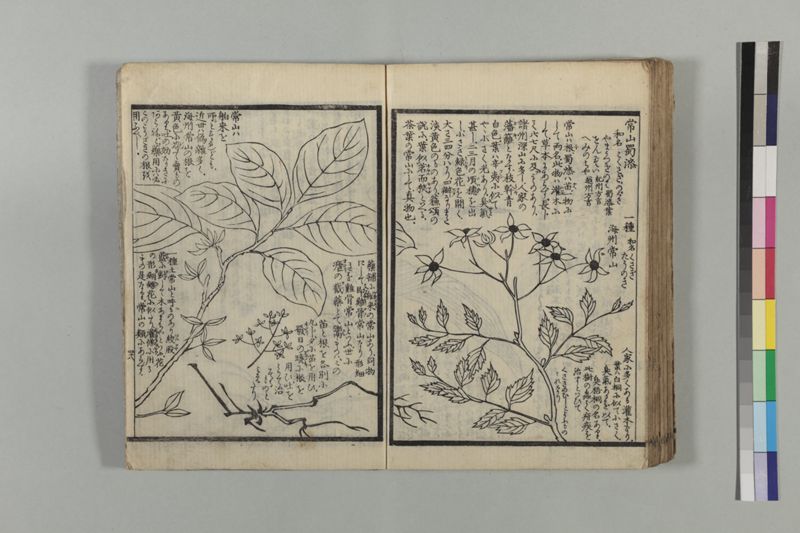
翻刻
【右丁 上部】
常山蜀漆 一種《割書:和名くさぎ| たうのき》
《割書:和名こくさぎ、のぐさ|やまうつぎのは蜀漆葉》 海州常山
《割書:せんずい紀州方言|へみのちや越州方言》
常山は根(ネ)、蜀漆は苗(ナヘ)、一物に
して両名、此物は灌(クワン)木に
して、草本にあらず、長じ
て六七尺に及 ̄ブ ものあり、
諸州深山に多し、人家の
藩籬(カキ)となす、枝 幹(ミキ)青
白色、葉は辛夷(コフシ)に似(ニ)て
やゝ小さく光あり、臭気(クサミ)
甚し、二三月の頃(コロ)穂(ホ)を出
し、小さき緑(ミトリ)色花を開く、
大さ三四分はかり、四 弁(ヒラ)なりまた
淡黄色のものあり、蘇頌の
説に、葉以_レ茗(チヤニ)而 狭(セマシ)といへる、
茶葉の常山にして、真物也、
【同 下部】
人家に多くある灌木なり、
葉は白桐に似て小さく、
臭気あるを以て、
臭梧桐の名あり、
此樹の虫よく疳疾を
治すといひて
くさきのむしとよふもの
これなり
【左丁 上部】
常山は
舶来を
可(ヨシ)とすれども、
近世は偽雑多く、
海州常山の根を
黄色に染(ソメ)て売もの
あり、吐の効なきに
あらねど、薬用には必
このこうざきの根を
用ふべし、
【同 下部】
薬鋪【舗は俗字】に舶来(ワタリモノ)の常山あり、同物
にして、即(スナハチ)雞骨(ケイコツ)常山なり、形細
きを雞骨常山といふ、世に
瘧(オコリ)の截(キリ)薬とて鬻(ウル)ものは、この
苗と根を各別に
丸じ、夕に苗を用ひ、
発(オコリ)日の暁(アカツキ)に根を
用ひ、吐を
とりて治
するものと
みえたり
一種土常山と呼ものあり絞股(ツルアマ)
藍(チヤ)に対(タイ)して木あまちやといふ、花
の形 胡蝶(ガク)花に似たり、灌仏(シヤカノタンジヤウ)に用る
もの是なり、常山の類にあらず、
現代語訳
【右丁 上部】
常山蜀漆 一種(和名:くさぎ、たうのき)
(和名:こくさぎ、のぐさ、やまうつぎの葉は蜀漆葉) 海州常山
(せんずい:紀州方言、へみのちゃ:越州方言)
常山は根、蜀漆は苗で、一つの植物に二つの名前がある。この植物は灌木であって、草本ではない。成長して6、7尺に及ぶものもある。諸国の深山に多く、人家の垣根とする。枝幹は青白色、葉は辛夷に似てやや小さく光沢があり、臭気が甚だしい。2、3月頃に穂を出し、小さな緑色の花を開く。大きさは3、4分ほどで4弁である。また淡黄色のものもある。蘇頌の説に「葉は茶に似て狭い」とあるのは、茶葉のような常山で、これが真物である。
【同 下部】
人家に多くある灌木である。葉は白桐に似て小さく、臭気があることから、臭梧桐の名がある。この樹の虫はよく疳疾を治すといって、くさきの虫と呼ぶものがこれである。
【左丁 上部】
常山は舶来品が良いとされるが、近世は偽物や粗悪品が多く、海州常山の根を黄色に染めて売るものがある。嘔吐の効果がないわけではないが、薬用には必ずこのこうざきの根を用いるべきである。
【同 下部】
薬舗に舶来の常山がある。同じ植物で、すなわち鶏骨常山である。形が細いものを鶏骨常山という。世間でマラリアの治療薬として売られているものは、この苗と根を別々に丸薬にし、夕方に苗を用い、発病日の暁に根を用いて、嘔吐を起こして治療するもののようである。
一種で土常山と呼ぶものがあり、ツルアマチャに対して木アマチャという。花の形は胡蝶花に似ている。灌仏会に用いるものがこれである。常山の類ではない。
英語訳
【Right Page Upper Section】
Dichroa febrifuga and Dichroa leaves One variety (Japanese names: kusagi, taunoki)
(Japanese names: kokusagi, nogusa, yamaute leaves are Dichroa leaves) Haizhou Dichroa
(senzui: Kishu dialect, heminocha: Etsu Province dialect)
Dichroa refers to the root, and Dichroa leaves to the shoots - one plant with two names. This plant is a shrub, not an herbaceous plant. Some grow to 6-7 shaku in height. It is abundant in deep mountains of various provinces and is used as hedging around homes. The branches and trunk are bluish-white, the leaves resemble magnolia but are somewhat smaller with a glossy surface and strong odor. Around the second and third months it produces spikes and opens small green flowers about 3-4 bu in size with 4 petals. There are also pale yellow varieties. Su Song's description of "leaves resembling tea but narrower" refers to the tea-leaf-like Dichroa, which is the genuine article.
【Same Lower Section】
This is a shrub common around homes. The leaves resemble paulownia but are smaller, and due to their odor, it has the name "stinking paulownia." The insects of this tree are said to effectively treat childhood nutritional disorders, and are called kusaki insects.
【Left Page Upper Section】
For Dichroa, imported varieties are considered best, but in recent times there are many counterfeits and adulterants. Some dye the roots of Haizhou Dichroa yellow and sell them. While not without emetic effect, for medicinal use one must use the roots of this kouzaki variety.
【Same Lower Section】
Pharmacies carry imported Dichroa, which is the same plant - namely chicken-bone Dichroa. The thin-formed variety is called chicken-bone Dichroa. What is sold in the world as malaria treatment appears to be made by forming the shoots and roots into separate pills, using the shoots in the evening and the roots at dawn on the day of fever onset, inducing vomiting for treatment.
There is a variety called earth Dichroa, which in contrast to climbing hydrangea is called tree hydrangea. The flower shape resembles butterfly flowers. This is what is used for Buddha-bathing ceremonies. It is not a type of Dichroa.