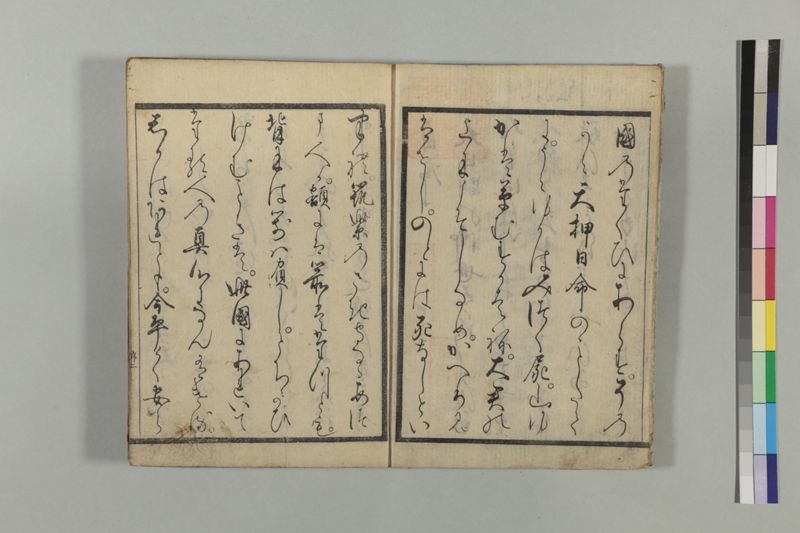
翻刻
【右丁】
国のたくひにあらす。その
かみ天押日命のことたて
に。うみゆかはみつく屍。山ゆ
かは草むすかはね。大君の
うえ【上 注】にこそしなめ。かへり見
はせし。のとには死なしとい
【左丁】
はれ。筑紫のさき守なるあつ
ま人か。額には箭はたつとも。
背には箭は負し。とちかひ
けむこときは。此国にあれいて
たる人の真心になん有ける。
しかはあれとも。今平けく安ら
【注 大伴家持の歌。『万葉集』四〇九四番。万葉仮名で「敝爾許曽(へにこそ)」と表記され「辺」と解釈されている。】
現代語訳
【右丁】
国の比類にあらず。その
昔、天押日命の言葉に、
「海を行けば水に漬かった屍、山を
行けば草の生えた屍となっても、大君の
お側にこそ死のう、振り返って
見ることはしない、後には死なじ」と言
【左丁】
われ、筑紫の防人である東
国の人が、「額には矢が立っても、
背中には矢は負わない」と誓い
けるような事は、この国に生まれ育っ
ている人の真心なのである。
しかしながら、今は平和で安らか
英語訳
【Right page】
comparable to other nations. In ancient times,
at the words of Ame-no-Oshihi-no-Mikoto:
"Whether going by sea we become corpses soaked in water,
or going by mountain we become corpses with grass growing over us,
we shall die by our great lord's
side, never looking back,
never dying in retreat," it was said.
【Left page】
The men of the eastern provinces
who serve as frontier guards in Kyushu
vowed: "Though arrows may pierce our foreheads,
we shall never take arrows in our backs."
Such sentiments represent the true hearts
of people born and raised in this country.
However, now in these peaceful and tranquil times,