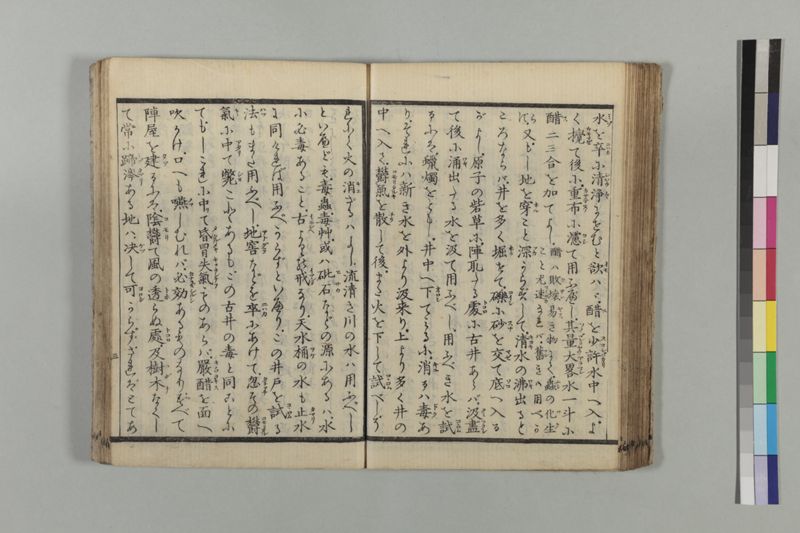
翻刻
【右丁】
水(ミヅ)を卒(ニハカ)に清浄(シヤウ〴〵)にせむと欲(オモ)はゞ、醋(ス)を少(スコシ)許(バカリ)水中へ入、よ
く攪(カキマゼ)て後に、重布(カサネヌノ)に濾(コシ)て用ふべし、其(ソノ)量(ブンリヤウ)大略(アラマシ)水一斗に
醋(ス)二三合を加てよし、《割書:醋は敗壊(クサレ)易(ヤス)き物にて、虫(ムシ)の化生(ワク)|こと尤 速(スミヤカ)なれば、旧(フル)きは用べか》
《割書:ら|ず、》又、もし地を穿(ホル)こと深(フカ)からずして、清(キヨキ)水の沸(ワキ)出ると
ころならば、井を多く堀(ホラ)せて、礫(コイシ)に砂(スナ)を交(マゼ)て底(ソコ)へ入る
がよし、原子の砦草に、陣耴【取の誤記ヵ】たる処(トコロ)に古井あらば、汲(クミ)尽(ツクシ)
て後に湧(ワキ)出たる水を汲て用ふべし、用ふべき水を試(コヽロム)
るには、蝋燭をともし、井中へ下(オロシ)てみるに、消(キユ)るは毒(ドク)あ
り、それには新き水を外より汲来り、上より多く井の
中へ入て、欝気(コモリタルキ)を散(チラ)して後、火を下して試(コヽロム)べし、そ
【左丁】
れにて火の消(キエ)ざるはよし、流清き川の水は用ふべし
といへども、毒虫、毒草【艸】、或は砒石(ヒサウ)などの源にあるは、水
に必毒あること、古(イニシヘ)よりの戒(イマシメ)なり、天水 桶(ヲケ)の水も止(タマリ)水
に同ければ用ふべからずといへり、この井戸を試(コヽロム)る
法(ハフ)もまた用ふべし、地窖(アナグラ)などを卒(ニハカ)にあけて、忽(タチマチ)その欝(コモリタル)
気(キ)に中(アタリ)て斃(シヌ)ことあるも、この古井の毒と同ことに
て、もしこれに中りて昏冒(メクルメキ)失気(キヲウシナフ)ものあらば、巌(キノツヨキ)醋(ス)を面へ
吹かけ、口へも嚥(ノマ)しむれば、必(カナラズ)効(シルシ)あるものなり、すべて
陣屋を建(タツ)るには、陰欝(コモリ)て風の透(トホ)らぬ処(トコロ)、及 樹木(コダチ)なくし
て常に蹄涔(ミヅタマリ)ある地は、決(ケツ)して可(ヨロシ)からず、さればとてあ
現代語訳
【右丁】
水を急に清浄にしたいと思うならば、酢を少しばかり水中へ入れ、よく掻き混ぜてから、重ねた布で濾して用いるべきである。その分量はおおよそ水一斗に酢二三合を加えればよい。《割書:酢は腐敗しやすいもので、虫が発生することが最も早いので、古いものは用いてはならない。》又、もし地を掘ることが深くなくて、清い水が湧き出る所ならば、井戸を多く掘らせて、小石に砂を混ぜて底へ入れるのがよい。元々の砦があった所に陣を張った処に古い井戸があれば、汲み尽くしてから湧き出た水を汲んで用いるべきである。用いるべき水を試すには、蝋燭を灯し、井戸の中へ下ろして見ると、消えるのは毒がある。それには新しい水を外より汲み来たり、上より多く井戸の中へ入れて、こもった気を散らしてから、火を下して試すべきである。そ
【左丁】
れで火が消えなければよい。流れの清い川の水は用いるべきであるといっても、毒虫、毒草、或いは砒石などが源にあるものは、水に必ず毒があることは、古来からの戒めである。天水を溜めた桶の水も溜まり水と同じなので用いてはならないという。この井戸を試す方法もまた用いるべきである。地下の蔵などを急に開けて、たちまちそのこもった気に当たって死ぬことがあるのも、この古い井戸の毒と同じことで、もしこれに当たって眩暈がして気を失う者があれば、強い酢を顔へ吹きかけ、口へも飲ませれば、必ず効果があるものである。すべて陣屋を建てるには、陰気でこもって風の通らない処、及び樹木がなくして常に水溜まりがある地は、決してよろしくない。さりとてあ
英語訳
【Right page】
If one wishes to quickly purify water, one should add a small amount of vinegar to the water, mix it well, then filter it through layered cloth before use. The approximate quantity should be two to three gō of vinegar added to one to of water. 《Marginal note: Vinegar spoils easily and insects generate in it most rapidly, so old vinegar must not be used.》 Also, if the ground need not be dug deeply and there is a place where clean water springs forth, it is good to have many wells dug and put small stones mixed with sand at the bottom. If there is an old well at a place where a camp is set up at a former fortress site, one should draw out all the water and then use the water that springs forth afterward. To test water for use, light a candle and lower it into the well - if it goes out, there is poison. In such cases, draw fresh water from elsewhere, pour much of it into the well from above to disperse the stagnant air, then lower the fire to test. If
【Left page】
the fire does not go out, it is good. Although flowing clear river water should be used, it is an ancient warning that water from sources where poisonous insects, poisonous plants, or arsenic stones are present will surely contain poison. Water from rain barrels is the same as stagnant water and should not be used, it is said. This method of testing wells should also be employed. When underground storerooms are suddenly opened and one is immediately struck by the stagnant air and dies, this is the same as the poison of old wells. If someone is affected by this and becomes dizzy and loses consciousness, spraying strong vinegar on their face and having them drink some will surely be effective. In general, when establishing military camps, places that are gloomy and stagnant where wind does not penetrate, as well as ground without trees that constantly has puddles, are decidedly unsuitable. However,