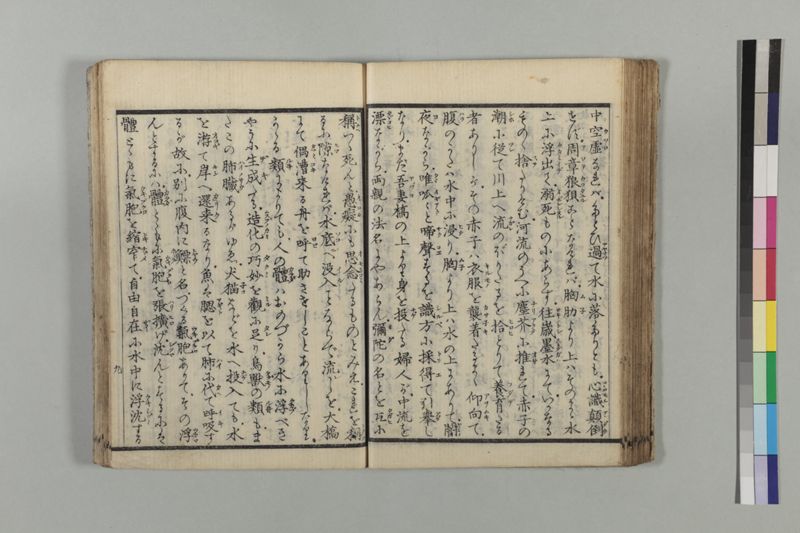
翻刻
【右丁】
中 空虚(ウツロ)なれば、たとひ過(アヤマツ)て水に落たりとも、心識(コヽロモチ)顛倒(テンダウ)
せず、周章(アワテ)狼狽(ウロタエル)ことなければ、胸肋(ムネ)より上はそのまゝ水
上に浮出(ウカミイデ)て、溺死(オボレシヌル)ものにあらず、往歳(サキノトシ)墨水(スミダガハ)にて、いかなる
ものゝ捨(ステ)たりけむ、河流のうへに塵(チリ)芥(アクタ)に推(オサ)れて、赤子の
潮(シホ)に従(ツレ)て川上へ流(ナガレ)のぼりたるを拾い(ヒロヒ)とりて養育(ソダテ)たる
者ありしが、その赤子は衣服(キルモノ)を襲着(カサネキ)たるまゝ仰向(アヲムキ)て、
腹(ハラ)のかたは水中に浸(ヒタ)り、胸(ムネ)より上は水の上にありて、闇(ヤミノ)
夜(ヨ)ながら、唯(タヾ)《振り仮名:呱〳〵|オギア〳〵》と啼(ナク)声(コヱ)するを識方(シルベ)に採得(トリエ)て引 挙(アゲ)し
なり、また吾妻(アヅマ)橋の上より身を投(ナゲ)たる婦人が、中流を
漂(タヾヨヒ)ながら、両親の法名にやあらん、彌陀(ミダ)の名とを互(タガヒ)に
【左丁】
称(となへ)つゝ死んと、愚癡(オロカ)にも思念(オモヒコミ)たるものとみえ、これを称(トナフ)
るに隙(ヒマ)なければ、水 底(ソコ)へ没入(イル)ことならで流 ̄レ しを、大橋
にて偶(タマ々)漕(コキ)来る舟を呼(ヨビ)て助させしことありしなり、
かゝる類(ルヰ)によりても、人の体はおのづから水に浮(ウカブ)べき
やうに生成(デキ)たる、造化(ムスブノカミ)の巧妙(タクミ)を観(ミル)に足(タレ)り、鳥 獣(ケダモノ)の類(ルヰ)も、ま
たこの肺臓(ハイノサウ)あるがゆゑ、犬 猫(ネコ)などを水へ投(ナゲ)入ても、水
を游(オヨギ)て岸(キシ)へ還来(カヘリク)るなり、魚は腮(アギト)を以て肺(ハイ)に代(カヘ)て呼吸(イキ)す
るが故に、別に腹内に鰾(ヒヤウ)【左ルビ:ホハラ】と名づくる気胞(ウキブクロ)ありて、その浮(ウカマ)
んとするには、体(カラダ)とゝもに気胞(ウキブクロ)を張(ハリ)拡(ヒロ)げ、沈(シツマ)んとするには
体とゝもに気胞(ウキブクロ)を縮窄(ヒキチヾメ)て、自由自 在(ザイ)に水中に浮沈(ウキシヅミ)する
現代語訳
【右丁】
中が空洞なので、たとえ誤って水に落ちても、心が動転せず、慌てふためくことがなければ、胸から上はそのまま水上に浮き出て、溺死するものではない。往年、隅田川で、何者かが捨てたのであろうか、川の流れの上で塵芥に押し流されて、赤子が潮に従って川上へ流れ上がったのを拾い取って養育した者があったが、その赤子は衣服を重ね着したまま仰向けで、腹の方は水中に浸かり、胸から上は水の上にあって、暗夜でありながら、ただ「オギア、オギア」と泣く声を頼りに見つけて引き上げたのである。また吾妻橋の上から身を投げた婦人が、中流を漂いながら、両親の法名であろうか、阿弥陀の名号を互いに
【左丁】
唱えつつ死のうと、愚かにも思い込んでいるものと見え、これを唱えるのに暇がないので、水底へ沈むことができずに流されているのを、大橋でたまたま漕ぎ来る舟を呼んで助けさせたことがあった。このような例によっても、人の体は自然と水に浮くように作られている、造化の神の巧妙さを観ることができる。鳥獣の類も、またこの肺臓があるゆえに、犬や猫などを水へ投げ入れても、水を泳いで岸へ帰って来るのである。魚は鰓を以て肺に代えて呼吸するが故に、別に腹内に鰾(うきぶくろ)と名づける気胞があって、その浮かもうとする時には、体とともに気胞を張り広げ、沈もうとする時には体とともに気胞を縮めて、自由自在に水中に浮き沈みする
英語訳
【Right page】
Since the interior is hollow, even if one accidentally falls into water, if the mind does not become confused and one does not panic in bewilderment, the chest and above will naturally float on the water surface, and one will not drown. In past years, in the Sumida River, someone had apparently abandoned an infant, and as it was pushed along by debris on the river's flow, the baby floated upstream with the tide and was picked up and raised by someone. This infant, still wearing layers of clothing and lying face up, had its belly submerged in the water while the chest and above remained on the water surface. Even in the dark night, it was discovered and pulled up by following only the sound of its crying "ogia, ogia." Also, there was a woman who threw herself from Azuma Bridge and while drifting in the mid-current, appeared to be foolishly determined to die while alternately
【Left page】
chanting what were likely her parents' posthumous Buddhist names and Amida's name. Since she was too busy chanting to sink to the bottom, she was carried along by the current until a boat that happened to be rowing by at Ohashi was called to rescue her. From such examples, one can observe the ingenious craftsmanship of the Creator, who made human bodies naturally designed to float on water. Birds and beasts also possess these lungs, so even when dogs or cats are thrown into water, they swim back to shore. Fish use gills instead of lungs for breathing, so they have separately within their bellies what is called a swim bladder - a gas-filled sac. When they wish to rise, they expand this air sac along with their body, and when they wish to sink, they contract the air sac along with their body, thus floating and sinking in the water at will.