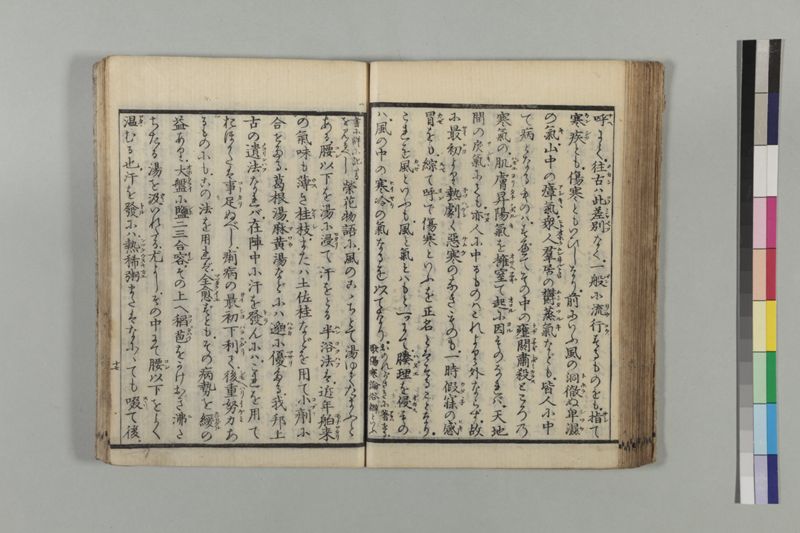
翻刻
【右丁】
呼(ナヘ)にて、往古(ムカシ)は此(コノ)差別(シヤベツ)なく、一 般(パン)に流行(リウコウ)するものをも、指(サシ)て
寒疾(カンシツ)とも、傷寒ともいひしなり、前にいふ風の洞徹(トホラ)ぬ卑湿(シツケ)
の気(キ)、山中の瘴気(アシキヽ)、衆人(ヒトオホク)群居(ムレヰルトコロ)の欝蒸気(ムシタツルキ)なども、皆人に中
て病となるものは、すべてその中の壅閼(トヂフサギ)粛殺(シボミカラス)ところの
寒気の、肌膚(ハダエヨリ)昇陽気(タチノボルキ)を擁(オサヘ)窒(フサギ)て起(オコル)に因(ヨル)ものなれば、天地
間の戻気(アシキヽ)にても、亦(マタ)人に中るものはこれより外ならず、故
に最初(サイシヨ)より熱(ネツ)劇(ハゲシ)く悪寒(サムケ)のなきものも、一時 仮寐(ウタヽネ)の感(ヒキ)
冒(カゼ)をも、綜(スベ)て呼(ヨン)で傷寒といふを正名とはすることなり、
これを風(カゼ)といふも、風と気とはもと一ッにて腠理(ハダエ)を侵(オカス)もの
は、風の中の寒冷(ヒイヤリ)の気なるを以てなり、《割書:おのれがさきに著(アラハ)せる、|歌傷寒論俗弁といふ》
【左丁】
《割書:書に詳に記たる|を見るべし》栄花物語に、風のこゝちとて湯ゆでたまふと
ある、腰(コシ)以下を湯に浸(ヒタリ)て汗をとる半浴法(ハンヨクハフ)は、近年 舶来(モチワタリ)
の気味も薄(ウス)き桂枝(ケイシ)、または土佐桂などを用て小剤(コブク)に
合せたる、葛根湯、麻黄(マワウ)湯などには邈(ハルカ)に優(マサリ)たる、我邦上
古の遺法(ノコリシハフ)なれば、在陣中に汗を発(トラ)んには、これを用て
おほかたは事(コト)足(タリ)ぬべし、痢病の最初(サイシヨ)下利(ハラクダリ)て、後重(シモヘハリ)努力(イケミ)あ
るものにも、この法を用れば、全(マツタク)愈(イエ)ずとも、その病勢を緩(クツログル)の
益あり、大盤(オホタライ)に塩(シホ)二三合 容(イレ)、その上へ稲苞(コメダハラ)をかけおき沸(ニ)た
ちたる湯を汲(クミ)いれたる、尤よし、その中にて腰(コシ)以下をよく
温(アタヽ)むる也、汗を発(トル)には、熱(アツク)稀(ウスキ)粥(カユ)またはなにゝても啜(スヽリ)て後、
現代語訳
【右丁】
呼び方であって、往古はこの差別なく、一般に流行するものも指して寒疾とも、傷寒とも言ったのである。前に言う風の通らない湿気の多い気、山中の瘴気、多くの人が群居する場所の蒸し暑い気なども、皆人に当たって病となるものは、すべてその中の滞りふさがり、萎縮させ枯らすところの寒気が、肌から立ち上る陽気を抑えふさいで起こることによるものであるから、天地間の悪気でも、また人に当たるものはこれより他ではない。故に最初から熱が激しく悪寒のないものも、一時的なうたた寝の風邪も、すべて呼んで傷寒というのを正名とすることである。これを風というのも、風と気とは元来一つであって、皮膚の表面を侵すものは、風の中の寒冷の気であることによるものである。《割書:自分が以前に著した「歌傷寒論俗弁」という
【左丁】
《割書:書に詳しく記したのを見るべきである》栄花物語に、「風のこころちとて湯ゆでたまふ」とある、腰以下を湯に浸して汗をとる半身浴法は、近年舶来の気味も薄い桂枝、または土佐桂などを用いて小量に合わせた、葛根湯、麻黄湯などにははるかに優れた、我が国上古の遺法であるから、陣中で汗を発散させるには、これを用いて大体は事足りるであろう。赤痢病の最初、下痢して、後重・いきみがあるものにも、この法を用いれば、完全に治らなくても、その病勢を和らげる効果がある。大きな盥に塩二三合入れ、その上へ米俵をかけおき、沸騰した湯を汲み入れたのが、最もよい。その中で腰以下をよく温めるのである。汗を発散させるには、熱くて薄い粥または何でもすすって後、
英語訳
【Right page】
This is the nomenclature, and in ancient times there was no such distinction - even generally epidemic conditions were referred to as cold disease (kanshitsu) or shanghan. The stagnant humid air that wind cannot penetrate, the miasmatic qi of mountains, and the sultry steamy qi of places where many people gather in crowds, as mentioned earlier - all these that affect people and cause illness are entirely due to the stagnant, obstructive, withering and killing cold qi within them that suppresses and blocks the yang qi rising from the skin. Therefore, even malignant qi between heaven and earth that affects people is nothing other than this. Hence, even conditions with severe fever and no chills from the beginning, or temporary colds from brief naps, are all properly called shanghan. The reason this is also called "wind" is that wind and qi are originally one, and what invades the skin surface is the cold qi within wind. 《Marginal note: In my previously published work called "Uta Shanghan-ron Zokuben"
【Left page】
《Marginal note: this is recorded in detail and should be consulted》 In the Eiga Monogatari, it says "suffering from wind symptoms, one bathes in hot water." This half-bath method of immersing the body below the waist in hot water to induce sweating is a remnant method from our country's ancient times that is far superior to Kakkonto or Maoto prepared in small doses using the recently imported, weak-flavored keishi (cinnamon) or Tosa cinnamon. Therefore, for inducing sweating while in military camp, using this method should suffice for most cases. Even for dysentery patients who initially have diarrhea with tenesmus and straining, if this method is used, even if not completely cured, it has the benefit of alleviating the disease's intensity. It is best to put two to three go of salt in a large basin, place rice straw over it, and pour in boiling water. In this, one thoroughly warms the body below the waist. To induce sweating, after sipping hot, thin gruel or anything else,