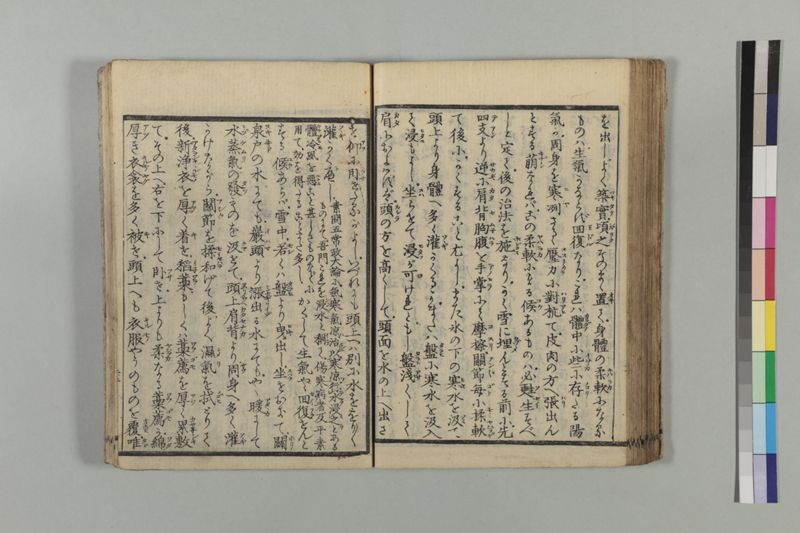
翻刻
【右丁】
を出し、よく築実(ツキタテ)、頃之(シバラク)そのまゝ置(オキ)て、身体の柔軟(ヤハラカ)になる
ものは、生気かならず回復(モドル)なり、これは体(カラダノ)中に些(イサヽカ)に存(ノコリ)たる陽
気か、周身を寒冽(ヒヤ)さるゝ圧力(オスチカラ)に対抗(ハリアヒ)て、皮肉の方へ張(ハリ)出ん
とする萌(キザシ)なれば、この柔軟(ヤハラカ)になる候(コウ)あるものは、必 甦生(ソセイ)すべ
しと定て、後の治法を施(ホドコス)なり、かく雪に埋(ウヅメ)んとする前に、先
四支(テアシ)より逆(サカシマ)に肩(カタ)背(セ)胸(ムネ)腹(ハラ)を手掌(テノヒラ)にて摩擦(コスリ)、関節(フシ〴〵)毎(ゴト)に揉(モミ)軟(ヤハラゲ)
て後に、かくすること尤よし、また氷の下の寒(ヒヤ)水を汲(クミ)て
頭上より身体へ多く濯(ソヽギ)かくるか、または盤(タラヒ)に寒水を汲入
て浸(ヒタス)もよし、坐(スハ)らせて浸(ヒタス)が可(ヨ)けれと、もし盤(タラヒ)浅(アサ)くして
肩(カタ)におよはずば、頭(カシラ)の方を高くして、頭面を水の上へ出さ
【左丁】
せ仰(アフ)に臥(フサ)せたるがよし、いづれにも頭上へは別に水ををり〳〵
潅(ソヽギ)かくべし、《割書:素問五常政大論に、気寒気涼 ̄ハ、治 ̄スルニ以 ̄ス_二【一点は誤記】寒涼 ̄ヲ_一、行 ̄シテ_レ水 ̄ヲ浸 ̄ス_レ之 ̄ヲ とある|ものにて、吾門これを浸(シン)水と称(イフ)て、傷寒病者、及平素》
《割書:体(カラダ)冷(ヒエ)、風を悪(ニクム)こと甚しきものなどに|用て、効を得たることまた多し、》かくして生気やゝ回復(カイフク)せんと
する候(コウ)あらば、雪中、若(モシ)くは盤(タラヒ)より曳(ヒキ)出し、坐(スハラ)せおきて、闢(ホリ)
泉戸(ヌキヰド)の水にても、巌頭(イハマ)より漲(ミナギリ)出(イヅ)る水にても、やゝ暖(アタヽカ)にして
水蒸気(ミヅケムリ)の発(タツ)ものを汲(クマ)せて、頭上(ツムリノウヘ)肩(カタ)背(セナカ)より、周(サウ)身へ多く潅(ソヽギ)
かけながら、関節(フシ〴〵)を揉(モミ)和(ヤハラ)げて後、よく湿気(シメリ)を拭(ノゴヒ)とりて
後、新浄衣(アタラシキヽルモノ)を厚(アツ)く着(キ)せ、稲藁(イネワラ)、もしくは藁薦(ワラゴモ)を厚(アツ)く累(カサネ)敷(シキ)
て、その上へ右を下にして臥(フサ)せ、上よりも柔(ヤハラカ)なる藁薦(ワラゴモ)か、綿(ワタ)
厚(アツ)き衣(キルモノ)衾(ヤグ)を多く被(キ)せ、頭上へも衣服(キルモノ)やうのものを覆(オホヒ)、唯(タヾ)
現代語訳
【右丁】
を出し、よく突き固めて、しばらくそのまま置いて、身体が柔らかくなるものは、生気が必ず回復する。これは体の中に僅かに残った陽気が、全身を冷やす圧力に対抗して、皮膚や筋肉の方へ張り出そうとする兆しなので、この柔らかくなる徴候があるものは、必ず蘇生するべきと決めて、その後の治療法を施す。このように雪に埋める前に、まず手足から逆に肩、背、胸、腹を手のひらで摩擦し、関節ごとに揉んで柔らかくした後に、このようにすることが最もよい。また氷の下の冷水を汲んで頭上から身体へ多く注ぎかけるか、または盥に冷水を汲み入れて浸すのもよい。座らせて浸すのがよいが、もし盥が浅くて肩に及ばなければ、頭の方を高くして、頭面を水の上へ出さ
【左丁】
せて仰向けに臥せるのがよい。いずれにも頭上へは別に水を折々注ぎかけるべきである。《割書:素問五常政大論に、気寒気涼は、治するに寒涼を以てし、水を行して之を浸すとあるもので、我が門ではこれを浸水と称して、傷寒病者、及び平素体が冷え、風を嫌うこと甚だしいものなどに用いて、効を得たこともまた多い》このようにして生気がやや回復しようとする徴候があれば、雪中、若しくは盥より引き出し、座らせておいて、掘り抜き井戸の水でも、岩頭より溢れ出る水でも、やや暖かくして水蒸気の発するものを汲ませて、頭上、肩、背中から、全身へ多く注ぎかけながら、関節を揉んで柔らかくした後、よく湿気を拭き取った後、新しい清潔な衣服を厚く着せ、稲藁、もしくは藁薦を厚く重ね敷いて、その上へ右を下にして臥せ、上からも柔らかな藁薦か、綿の厚い衣服や夜具を多く被せ、頭上へも衣服のようなものを覆い、ただ
英語訳
【Right Page】
Expose only the face above ground, pack it down well, and leave it as is for a while. If the body becomes soft, vital energy will surely return. This is because the slight yang energy remaining in the body attempts to expand toward the skin and muscles in opposition to the pressure of cold surrounding the entire body. When there are signs of this softening, one should determine that revival is certain and apply subsequent treatment methods. Before burying in snow like this, it is best to first massage with the palms from the extremities up to the shoulders, back, chest, and abdomen, kneading and softening each joint, then proceed with this method. It is also good to draw cold water from beneath ice and pour it abundantly from the head over the body, or to fill a basin with cold water for immersion. Sitting immersion is preferable, but if the basin is too shallow to reach the shoulders, it is better to elevate the head and have the patient lie supine with the head and face above water.
【Left Page】
In either case, water should be poured separately over the head from time to time. 《Marginal note: The Suwen Wuchang Zheng Dalun states, "When qi is cold and cool, treat with cold and coolness, circulate water and immerse." Our school calls this "immersion water therapy" and has achieved many successes using it for typhoid patients and those whose bodies are habitually cold and extremely averse to wind.》 When there are signs that vital energy is beginning to recover, remove the patient from the snow or basin, seat them, and whether using water from a well or water flowing from rock faces, use somewhat warm water that produces steam. Pour this abundantly over the head, shoulders, back, and entire body while kneading and softening the joints. After thoroughly wiping away moisture, dress the patient thickly in fresh clean clothing, lay thick layers of rice straw or straw mats, have them lie on their right side, cover abundantly with soft straw mats or thick cotton garments and bedding from above, cover the head with clothing-like materials, leaving only