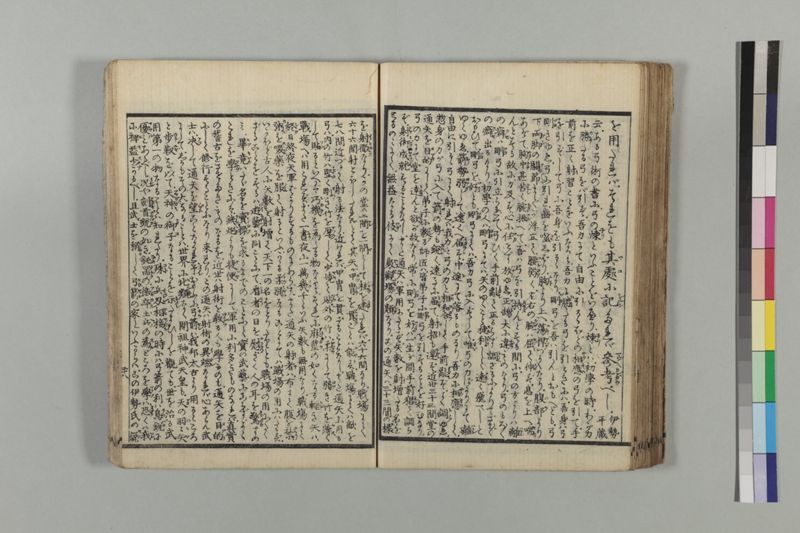
翻刻
【右丁】
を用たれば、それをも其処(ソコ)に記(シルシ)たれば参考(マジヘカンガウ)べし、《割書:伊勢|平蔵》
《割書:云、ある弓術の書に、弓の煉(ネリ)といふことをいへり、煉(ネリ)とは、初学の時、わが力|に勝(カチ)たる弓をば引ず、吾力にて自由に引るゝほどの相応(サウオウ)の弓を引て、手》
《割書:前を正く射(イ)習ことをいふなり、吾力に勝(カチ)たる弓を引ときには、吾身は弓|を引ずして、弓に吾身を引るゝなり、剛(ツヨ)弓を吾は引んとおもへども、弓》
《割書:剛(ツヨ)きゆゑ、弓に引れ、歯(は)を噬(クヒ)しばり、胸(ムネ)より上へ蕩悍(ユリアゲ)つよくなり、腹部(ハラ)より|下 両脚(アシ)の関節(フシ〴〵)までが浮立て、腰(コシ)弱(ヨワ)く、左右の腕(ウデ)は屈(カヾミ)て伸(ノビ)ず、息を上へ喘(セリ)》
《割書:あげて、胸中(ムネノウチ)甚 苦(クルシ)く、腕(ウデ)振(フル)へて、吾は弓を引 持(タモタ)んとする間に、弓の方よりは離(ハナレ)|んとする故に、力及ず、心に任(マカ)せず放(ハナツ)ゆゑ、正鵠(マト)大に違(チガフ)ものなり、弓のもろ〳〵》
《割書:の癖(クセ)は剛(ツヨ)弓に引立られて、弓ひく手前 乱(ミタレ)て正からず調(トヽノハ)ざるによりてさま〴〵|の癖(クセ)出るなり、初学の人は、剛(ヨヨ)【ツヨの誤記】弓にては、矢のゆくこと捷利(スルドク)して遠(トホ)く飛べしと》
《割書:おもひて、剛(ツヨ)弓を好(コノム)とも、剛(ツヨ)弓にては、吾力弓に入ずして、唯(タヾ)弓の力ばかりにて離(ハナレ)|ゆくゆゑ、箭(ヤノ)勢 弱(ヨワク)して遠くへ届(イタラ)ず、中 途(ト)にて落るものなり、吾力に相応(サウオウ)して、》
《割書:自由に引るゝ弓にて射(イ)れば、我力と弓の力と相(アヒ)和合(ワカフ)して手前 乱(ミタレ)ず、よく調(ト[ヽ]ノフ)ゆゑ、|総身の力が弓に入て、箭(ヤ)の勢も鋭(スル[ド])く、遠きに届(トヾキ)て、射招(マト)も違(チガハ)ず、近世三十三間堂の》
《割書:通矢を目的(メアテ)にして、弟子に教(ヲシフ)る師匠は、皆弟子に剛(ツヨ)弓を引することを好むなり、|弓の力にて堂を達(トホサ)んと欲(オモフ)が故なり、常に剛(ツヨ)弓を好(コノメ)ば、一生が間手前 猖(クルフ)て調ら》
《割書:ず、射術(シヤシユツ)成就([ジ]ヤウジユ)することなし、また通矢は軍用にたゝず、矢数を射(イ)増たる名を|とるのこ【みヵ】にて、無益なる技(ワザ)にて聚観場(ミセモノ)の類(ルヰ)なり、この通矢は、三十三間の椽(エン)【「縁」とあるところか】》
【左丁】
《割書:を射徹(イトホス)なり、かの堂は二 間(ケン)を一 間(マ)として柱(ハシラ)を建(タテ)たれば、六十六間なり、戦場にて|六十六間射とほしたればとて其矢が甲冑(カツチウ)を貫(ツラヌク)ことは能(▢▢ワ)【アタワ】ず、戦場にては敵を》
《割書:七八間近づけて射る法なり、近ければ、甲冑を貫ざることなし、また通矢に用る|弓は、内の竹は、堅(カタ)く剛(コハ)き竹を厚(アツク)して、少 焼(ヤキ)て貼(ツケ)、外の竹は、柔(ヤハラカ)にして弱(ヨワ)き竹を薄(ウス)く》
《割書:して貼(ツク)るといへば巧機(シカケ)を為たる物なり、それに麻茎(アサカラ)の如くなる軽(カロ)き矢は、|戦場へは用られず、また一 昼(チウ)夜に一万 幾(イク)千といふ矢数も無用なり、戦場にて》
《割書:終(シウ)日終夜矢軍ばかりするものにあらず、また通矢の射者(イテ)は、布にて腹を紮(クヽリ)、|粥(カユ)を啜(スヽリ)薬を服(ノミ)て射るといふ、かゝる柔弱(ジウシヤク)なることにては、戦場の用にはたゝず、》
《割書:いかほど古人に矢数を射増て、天下一の名をとりたりとも、戦場の用にたゝ|ざることをするは、遊芸(イウゲイ)に同ことにて、看者(ミルモノ)の目を慰(ナクサメ)、きく人の耳を驚(オドロカ)すの》
《割書:み、畢竟(ヒツキヤウ)はたゞ名を売(ウリ)禄(ロク)を求るまでのことにて、実の武芸にあらず、よく|これを学(マナブ)ときには、鉄炮(テツハウ)よりも捷便(テバヤ)にして、軍用に利多きものなれば、真実》
《割書:の稽古をさせたきものなるを、近世は射術を教(ヲシフ)る人も学ものも、通矢を目的(メアテ)|にして修行することになり来れり、この通矢は射術の異端(イタン)なれば心あらん武》
《割書:士は、決(ケツ)して通矢を望(ノゾム)ことなかれ、予(オノレ)おもふに、弓箭(キウセン)は、我邦太古より用るところ|にして、しかもその大なることは、世界に比類(ヒルヰ)なく開祖神武天皇も、天(アメ)の羽々矢(ハヽヤ)【注】》
《割書:と歩(カチ)靫(ユギ)を以て天神(アマツガミ)の御子(ミコ)なることを示(シメシ)たまひしを観ても、世を治る武|用第一の物なることは知れたり、殊(コト)に兵刃([ヘ]イジン)相接(アヒマジハル)の時には、弓箭の利は鳥鋭(テツパウ)【銃の誤記ヵ】に》
《割書:優(マサル)ことあるべし、況(イハン)や剣首銃(ケンヅキデツパウ)の如き、鈍器(ニブキタウク)の、徼卒(アシカル)土兵(コヘ▢)【コヘイ(雇兵の意)ヵ】の為(スル)ところを学(マナフ)は、恐(オソラ)くは我(ワレ)|に裨益(ヱキ)少(スクナ)かるべし、且武士を称(シヨウ)して弓箭(キウセン)の家といふからは、この伊勢氏の説(セツ)》
【注 語義不詳。見事な矢羽の付いた神聖な矢の意か。】
現代語訳
【右丁】
を用いたので、それをもそこに記したので参考にすべきである。《伊勢平蔵曰く、ある弓術の書に、弓の「練り」ということを言っている。練りとは、初学の時、自分の力に勝る弓は引かず、自分の力で自由に引けるほどの相応な弓を引いて、手前を正しく射習うことを言う。自分の力に勝る弓を引く時には、自分が弓を引くのではなく、弓に自分が引かれるのである。強弓を自分は引こうと思うけれども、弓が強いゆえに、弓に引かれ、歯を食いしばり、胸から上へ激しく揺り上げられ、腹部から下、両脚の関節まで浮き立って、腰が弱くなり、左右の腕は屈んで伸びず、息を上へ喘ぎあげて、胸中が非常に苦しく、腕が震えて、自分は弓を引き保とうとする間に、弓の方は離れようとするので、力及ばず、心の思うようにならずに放つゆえ、的に大きく外れるものである。弓のもろもろの癖は強弓に引き立てられて、弓を引く手前が乱れて正しくならず調わないことにより様々な癖が出るのである。初学の人は、強弓では矢の行くことが鋭く遠くまで飛ぶだろうと思って、強弓を好むとも、強弓では、自分の力が弓に入らずに、ただ弓の力ばかりで離れていくゆえ、矢の勢いが弱くて遠くへ届かず、途中で落ちるものである。自分の力に相応して、自由に引ける弓で射れば、我が力と弓の力が相和合して手前が乱れず、よく調うゆえ、全身の力が弓に入って、矢の勢いも鋭く、遠くに届いて、的も外さず、近世三十三間堂の通矢を目的にして、弟子に教える師匠は、皆弟子に強弓を引くことを好む。弓の力で堂を射通そうと思うが故である。常に強弓を好めば、一生の間手前が狂って調わず、射術成就することなし、また通矢は軍用に立たず、矢数を射増した名を取るのみにて、無益な技で見世物の類である。この通矢は、三十三間の縁を射通すのである。かの堂は二間を一間として柱を建てたので、六十六間である。》
【左丁】
《戦場にて六十六間射通したからといって、その矢が甲冑を貫くことはできず、戦場では敵を七八間近づけて射る法である。近ければ、甲冑を貫かないことはない。また通矢に用いる弓は、内の竹は、堅く強い竹を厚くして、少し焼いて貼り、外の竹は、柔らかくて弱い竹を薄くして貼るというので、仕掛けを施したものである。それに麻茎のような軽い矢は、戦場では用いられず、また一昼夜に一万幾千という矢数も無用である。戦場にて終日終夜矢軍ばかりするものではない。また通矢の射手は、布で腹を縛り、粥を啜り薬を服して射るという、かかる柔弱なことでは、戦場の用には立たず、いかほど古人に矢数を射増して、天下一の名を取ったとしても、戦場の用に立たないことをするのは、遊芸に同じことで、見る者の目を慰め、聞く人の耳を驚かすのみ、畢竟はただ名を売り禄を求めるまでのことで、実の武芸ではない。よくこれを学ぶ時には、鉄砲よりも手早くして、軍用に利の多いものなので、真実の稽古をさせたいものであるのに、近世は射術を教える人も学ぶ者も、通矢を目的にして修行することになってきた。この通矢は射術の異端なので心ある武士は、決して通矢を望むことなかれ。私が思うに、弓矢は、我が国太古より用いるところにして、しかもその大なることは、世界に比類なく開祖神武天皇も、天の羽々矢と歩靫を以て天神の御子なることを示したまいしを見ても、世を治める武用第一の物なることは知れた。殊に兵刃相接する時には、弓矢の利は鉄砲に優ることがあるだろう。況んや剣付き鉄砲の如き、鈍器の、足軽土兵の為すところを学ぶのは、恐らくは我に益少ないだろう。且つ武士を称して弓矢の家というからは、この伊勢氏の説は}}
【注 語義不詳。見事な矢羽の付いた神聖な矢の意か。】
英語訳
【Right Page】
was used, so since this is also recorded there, it should be referenced. 《Ise Heizō says: A certain archery manual speaks of "training" with the bow. Training means that when learning initially, one does not draw a bow that exceeds one's strength, but draws an appropriate bow that can be freely drawn with one's own power, and practices shooting with correct form. When drawing a bow that exceeds one's strength, it is not oneself drawing the bow, but the bow drawing oneself. Though one intends to draw a strong bow, because the bow is strong, one is pulled by the bow, clenching teeth, being violently jerked upward from the chest, with the area from the abdomen down to both leg joints floating up, the waist becoming weak, both arms bent and unable to extend, gasping for breath upward, the chest extremely distressed, arms trembling, and while one tries to hold and draw the bow, the bow seeks to release, so strength is insufficient and one releases against one's will, thus greatly missing the target. Various bad habits with the bow arise from being pulled by strong bows, with shooting form becoming disordered and improper due to lack of adjustment. Beginning students think that with strong bows arrows will fly sharply and far, and though they prefer strong bows, with strong bows one's power does not enter the bow, and as it releases with only the bow's power, the arrow's force is weak and does not reach far, falling midway. If one shoots with a bow appropriate to one's strength that can be freely drawn, one's power and the bow's power harmonize, the form does not become disordered and is well-adjusted, so the whole body's power enters the bow, the arrow's force is also sharp, reaching far without missing the target. In recent times, masters who teach disciples with the goal of Sanjūsangendō's through-shooting all prefer having disciples draw strong bows. This is because they want to shoot through the hall with the bow's power. If one constantly prefers strong bows, one's form will be deranged and maladjusted for life, and archery will never be mastered. Moreover, through-shooting is useless for military purposes, serving only to gain fame for shooting many arrows, being a useless technique like a sideshow. This through-shooting means shooting through the thirty-three ken corridor. That hall has pillars built with two ken as one interval, so it is sixty-six ken.》
【Left Page】
《Even if one shoots through sixty-six ken on the battlefield, that arrow cannot penetrate armor, and on the battlefield the method is to let enemies approach within seven or eight ken before shooting. If close, it will certainly penetrate armor. Also, bows used for through-shooting have inner bamboo that is hard and strong bamboo made thick, slightly fired and attached, while outer bamboo uses soft and weak bamboo made thin and attached, so they are devices with special mechanisms. Moreover, light arrows like hemp stalks cannot be used on battlefields, and shooting tens of thousands of arrows in one day and night is also useless. On battlefields one does not engage only in arrow warfare all day and night. Also, through-shooting archers bind their bellies with cloth, sip porridge and take medicine before shooting - such weakness is useless for battlefield purposes. No matter how much ancient people increased their arrow counts and gained fame as the best in the realm, doing things useless for battlefield purposes is the same as recreational arts, merely comforting viewers' eyes and surprising listeners' ears. Ultimately it is just selling one's name and seeking salary, not true martial arts. When this is properly learned, it is quicker than firearms and very useful for military purposes, so one would want to have true training, but in recent times both those who teach archery and those who learn it have come to train with through-shooting as their goal. This through-shooting is heretical to archery, so thoughtful warriors must never aspire to through-shooting. I think that bow and arrow have been used in our country since ancient times, and their greatness is unparalleled in the world. Even seeing that our founding Emperor Jinmu demonstrated his divine parentage through the heavenly hahaya arrows and foot quiver shows that this is the primary military implement for governing the world. Especially when weapons clash directly, the advantages of bow and arrow may exceed those of firearms. How much more so - learning what foot soldiers and hired troops do with clumsy implements like sword-mounted guns would probably benefit us little. Moreover, since warriors are called "houses of bow and arrow," this theory of Lord Ise...》
【Note: Meaning unclear. Possibly refers to sacred arrows with splendid fletching.】