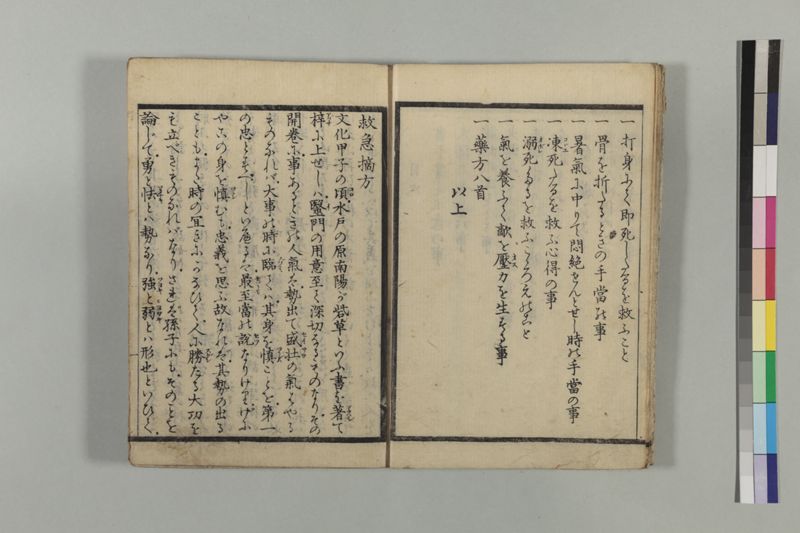
翻刻
【右丁】
一打身にて即死したるを救ふこと
一骨を折たるときの手当の事
一暑気に中りて悶絶せんとせし時の手当の事
一 凍(コヾエ)死たるを救ふ心得の事
一 溺(オボレ)死たるを救ふこゝろえのこと
一気を養ふて敵を圧(オス)力を生する事
一薬方八首
以上
【左丁】
救急摘方
文化甲子の頃(コロ)、水戸の原南陽が砦草といふ書を著(アラハシ)て
梓(アヅサ)に上せしは、医(イ)門の用意至て深切なるものなり、その
開巻に、事あるときの人気は、勢出て盛壮(セイサウ)の気はやる
ものなれば、大事の時に臨(ノゾミ)ては、其身を慎(ツヽシム)ことを、第一
の忠とすべしといへるは、最(モツトモ)至当の説(セツ)なりけり、げに
やこの身を慎(ツヽシ)むも、忠義を思ふ故なれば、其勢の出る
ことも、また時の宜きにかなひて、人に勝(スグレ)たる大功を
も立べきものなればなり、されば孫子にも、そのことを
論じて、勇と怯(ツタナキ)とは勢なり、強(ツヨキ)と弱(ヨワキ)とは形也といひて、
現代語訳
【右丁】
一 打撲により即死した者を救うこと
一 骨を折った時の手当のこと
一 暑気あたりで悶絶しそうになった時の手当のこと
一 凍死した者を救う心得のこと
一 溺死した者を救う心得のこと
一 気を養って敵を圧倒する力を生み出すこと
一 薬方八首
以上
【左丁】
救急摘方
文化元年(甲子)の頃、水戸の原南陽が『砦草』という書を著して
出版したのは、医学界にとって非常に有益で親切なものである。その
冒頭に、「事変が起こった時の人心は、勢いが出て盛んで壮健な気が逸る
ものであるから、大事の時に臨んでは、自分の身を慎むことを第一
の忠義とすべきである」と述べているのは、最も適切な説である。まことに
この身を慎むのも、忠義を思うゆえであるから、その勢いが出る
ことも、また時宜にかなって、人に優れた大功を
立てることができるものなのである。そこで孫子も、そのことを
論じて、「勇敢さと臆病さとは勢いの問題であり、強さと弱さとは形勢の問題である」と言って、
英語訳
【Right page】
1. On rescuing those who died instantly from blunt trauma
1. On treating broken bones
1. On treating those about to faint from heat stroke
1. On the principles of rescuing those who froze to death
1. On the principles of rescuing those who drowned
1. On cultivating one's spirit to generate power that overwhelms enemies
1. Eight medicinal prescriptions
The above
【Left page】
Emergency Medical Remedies
Around the first year of Bunka era (1804, Year of the Wood Rat), Hara Nan'yō of Mito wrote
a book called "Toride-gusa" (Fortress Grass) and had it published,
which was extremely useful and thoughtful for the medical field. In its
opening, he states that "when incidents occur, people's spirits become excited and vigorous energy runs high,
so when facing critical situations, one should consider exercising self-restraint as the primary
form of loyalty"—this is indeed a most appropriate view. Truly,
this self-restraint also stems from thoughts of loyalty, so when that vigor emerges,
it also aligns with the proper timing, allowing one to achieve great accomplishments
that surpass others. Therefore, Sun Tzu also
discussed this matter, saying "courage and cowardice are matters of momentum, while strength and weakness are matters of formation," and