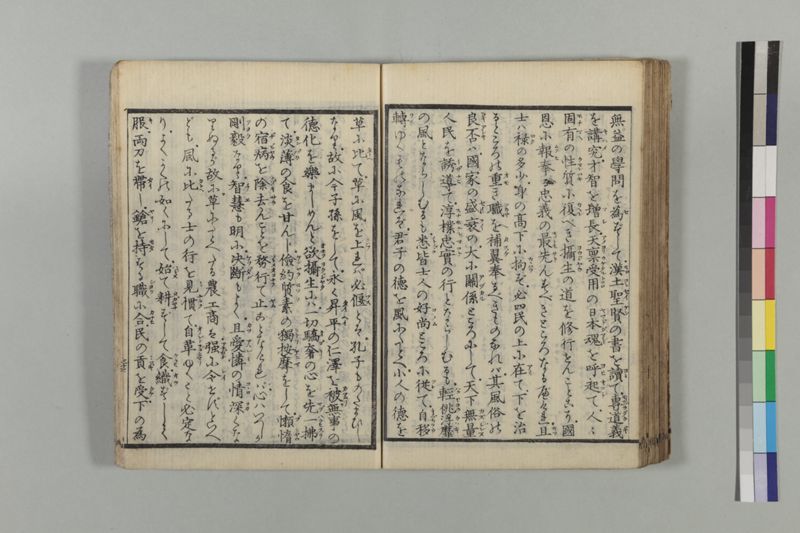
翻刻
【右丁】
無益の学問を為(セ)ずして、漢土(モロコシ)聖賢(セイケン)の書を読(ヨミ)て、専(モツパラ)道義(’ダウギ)
を講究(キハメ)、才智を増長(マシ)、天稟受用(アメヨリウケタルトコロ)の日本魂(ヤマドダマシヒ)を呼起(ヨビオコシ)て、人々
固有(モチマヘ)の性質(ウマレツキ)に復(カヘル)べき摂生(ヨウジヤウ)の道を修行せんことこそ、国
恩に報(ムクヒ)奉る忠義の最(モツトモ)先(サキ)んずべきところなるべけれ、且(カツ)
士は禄(ロク)の多少、身の高下に拘(カヽハラ)ず、必四民の上に在(アリ)て、下を治
るところの重(オモ)き職(ツカサ)を補翼(タスケ)奉るべきものなれば、其風俗の
良否(ヨキアシキ)は、国家の盛衰(セイスイ)の、大に関係(アヅカル)ところにして、天下 無量(カズシレヌ)
人民を誘導(イザナヒ)て、淳樸(スナホナル)忠実(マコト)の行とならしむるも、軽佻(ハクジヨウ)浮靡(ウハキ)
の風とならしむるも、悉(コト〴〵ク)皆士人の好尚(コノム)ところに従(ツレ)て、自(オノヅカラ)移(ウ)
転(ツリ)ゆくものなれば、君子の徳を風にたとへ、小人の徳を
【左丁】
草に比(タトヘ)て、草に風を上(クハフ)れば必 偃(フス)とは、孔子ものたまひし
なり、故に今子孫をして、永く昇平(タイヘイ)の仁沢を被(カフムリ)無事の
徳化を楽ましめんと欲(オモフ)摂生(ヨウジヤウ)には、一切 驕奢(オゴリ)の心を先(マヅ)一払(ハラヒステ)
て、淡薄(タンパク)の食を甘んじ、倹約(ケンヤク)質素(ヒツソ)の独(ヒトリ)按摩(アンマ)をして、懶惰(ブシヤウ)
の宿病(ヂビヤウ)を除(ノゾキ)去(サラ)んことを務(ツトメ)行(オコナフ)て止(ヤム)ことなければ、心はいつしか
剛毅(ツヨク)なり、智慧(チヱ)も明に、決断(ケツダン)もよく、且(カツ)愛憐(アハレミ)の情(コヽロ)深(フカ)くな
りぬるが故に、草にたとへたる農工商は、強(アナガチ)に令(レイ)せずといへ
ども、風に比(タトヘ)たる士の行を見慣(ミナラフ)て、自(オノレト)革(アラタマリ)ゆくこと必定な
り、よくかくの如くにして、始(ハジメ)て耕(タガヤサ)ずして食(クラヒ)、織(オラ)ずして
服(キ)、両刀を帯(タイ)し、鎗(ヤリ)を持(モタ)する職(シヨク)に合(カナヒ)、民の貢(ミツギ)を受(ウケ)、下の為
現代語訳
【右丁】
無益な学問をせずに、中国の聖賢の書を読んで、専ら道義を究め、才知を増長させ、天から授かった日本魂を呼び起こして、人々が本来持っている性質に立ち返るべき養生の道を修行することこそ、国恩に報いる忠義において最も先んじてなすべきところであろう。かつ武士は禄の多少、身分の高低に関わらず、必ず四民の上に在って、下を治めるという重要な職務を補佐するものであるから、その風俗の良し悪しは、国家の盛衰に大いに関係するところであって、天下無数の人民を導いて、純朴で忠実な行いとならしめるも、軽薄で浮ついた風とならしめるも、すべて皆武士が好むところに従って、自然に移り変わっていくものであるから、君子の徳を風にたとえ、小人の徳を
【左丁】
草に比べて、草に風を加えれば必ず伏すとは、孔子も仰ったことである。故に今、子孫をして、永く太平の仁沢を被り、無事の徳化を楽しませようと思う養生には、一切の驕奢の心をまず一掃して、淡白な食事を甘んじ、倹約質素を独自に実践して、怠惰の持病を除去することを務め行って止むことがなければ、心はいつしか剛毅になり、知恵も明らかに、決断力もよく、かつ慈愛の情も深くなるが故に、草にたとえた農工商は、強いて命令せずといえども、風にたとえた武士の行いを見慣れて、自ら改まっていくこと必定である。よくこのようにして、初めて耕さずして食い、織らずして着て、両刀を帯び、槍を持つ職に適い、民の貢物を受け、下のため
英語訳
【Right Page】
Rather than pursuing useless learning, one should read the books of Chinese sages, devote oneself to investigating moral principles, increase wisdom and intelligence, awaken the Japanese spirit bestowed by heaven, and practice the way of yangsheng (health cultivation) to return to each person's inherent nature. This is what should take precedence in the loyalty that repays the nation's benevolence. Moreover, since warriors, regardless of the size of their stipends or the height of their status, must necessarily stand above the four classes of people and assist in the important duty of governing those below, the quality of their customs greatly affects the rise and fall of the nation. Whether the countless people of the realm are guided toward pure and faithful conduct, or toward frivolous and superficial ways, all depends entirely on what the warrior class favors, changing naturally according to their preferences. As the analogy goes, the virtue of the gentleman is like wind, and the virtue of the common people is like
【Left Page】
grass—when wind is applied to grass, it necessarily bends down, as Confucius himself said. Therefore, if one wishes descendants to long enjoy the benevolent blessings of great peace and take pleasure in the moral transformation of tranquil times, in yangsheng practice one must first sweep away all thoughts of luxury and extravagance, be content with simple food, practice frugality and austerity on one's own, and work continuously to eliminate the chronic disease of laziness. If this is done without cease, the heart will naturally become resolute, wisdom will become clear, decision-making will improve, and compassionate feelings will deepen. Therefore, the farmers, artisans, and merchants—likened to grass—even without being forcefully commanded, will become accustomed to observing the conduct of the warriors—likened to wind—and will certainly reform themselves naturally. Only by doing this well can one finally be worthy of the position of eating without tilling, wearing clothes without weaving, wearing two swords, carrying a spear, receiving tribute from the people, and serving those below.