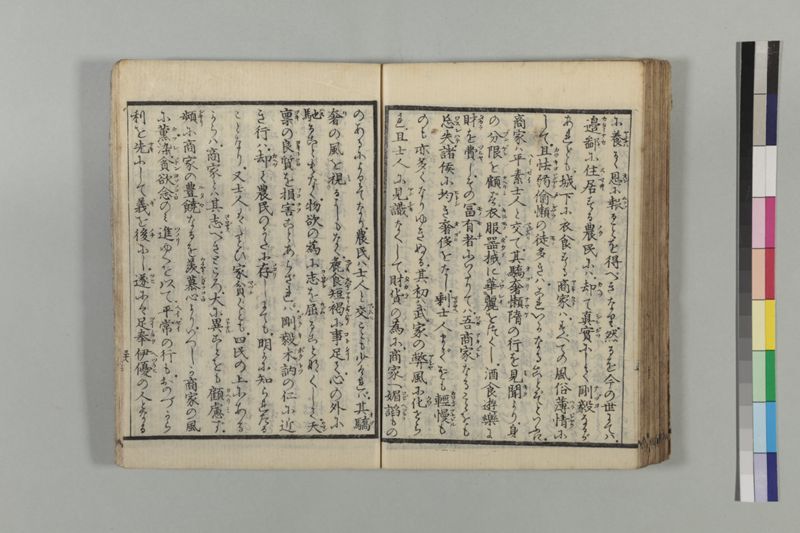
翻刻
【右丁】
に養(ヤシナハ)るゝ恩(オン)に報(ムクフ)ることを得べきなり、然るを今の世にては、
辺鄙(カタイナカ)に住居(スマヰ)する農(ノウ)民には、却(カヘツ)て真実(シンジツ)にして剛毅(テヅヨ)なるが
あれども、城下に衣食する商家(アキウド)は、すべての風俗 薄情(ハクジヤウ)に
して、且(カツ)怯弱(キヨジヤク)偸懶(ブシヤウ)の徒(モノ)多きは、これいかなることぞといふに、
商家は平素(ヘイゼイ)士人と交(マジハリ)て、其 驕奢(オゴリ)懶隋(ナマケ)の行を見聞(ミキク)より、身
の分限(ブンゲン)を顧(カヘリミ)ず、衣服(キルモノ)器械(ダウグ)に華麗(クワレイ)をつくし、酒食遊楽に
財(タカラ)を費(ツヒヤ)し、その富有者(モノモチ)にいたりては、吾(ワガ)商家(アキビト)なることをも
忘失(ワスレハテ)、諸侯に均(ヒトシ)き奢侈(オゴリ)をなし、剰(アマツサヘ)士人までをも軽(カロシメ)慢(アナドル)も
のも亦多くなりゆきぬる、其初は武家の弊(アシヤ)風に化(クワ)せら
れ、且士人に見識(ケンシキ)なくして、財貨(タカラ)の為に、商家へ媚(コビ)諂(ヘツラフ)もの
【左丁】
のあるによりてなり、農民は士人と交(マジハル)ことも少ければ、其 驕(オゴ)
奢(リ)の風を視(み)るよしもなく、麁食(マヅキタベモノ)短褐(アラ々シキルモノ)に事(コト)足(タリ)て、心の外に
馳(ハス)ることもなく、物欲の為に志(コヽロザシ)を屈(カヾム)ることなくして、夭(ウマレ)
稟(ツキ)の良質(ヨキトコロ)を損害(ソコナフ)ことあらざれば、剛毅(ゴウキ)木訥(ボクトツ)の仁に近
き行は、却(カヘツ)て農民のかたに存(ノコリ)しにても、明かに知られたる
ことなり、又士人はたとひ家 貧(マヅシ)くとも、四民の上にある
からは、商家とは其 志(コヽロザス)べきところ、大に異(コトナル)ことをも顧慮(カヘリミ)ず、
頻(シキリ)に商家の豊饒(ユタカ)なるを羨(ウラヤミ)慕(シタフ)心(コヽロ)より、いつしか商家の風
に薫染(カブレ)、貪欲(ドンヨクノ)念(コヽロ)のみ進(ツノリ)ゆくを以て、平常(ヘイゼイ)の行も、おのづから
利を先(サキ)にして義(ギ)を後(ノチ)にし、遂(ツヒ)には、足奉(ツイシヨウ)伊優(ヘツラヒ)の人となる
現代語訳
【右丁】
に養われる恩に報いることができるのである。しかるに今の世においては、辺鄙な土地に住む農民には、かえって真実で剛毅な者がいるけれども、城下で衣食する商人は、すべての風俗が薄情で、かつ怯弱で怠惰な者が多いのは、これはいったいどういうことかというと、商人は普段から武士と交際して、その驕奢で怠惰な行いを見聞きするうちに、身分をわきまえず、衣服や道具に華麗を尽くし、酒食遊楽に財産を費やし、その富裕な者に至っては、我が身が商人であることをも忘れ果てて、諸侯に等しい奢侈を行い、あまつさえ武士までをも軽んじ侮る者も又多くなっていった。その初めは武家の悪い風習に感化され、かつ武士に見識がなくして、財貨のために、商家へ媚び諂う者
【左丁】
があることによるのである。農民は武士と交際することも少ないので、その驕奢の風を見ることもなく、粗食と粗衣で事足りて、心が外に走ることもなく、物欲のために志を屈することもなくして、生まれつきの良質を損なうことがなければ、剛毅で飾らない仁に近い行いは、かえって農民の方に残っているのでも、明らかに知られることである。また武士はたとえ家が貧しくとも、四民の上にあるからは、商家とはその志すべきところが大いに異なることをも顧慮せず、しきりに商家の豊かさを羨み慕う心から、いつしか商家の風に染まり、貪欲の念のみ募っていくので、平常の行いも、おのずから利を先にして義を後にし、ついには、へつらいおもねる人となる
英語訳
【Right Page】
and thus be able to repay the benevolence of being nurtured by those below. However, in today's world, while farmers living in remote areas are actually sincere and resolute, the merchants who make their living in castle towns have customs that are entirely heartless, and many are cowardly and lazy. What is the reason for this? It is because merchants regularly associate with warriors and, seeing and hearing their extravagant and lazy conduct, they disregard their proper station, lavish expense on gorgeous clothing and implements, squander their wealth on wine, food, and entertainment. The wealthy among them even forget that they are merchants, indulge in luxury equal to that of feudal lords, and many even come to despise and look down upon warriors. This began with being influenced by the corrupt customs of the warrior houses, and also because warriors lack discernment and, for the sake of wealth, fawn and flatter the merchant houses.
【Left Page】
This happens because of such circumstances. Since farmers have little association with warriors, they have no opportunity to observe their extravagant ways. Being content with coarse food and rough clothing, their hearts do not race after external things, they do not bend their will for material desires, and since they do not damage their innate good qualities, the resolute and unpretentious conduct that approaches benevolence actually remains more with the farmers—this is clearly recognized. Moreover, even though warriors may be poor in their households, since they stand above the four classes of people, they fail to consider that what they should aspire to differs greatly from merchants. Due to their hearts constantly envying and longing for the prosperity of merchant houses, they gradually become infected with merchant customs, and as only greedy thoughts increase, their ordinary conduct naturally puts profit first and righteousness second, until finally they become people who flatter and fawn.