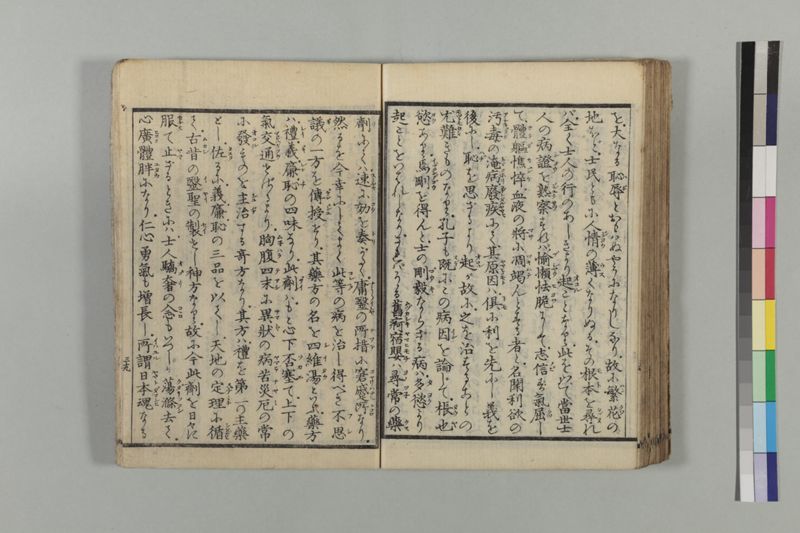
翻刻
【右丁】
を、大なる恥辱(ハヂ)とおもはぬやうになりしなり、故に繁花(ハンクワ)の
地ほど、士民ともに人 情(ジヨウ)の薄(ウス)くなりぬる、その根本(モト)を尋(タヅヌ)れ
ば、全く士人の行のあしきより起(オコル)ことなり、此を以て当世士
人の病 証(シヨウ)【證】を熟察(ジユクサツ)すれば、偸懶(ブシヤウ)怯脆(ヒヨワ)にして、志 信(ノビ)ず気 屈(クツ)し
て、体躯(カラダ)憔悴(カジケ)、血液の將(マサ)に凋竭(ツキハテ)んとする者と、名聞利欲の
汚毒(アシキドク)の淹病(トヾコホリ)、廃疾(コヂレタルヤマヒ)にて、其 原因(ヤマヒノモト)は、俱(トモ)に利を先にし義を
後にし、恥(ハヂ)を思ざるより起(オコル)が故に、之を治することの
尤(モツトモ)難(カタ)きものなり、孔子も既(スデ)にこの病 因(イン)を論じて、棖也(タウヤ)
欲(ヨク)あり、焉(イヅクンゾ)剛(ゴウ)を得んと、士の剛毅(ゴウキ)ならざる病は、多欲(タヨク)より
起ことをいはれしなり、さればかゝる旧痾宿嬰(ムヅカシキヤマヒモチ)は尋常(ヨノツネ)の薬(クス)
【左丁】
剤(リ)にては、速(スミヤカ)に効(コウ)を奏(トリ)がたく、庸医(ナミ〳〵ノイシヤ)の所措(テアテ)に窘蹙(コマリハテル)所(トコロ)なり、
然るを今幸にしてよく此等(コレラ)の病を治し得べき不思(フシ)
議(ギ)の一方を伝授(デンジユ)せり、其薬方の名を四維踰(シイタウ)といふ、薬方
は、礼(レイ)、義(ギ)、廉(レン)、恥(チ)の四味なり、此 剤(ザイ)は、もと心下 否塞(ツカエ)て、上下の
気 交(マジハリ)通(ツウ)せざるより、胸(ムネ)腹(ハラ)四末(テアシ)に異状(サマ〴〵)の病苦災厄(ヤマヒノナヤミ)の常
に発(オコル)ものを主治(シユヂ)する奇方なり、其方は、礼を第一の主薬
とし、佐(タスク)るに、義、廉、恥の三品を以てし、天地の定理(スヂミチ)に循(シタガヒ)
て、古昔(ムカシ)の医聖(イセイ)の製(セイ)せし神方なり、故に今此剤を日々に
服(モチヒ)て止(ヤマ)ざるときには、士人 驕奢(オゴリ)の念(コヽロ)もいつしか蕩(クダリ)滌(ツクシ)去て、
心 広(ヒロク)体 胖(ユタカ)になり、仁心勇気も増長し、所謂(イハユル)日本魂(ヤマトダマシヒ)なる
現代語訳
【右丁】
を、大なる恥辱とも思わないようになってしまったのである。故に繁華な土地ほど、武士も民も共に人情が薄くなってしまった。その根本を尋ねれば、全く武士の行いが悪いことから起こることなのである。このことをもって当世の武士の病状を熟察すれば、怠惰で脆弱であって、志は伸びず気は屈して、身体は憔悴し、血液がまさに枯渇しようとする者と、名声や利欲という汚れた毒が体に滞った慢性疾患で、その原因は、ともに利を先にし義を後にし、恥を思わないことから起こるが故に、これを治すことは最も難しいものである。孔子もすでにこの病因を論じて、「棖や、欲あり、いずくんぞ剛を得ん」と、武士が剛毅でない病は、多欲から起こることを言われたのである。それゆえこのような治りにくい持病を持つ者は、普通の薬
【左丁】
剤では、速やかに効果を上げることが難しく、並の医者の手当てでは困り果てるところである。しかし今幸いにして、よくこれらの病を治すことができる不思議な一つの処方を伝授された。その薬方の名を四維湯という。薬方は、礼、義、廉、恥の四味である。この薬剤は、もと心下が塞がって、上下の気が交流通じないことから、胸や腹、手足にさまざまな病気の苦しみや災いが常に発生するものを主に治療する奇妙な処方である。その処方は、礼を第一の主薬とし、補佐するに、義、廉、恥の三品をもってし、天地の定理に従って、古の医聖が製した神妙な処方である。故に今この薬剤を日々に服用して止めないときには、武士の驕奢の念もいつしか洗い清められ去って、心は広く体は豊かになり、仁心と勇気も増長し、いわゆる日本魂なる
英語訳
【Right Page】
no longer consider such behavior a great shame. Therefore, the more prosperous a place becomes, the thinner the human sentiment becomes among both warriors and common people alike. If we trace this to its root cause, it arises entirely from the corrupt conduct of the warrior class. With this understanding, if we carefully examine the symptoms of contemporary warriors, we find those who are lazy and fragile, whose aspirations do not expand and whose spirit is crushed, whose bodies are emaciated and whose vital essence is about to be completely depleted, along with those suffering from chronic ailments caused by the foul poison of desire for fame and profit stagnating within them. Since the root cause of both conditions lies in putting profit before righteousness and feeling no shame, treating these conditions is extremely difficult. Confucius already discussed this cause of illness, saying "Cheng has desires; how can he attain fortitude?" He indicated that the warrior's lack of fortitude arises from excessive desires. Therefore, those with such chronic and stubborn ailments cannot be treated with ordinary medicines.
【Left Page】
With regular remedies, it is difficult to achieve swift results, and ordinary physicians are at their wit's end in treating such cases. However, we have now fortunately been taught a mysterious prescription that can effectively cure these ailments. The name of this medicinal formula is "Four Cardinal Principles Decoction" (Shii-tō). The prescription consists of four ingredients: propriety (rei), righteousness (gi), integrity (ren), and shame (chi). This remedy is a miraculous prescription that primarily treats the various ailments and calamities that constantly arise in the chest, abdomen, and limbs due to blockage in the heart region that prevents the proper circulation of vital energy between upper and lower parts of the body. This formula uses propriety as the primary medicine, supported by the three ingredients of righteousness, integrity, and shame. It is a divine prescription created by ancient medical sages in accordance with the natural principles of heaven and earth. Therefore, when one takes this remedy daily without cease, the warrior's thoughts of extravagance are gradually purged and cleansed away, the heart becomes broad and the body robust, benevolent feelings and courage increase, and what is called the Japanese spirit (Yamato-damashii)