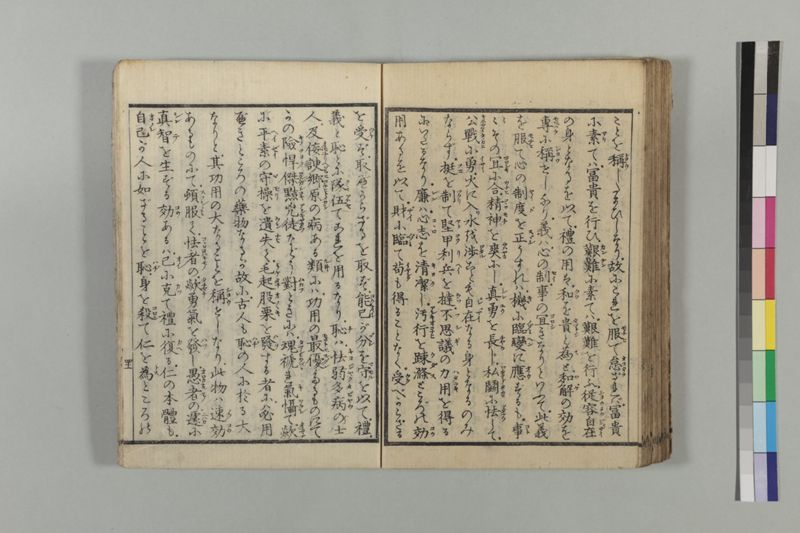
翻刻
【右丁】
ことを称(シヨウ)したまひしなり、故にこれを服(モチヒ)て怠(オコタラ)ざれば、富貴
に素(アリ)ては、富貴を行ひ、艱難(カンナン)に素ては、艱難を行ふ、従容(シヨウヨウ)自在(ジザイ)
の身となるを以て、礼の用は、和(クワ)を貴(タツトシ)と為(ス)と、和解(ワゲ)の効を
専(モツパラ)に称(シヨウ)せしなり、義は、心の制(セイ)、事の宜(ヨロシ)きなりといふて、此義
を服(モチヒ)て心の制度(セイド)を正(スヾシ)うすれは、機(キ)に臨(ノゾミ)変(ヘン)に応(オウ)ずるも、事(コト)
々(々)その宜(ヨロシキ)に合(カナヒ)、精神(コヽロモチ)を爽(サハヤカ)にし、真勇(シンユウ)を長(チヤウ)じ、私闘(ワタクシノタヽカヒ)に怯(ツタナク)して、
公戦(オホヤケノタヽカヒ)に勇(イサミ)、火に入り水を渉(ワタル)ことも自在(ジザイ)なる身となるのみ
ならず、挺(ツヱ)を制(ツクリ)て堅甲(ケンコウ)利兵(リヘイ)を撻(ウツ)、不思議(フシギ)の力用(ハタラキ)を得る
にいたるなり、廉(レン)は、心志(コヽロ)を清潔(キヨク)し、汚(アシキ)行(オコナヒ)を疎滌(クダス)ところの効(コウ)
用あるを以て、財(ザイ)に臨(ノゾミ)て苟(イヤシク)も得ることなく、受(ウク)べからざる
【左丁】
を受(ウケ)ず、取べからざるを取ず、能(ヨク)己(オノレ)が分(ブン)を守(マモル)を以て、礼、
義と恥とに隊伍(クミアハセ)てこれを用るなり、恥(チ)は、怯弱(キヨジヤク)多病(タビヤウ)の士
人、及 佞(オモネリ)【侫は誤字】諛(ヘツラヒ)郷原(ヨキヒトメカシ)の病ある類(ルヰ)には、功用の最(モツトモ)優(スグレ)たるものにて
かの険悍(キノツヨク)傑黠(ワルガシコキ)兇徒(アシキヤカラ)などに対(ムカフ)ときには、魂(タマシヒ)褫(ウバヽ)れ気(キ)懾(ヲクレ)て、歘(タチマチ)
に平素(ヘイゼイ)の守操(マモリ)を遺失(ウシナヒ)て、毛起(ミノケタチ)股栗(オノヽキ)を発(ハツ)する者には必用
べきところの薬物なるが故に、古人も恥(ハヂ)の人に於る大
なりと、其功用の大なることを称(シヨウ)せしなり、此物は速効(ソクコウ)
あるものにて、頓服(スコシノミ)て、怯者(コヽロヨハキモノ)の、歘(タチマチ)勇気を発(ハツ)し、愚者(オロカナルモノ)の、遽(ニハカ)に
真智(シンチ)を生ずる効(コウ)あるは、己(オノレ)に克(カツ)て礼に復(カヘ)る、仁の本体も、
自己(オノレ)が人に如ざることを恥(ハヂ)、身を殺(コロシ)て仁を為(ナス)ところの
現代語訳
【右丁】
ことを称賛されたのである。故にこれを服用して怠らなければ、富貴の身にあっては富貴にふさわしく行い、艱難の中にあっては艱難に処して行う、従容自在の身となることをもって、礼の用は「和を貴しと為す」と、和解の効を専ら称したのである。義は、心の制御、事の適宜なりといって、この義を服用して心の制度を正しくすれば、機に臨み変に応ずるも、事々その適宜に適い、精神を爽やかにし、真勇を養い、私闘には臆して、公戦には勇み、火に入り水を渡ることも自在な身となるのみならず、棒を制作して堅い甲冑や鋭利な兵器を打つ、不思議な力用を得るに至るのである。廉は、心志を清潔にし、悪い行いを洗い流すところの効用があることをもって、財に臨んでも苟しくも得ることなく、受けるべからざる
【左丁】
ものを受けず、取るべからざるものを取らず、よく自分の分を守ることをもって、礼、義と恥とに組み合わせてこれを用いるのである。恥は、怯弱多病の士人、および佞諛郷原の病がある類には、功用の最も優れたものであって、あの険悍で傑黠な凶徒などに対するときには、魂を奪われ気を挫かれて、たちまちに平素の守操を失って、身の毛立ち股戦きを発する者には必用すべきところの薬物であるが故に、古人も「恥の人に於けること大なり」と、その功用の大なることを称したのである。この物は速効があるものであって、頓服して、怯者が、たちまち勇気を発し、愚者が、にわかに真智を生ずる効があるのは、己に克って礼に復る、仁の本体も、自己が人に及ばないことを恥じ、身を殺して仁を為すところの
英語訳
【Right Page】
This is what he praised. Therefore, if one takes this without neglecting it, when in wealth and honor, one acts befitting wealth and honor; when in hardship and difficulty, one acts in accordance with hardship and difficulty, becoming a person of calm composure and freedom. Thus the use of propriety "values harmony above all," and he specifically praised the efficacy of reconciliation. Righteousness is the control of the heart and the appropriateness of affairs. When one takes this righteousness and corrects the system of the heart, even when facing crises and responding to changes, each matter accords with what is appropriate, making the spirit refreshed, nurturing true courage, being timid in private fights but brave in public battles, entering fire and crossing water at will. Not only does one become such a person, but one even attains the mysterious power to craft staffs that can strike down strong armor and sharp weapons. Integrity has the efficacy of purifying the mind and washing away evil deeds, so that when facing wealth, one never gains it through base means, not accepting what should not be accepted,
【Left Page】
not taking what should not be taken, well maintaining one's proper portion, using it in combination with propriety, righteousness, and shame. Shame has the most excellent efficacy for cowardly and sickly scholars and those afflicted with the disease of flattery and false virtue. When confronting those dangerous, violent, cunning, and wicked fellows, those who have their souls seized and spirits cowed, immediately losing their usual moral integrity and experiencing hair standing on end and legs trembling, must use this medicine. Therefore, the ancients also said "shame is of great importance to people," praising the greatness of its efficacy. This substance has rapid effects - taken as a single dose, it enables cowards to immediately develop courage and fools to suddenly generate true wisdom. This is because overcoming oneself and returning to propriety, the fundamental essence of benevolence, also involves being ashamed that oneself does not measure up to others and sacrificing one's life to achieve benevolence.