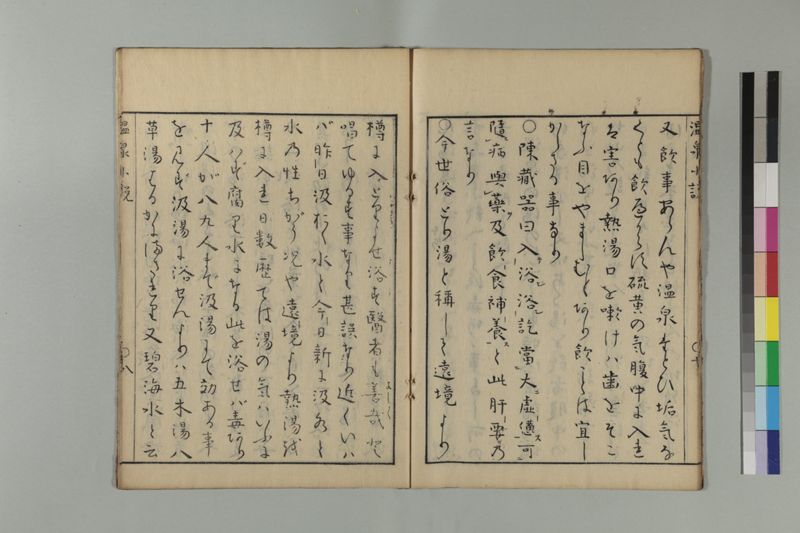
翻刻
【右丁】
又飲事あらんや温泉たとひ垢気な
くとも飲へからす硫黄の気腹中に入れ
は害あり熱湯口を嗽けは歯をそこ
なふ目をやましむとあり飲ことは宜し
からさる事なり
〇陳蔵器曰入 ̄テ-浴 ̄シ浴 ̄シ-訖当_二大 ̄ニ虚-憊 ̄ス_一可_二
随 ̄ヒ_レ病与_レ薬 ̄ヲ及飲-食補-養 ̄ス_一と此肝-要の
言なり
〇今世俗とり湯と称して遠境より
【左丁】
樽に入とりよせ浴す医者も善哉(よし〳〵)と
唱てゆるす事なり甚誤なり近くいは
ば昨-日汲おく水と今-日新に汲水と
水の性ちがう況や遠-境より熱湯を
樽に入れ日数歴ては湯の気はいふに
及はず腐り水になる此を浴せば毒あり
十人が八九人まで汲湯にて効ある事
を見ず汲湯に浴せんより五木湯八
草湯はるかにまされり又碧海水と云
現代語訳
【右丁】
また飲むことなどあろうか。温泉はたとえ垢や匂いがなくても飲んではならない。硫黄の気が腹中に入れば害がある。熱湯で口をすすげば歯を損ない、目を痛めるとある。飲むことは良くないことである。
○陳蔵器が言うには「入浴した後は大いに疲れ衰えるので、病気に応じて薬を与え、飲食で補養すべきである」と。これは肝要な言葉である。
○今の世俗では「とり湯」と称して遠い土地から
【左丁】
樽に入れて取り寄せて入浴する。医者も「良い良い」と言って許可することがある。これは甚だ間違いである。身近な例で言えば、昨日汲んでおいた水と今日新しく汲んだ水とでは水の性質が違う。ましてや遠い土地から熱湯を樽に入れて日数が経てば、湯の効能は言うに及ばず腐った水になる。これを浴びれば毒がある。十人のうち八九人まで汲み湯で効果があることを見ない。汲み湯で入浴するよりは五木湯や八草湯の方がはるかに優れている。また碧海水という
英語訳
【Right page】
how much more so drinking it? Hot spring water should not be drunk even if it lacks scum or odor. If sulfur vapors enter the abdomen, they cause harm. It is said that rinsing the mouth with hot water damages the teeth and harms the eyes. Drinking it is not advisable.
○Chen Cangqi said: "After bathing, one becomes greatly exhausted and weakened, so medicine should be given according to the disease, and one should be nourished with food and drink." These are essential words.
○Nowadays, common people practice what they call "fetched hot spring water," bringing it from distant places
【Left page】
in barrels for bathing. Even doctors say "good, good" and permit this practice. This is greatly mistaken. To use a close example, water drawn yesterday differs in nature from water freshly drawn today. How much more so when hot spring water is brought from distant places in barrels over many days - not only do the medicinal properties dissipate, but it becomes putrid water. Bathing in this is poisonous. I have not seen eight or nine out of ten people benefit from such transported water. Rather than bathing in transported spring water, five-tree decoction or eight-herb decoction would be far superior. There is also something called "blue sea water"