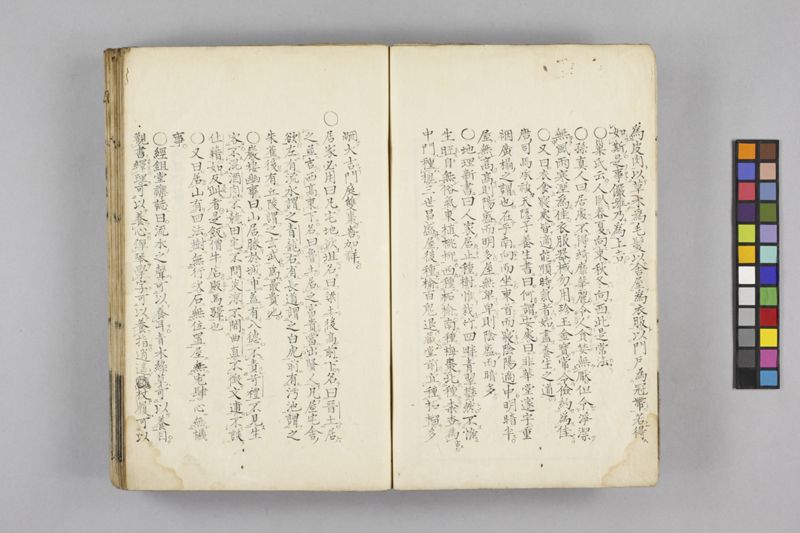
翻刻
【右丁】
為_二皮肉 ̄ト_一以 ̄テ_二草木_一為_二毛髪_一以 ̄テ_二舎屋 ̄ヲ_一為_二衣服 ̄ト_一。以_二門戸_一為_二冠帯 ̄ト_一。若 ̄シ得 ̄ハ
_レ如 ̄コトヲ_レ斯 ̄ノ。是 ̄ノ事(コト)儼雅 ̄ニシテ乃 ̄チ為_二 上吉 ̄ト_一。
○巣氏云。人臥 ̄コト。春夏 ̄ニハ向 ̄ヒ_レ東 ̄ニ。秋冬 ̄ニハ向 ̄フ_レ西 ̄ニ。此是 ̄ノ常法 ̄ナリ。
○孫真人曰。居処 ̄ヲハ不 ̄レ_レ得_下綺靡華 麗(レイ) ̄ニシテ。令 ̄シテ【再読送り仮名:ムルコトヲ】_中レ【レ点衍ヵ】人 ̄ヲ貪婪(トンラン) ̄シテ無 ̄ラ_上レ厭。但令 ̄ルヲ_下浄潔 ̄ニシテ
無 ̄カラ_中風雨寒湿_上為 ̄ス_レ佳。衣服器械勿 ̄レ用 ̄ルコト_二珍玉金宝 ̄ヲ_一。常 ̄ニ令 ̄ルコト_二倹約 ̄セ_一為 ̄ス_レ佳 ̄シト。
○又曰。衣食寝処。皆 ̄ナ適 ̄シテ能 ̄ク順 ̄フ_二時 ̄ノ気 ̄ニ_一者 ̄ノハ。始 ̄メテ尽 ̄ス_二養生 ̄ノ之道 ̄ヲ_一。
唐 ̄ノ司馬承禎 ̄カ天-隠子養生書 ̄ニ曰。何 ̄ヲカ謂 ̄フヤ_二安処 ̄ト_一。曰 ̄ク。非_二華堂邃宇。重
裀広榻 ̄ノ之謂 ̄ニハ_一也。在 ̄テ_二乎南 ̄ミ向(ムキニ)_一而坐 ̄シ。東 ̄ニ首 ̄シテ而 寝(イネ)。陰陽適中 ̄シ。明暗半 ̄ス。
屋 ̄ハ無 ̄レ_レ高 ̄コト。高 ̄トキハ則陽盛 ̄ニシテ而明-多 ̄シ。屋 ̄ハ無_レ卑 ̄コト。卑 ̄トキハ則陰盛 ̄ニシテ而暗多 ̄シ。
○地理新書 ̄ニ曰人家 ̄ノ居 ̄ニハ止(タヽ)種 ̄ユ_レ樹 ̄ヲ。惟 ̄リ栽 ̄レハ_二竹 ̄ヲ四畔 ̄ニ_一。青翠鬱然 ̄トシテ不 ̄ス_二惟 ̄ニ
生旺_一 ̄スルノミ自 ̄ヲ無 ̄シ_二俗気_一。東 ̄ニ植 ̄ヘ_二桃柳 ̄ヲ_一。西 ̄ニハ種 ̄ヘ_二柘楡 ̄ヲ_一。南 ̄ニハ種 ̄へ_二梅棗 ̄ヲ_一。北 ̄ニハ_二種 ̄ユルヲ柰杏 ̄ヲ_一為_レ《割書:吉 ̄ス》。
中門 ̄ハ ̄レハ種_レ槐。三世昌盛 ̄ナリ。屋 ̄ノ後 ̄ニ種 ̄ユレハ_レ楡 ̄ヲ。百鬼退 ̄キ蔵 ̄ル。堂前 ̄ニハ宜 ̄ク_レ種 ̄ユ_二柘榴 ̄ヲ_一。多
【左頁】
嗣 ̄ニシテ大吉 ̄ナリ。門庭 ̄ノ双棗 ̄ハ。喜 ̄ク加-祥 ̄ス。
○居家必用曰凡 ̄ソ宅地 ̄ハ欲 ̄ス_二《振り仮名:|平》坦 ̄ンコトヲ_一名 ̄テ曰 ̄フ_二梁土(────) ̄ト_一。後-高 ̄ク前 ̄ヘ下 ̄ヲ。名 ̄テ曰_二晋土(────) ̄ト_一。居 ̄レハ
_レ之 ̄ニ並 ̄ニ-吉《送り仮名:也》。西-高 ̄ク東 ̄シ-下 ̄ヲ。名 ̄テ曰 ̄フ_二魯土 ̄ト_一。居 ̄レハ_レ之 ̄ニ富貴 ̄ニシテ_一。当 ̄ニ_レ出 ̄ツ_二賢人 ̄ヲ_一。凡 ̄ソ屋宅舎 ̄ノ
欲(ネカイ) ̄ハ_一【一点衍】。左 ̄リニ有 ̄ル_二流水_一。謂 ̄フ_二之 青龍(────) ̄ト_一。右 ̄ニ有 ̄ル_二長道_一。謂_二之白虎 ̄ト_一。前 ̄ニ有 ̄ル_二汚池_一。謂 ̄フ_二之
朱雀 ̄ト_一。後 ̄ロニ有 ̄ル_二丘陵_一。謂 ̄フ_二之 ̄ヲ玄武 ̄ト_一。為 ̄ス_二最貴地 ̄ト_一。
○巌棲幽事 ̄ニ曰。山居 ̄ハ勝 ̄ルコト_二於城市 ̄ニ_一。蓋 ̄シ有 ̄リ_二 八徳_一。不 ̄ス_レ責 ̄ラレ_二苛礼(────)_一不_レ見 ̄ス_二生
客 ̄ヲ_一。不 ̄ス_レ混_二酒肉(────) ̄ニ_一。不 ̄ス_レ競 ̄ハ_二田宅(────)_一。不【レ点脱】問 ̄ハ_二炎涼 ̄ヲ_一。不 ̄ス_レ閙 ̄カラ_二曲直(────) ̄ニ_一。不_レ微 ̄サ_二文逋 ̄ヲ_一。不 ̄ス_レ談 ̄ラ_二
仕籍(────) ̄ヲ_一。如 ̄シ反 ̄スル_レ此 ̄ニ者 ̄ハ。是 ̄レ飯 ̄シテ_二僧牛 ̄ノ店 ̄ニ_一。販(ヒサ) ̄ク_二馬駅 ̄ニ_一也
○又曰。居 ̄ルニ_レ山有 ̄リ_二 四法_一。樹 ̄ニ_一【一点衍】無_二行次_一。石 ̄ニ無_二位置_一屋 ̄ニ無 ̄ク_二宏肆_一。心 ̄ニ無 ̄ン_二機
事_一。
○経鉏堂雑誌 ̄ニ曰。流水 ̄ノ之声 ̄ハ。可_二以 ̄テ養_一レ耳 ̄ヲ。青木緑草 ̄ハ。可_二以 ̄テ養_一レ目 ̄ヲ。
観_レ書 ̄ヲ繹(ヌキンスレハ)_レ理 ̄ヲ。可_二以 ̄テ養 ̄フ_一レ心 ̄ヲ。弾_レ琴 ̄ヲ学 ̄ハ_レ字 ̄ヲ。可_二以 ̄テ養 ̄フ_一レ指 ̄ヲ。逍遥 ̄トシテ《見せ消ち:扶 ̄キ|》杖 ̄キ-履 ̄ハ可_二以 ̄テ
現代語訳
【右丁】
皮肉となし、草木を以て毛髪となし、舎屋を以て衣服となし、門戸を以て冠帯となす。もしこのようなことを得れば、このことは整然として雅やかであり、すなわち上吉となる。
○巣氏が言う。人が臥すこと、春夏には東に向い、秋冬には西に向う。これが常法である。
○孫真人が曰く。居住地は綺麗で華麗にして、人をして貪欲で飽きることがないようにしてはならない。ただ清潔にして風雨寒湿がないようにするのが良い。衣服器具は珍玉金宝を用いてはならない。常に倹約にするのが良い。
○また曰く。衣食寝処、皆適切にして能く時の気に順う者は、初めて養生の道を尽くす。
唐の司馬承禎の天隠子養生書に曰く。何を安処というか。曰く、華堂や奥深い建物、重ねた敷物や広い寝台のことではない。南向きに座り、東に頭を向けて寝る。陰陽が適中し、明暗が半ばする。屋は高くしてはならない。高いと陽が盛んになって明るすぎる。屋は低くしてはならない。低いと陰が盛んになって暗すぎる。
○地理新書に曰く。人家の居住地にはただ木を植える。ただ竹を四方に栽培すれば、青翠として鬱蒼とし、生気が旺盛になるだけでなく、自然と俗気がなくなる。東には桃柳を植え、西には柘楡を種え、南には梅棗を種え、北には柰杏を種えるのが吉である。中門に槐を種えれば、三世にわたって昌盛となる。屋の後に楡を種えれば、百鬼が退散し隠れる。堂前には柘榴を種えるのが宜しく、多くの
【左丁】
子孫に恵まれて大吉である。門庭の双棗は、喜びと吉祥を加える。
○居家必用に曰く。およそ宅地は平坦なことを欲し、これを梁土と名づく。後が高く前が下がっているのを晋土と名づく。これに居住すれば皆吉である。西が高く東が下がっているのを魯土と名づく。これに居住すれば富貴となり、当然賢人を輩出する。およそ屋宅舎は、左に流水があるのを青龍と謂い、右に長道があるのを白虎と謂い、前に汚池があるのを朱雀と謂い、後に丘陵があるのを玄武と謂う。これを最も貴い地とする。
○巌棲幽事に曰く。山居は城市に勝ること、蓋し八徳がある。苛酷な礼を責められない、生客を見ない、酒肉に混じらない、田宅を競わない、炎涼を問わない、曲直を騒がない、文逋を微細にしない、仕籍を談らない。もしこれに反する者は、これは僧牛の店で飯を食い、馬駅で商売をするようなものである。
○また曰く。山に居るには四法がある。樹に行次がなく、石に位置がなく、屋に宏肆がなく、心に機事がない。
○経鉏堂雑誌に曰く。流水の声は、以て耳を養うことができる。青木緑草は、以て目を養うことができる。書を観て理を繹けば、以て心を養うことができる。琴を弾き字を学べば、以て指を養うことができる。逍遥として杖履すれば、以て
英語訳
【Right page】
skin and flesh, use vegetation as hair, dwellings as clothing, and gates and doors as caps and sashes. If one can achieve such conditions, this would be dignified and elegant, and thus constitute supreme good fortune.
○Master Chao says: When people lie down, in spring and summer they should face east, in autumn and winter they should face west. This is the standard method.
○Master Sun Zhenren said: Dwelling places should not be ornate and luxurious, causing people to become greedy and insatiable. Simply keep them clean and free from wind, rain, cold, and dampness - this is good. For clothing and utensils, do not use precious gems, gold, and treasures. Always maintain frugality - this is good.
○He also said: Clothing, food, and sleeping arrangements should all be appropriate and able to harmonize with the seasonal qi - only then does one fully practice the way of nurturing life.
The Tang dynasty's Sima Chengzhen's "Tianyin Zi Yang Sheng Shu" (Book on Nurturing Life by the Hermit of Heaven) says: What is meant by "peaceful dwelling"? It does not refer to magnificent halls, deep chambers, multiple cushions, or wide couches. Rather, it means sitting facing south and sleeping with one's head to the east. Yin and yang are in proper balance, light and dark are equal. Houses should not be too high - when high, yang becomes excessive and there is too much light. Houses should not be too low - when low, yin becomes excessive and there is too much darkness.
○The "Geography New Book" says: In human dwellings, one should simply plant trees. If one cultivates bamboo on all four sides, it will be verdantly lush, not only promoting vigorous growth but naturally eliminating vulgar qi. Plant peach and willow in the east, plant mulberry and elm in the west, plant plum and jujube in the south, and plant crabapple and apricot in the north - this brings good fortune. Plant scholar trees at the central gate and three generations will prosper. Plant elm behind the house and a hundred ghosts will retreat and hide. It is appropriate to plant pomegranates in front of the hall for many
【Left page】
descendants and great fortune. Twin jujube trees at the gate entrance add joy and auspiciousness.
○"Essential Knowledge for Household Management" says: Generally, residential land should be level and flat - this is called "liang soil." When the back is high and front is low, this is called "jin soil." Living in either brings good fortune. When the west is high and east is low, this is called "lu soil." Living there brings wealth and honor, and should produce worthy people. Generally, for houses and dwellings: flowing water on the left is called the Azure Dragon, a long road on the right is called the White Tiger, a pond in front is called the Vermillion Bird, and hills behind are called the Black Tortoise. This constitutes the most auspicious land.
○"Secluded Mountain Dwelling Affairs" says: Mountain living surpasses city life because it has eight virtues: one is not subjected to harsh etiquette, does not see bothersome guests, does not indulge in wine and meat, does not compete over fields and houses, does not concern oneself with others' favor or disfavor, does not get involved in disputes over right and wrong, does not worry over minor debts, and does not discuss official careers. Those who go against this are like eating at a monk's cattle inn or doing business at a horse station.
○It also says: Living in the mountains has four principles: trees without regimented rows, stones without fixed placement, houses without grand ostentation, and mind without scheming concerns.
○"Jingshu Hall Miscellany" says: The sound of flowing water can nourish the ears. Green trees and grass can nourish the eyes. Reading books and contemplating principles can nourish the mind. Playing the qin and practicing calligraphy can nourish the fingers. Strolling leisurely with walking stick and shoes can