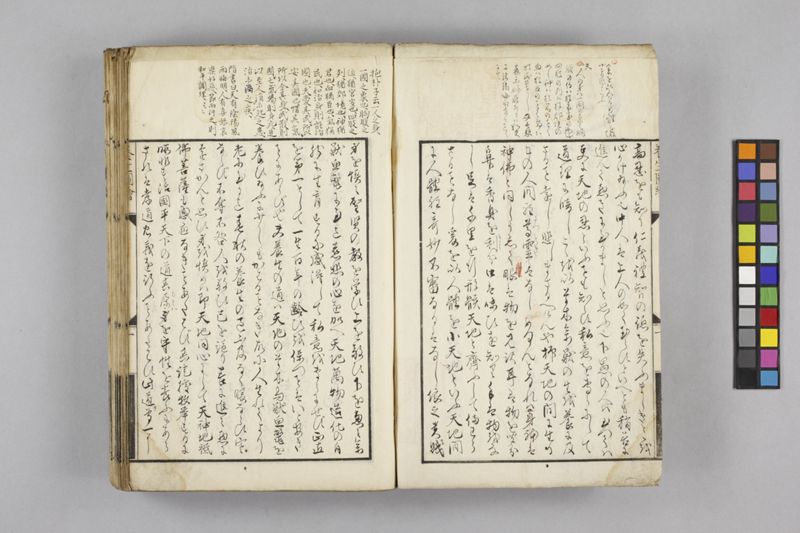
翻刻
【右丁】
高恩をも知り仁義礼智の徳を失ふましきと候を
心かけ給ふ也中人は上人の如く至らすといへとも稍答に
進んて悪きに至るましと思ふ也下愚の人は至つては
更に天地の恩といふことも知らす私意を専らにして
道理に暗しこゝを以草木禽獣の生を養に及
さること遠し悲しまさるへけんや抑天地の間に生る
もの人間程 尊霊(たつとき)はなし如何んとなれは《見せ消ち:◦|△》【△は朱】《見せ消ち:身体は|》【線は朱】
《見せ消ち:神仏と同しうして|》《振り仮名:|○《見せ消ち:故に|》》【○線は朱】眼は物を見訳耳は物を聞分
鼻は香臭を利(きゝ)分口は味ひを知り手は物をな
し足は千里を行形骸天地と斉ふして備わら
さることなし爰を以人体を小天地といふ天地間
に人体程奇妙不審なるはなし依之貴賎
【枠上 ○△それぞれの位置に挿入ヵ】
○爰を以人間の体を以て
小天地といふ
△夫一人の身は一国の象也胸
腹の位は猶宮室の如くし【て有ヵ】
四肢の列は猶郊境の
如く神は猶君のことく
血は猶臣のことく気は
猶民のことし又喜怒
哀楽好悪あるは猶夫
に陰陽晦明有かことく
にて
【左丁】
身を慎み聖賢の教を学ひ上を敬ひ下を恵み禽
獣魚鼈に至迄慈悲の心を加へ天地万物造化の自
然に生育するに感得して私意を専らにせず正直
を第一として一生百年の齢ひを保つことはいと安き
ことにあらずや夫養生の道は天地の草木鳥獣魚鼈を
養ひ給ふに少しもかはることなき故に人生れてより
老に至る迄春秋の養生の過不及なく暖ならす寒
ならず不奪不咎人を敬ひ己を謙り善に進み悪に
遠さかんと思ひ身を慎めは即天地同心にして天神地祗【祇の誤】
仏菩薩も感応なきことあたはず其証拠枚挙するに
暇非す治国平天下の道其 原(もとは)身を守性を養ふにあら
されは孝道忠義を行ふことあたはす此道 ̄ヲ専一に
【枠上】
抱朴子云一人之身
一国之象也、胸腹之
位、猶宮室也、四肢之
列、猶郊境也、神猶
君也、血猶臣也、気猶
民也、知治身則能治
国也、夫愛其民、所以
安其国也、惜其気、
所以全其身、民散則
国、亡、【注①】気竭則身死、是
以至人消_レ【注②】未_レ起_二之患_一、
治未病之疾、
隋書曰、天有陰陽風
雨晦明、人有喜怒哀
楽好悪、節而行之、則
和平調理、云々
【注① 「国」の下の読点を消し、「亡」の下に読点をを挿入。原文は「民弊國亡」】
【注② 「未」の上のレ点は衍ヵ】
現代語訳
【右丁】
高恩をも知り、仁義礼智の徳を失わないようにと心がけるのである。中程度の人は上位の人のように至らないとはいえ、やや答えに進んで悪いところには至らないと思うのである。下愚の人に至っては、全く天地の恩ということも知らず、私意を専らにして道理に暗い。ここをもって草木禽獣が生命を養うことにも及ばないことは遠い。悲しまずにいられようか。
そもそも天地の間に生まれるもので、人間ほど尊く霊妙なものはない。なぜかといえば、目は物を見分け、耳は物を聞き分け、鼻は香りと臭いを嗅ぎ分け、口は味を知り、手は物を作り、足は千里を行く。形体は天地と等しくして備わらないことはない。ここをもって人体を小天地というのである。天地間に人体ほど奇妙で不思議なものはない。これによって貴賎
【枠上の挿入文】
○ここをもって人間の体をもって小天地という
△そもそも一人の身は一国の象である。胸腹の位置は宮室のようであり、四肢の配列は郊境のようであり、神は君主のようであり、血は臣のようであり、気は民のようである。また喜怒哀楽好悪があるのは、それに陰陽晦明があるようなものである
【左丁】
身を慎み、聖賢の教えを学び、上を敬い下を恵み、禽獣魚鼈に至るまで慈悲の心を加え、天地万物造化の自然に生育することに感得して、私意を専らにせず、正直を第一として一生百年の齢を保つことは、とても易しいことではないだろうか。
そもそも養生の道は、天地が草木鳥獣魚鼈を養い給うのと少しも変わることがない故に、人が生まれてから老いに至るまで、春秋の養生に過不及なく、暖かすぎず寒すぎず、奪わず咎めず、人を敬い己を謙り、善に進み悪に遠ざかろうと思い、身を慎めば、すなわち天地同心にして、天神地祇、仏菩薩も感応しないことはできない。その証拠は枚挙するに暇がない。治国平天下の道、その根本は身を守り性を養うことにあるのでなければ、孝道忠義を行うことはできない。この道を専一に
【枠上の漢文】
抱朴子に云う、一人の身は一国の象なり。胸腹の位は宮室の如く、四肢の列は郊境の如く、神は君の如く、血は臣の如く、気は民の如し。身を治むることを知れば則ち能く国を治む。それ其の民を愛するは其の国を安んずる所以なり。其の気を惜しむは其の身を全うする所以なり。民散ずれば則ち国亡び、気竭くれば則ち身死す。是を以て至人は未だ起らざる患いを消し、未病の疾を治す。
隋書に曰く、天に陰陽風雨晦明あり、人に喜怒哀楽好悪あり。節してこれを行えば、則ち和平調理す、云々
英語訳
【Right page】
They know the great benevolence and are mindful not to lose the virtues of benevolence, righteousness, propriety, and wisdom. Those of middle virtue, though not reaching the level of superior people, advance somewhat in their responses and think not to reach evil. As for people of inferior wisdom, they know nothing at all of the benevolence of heaven and earth, focusing solely on selfish intentions and being ignorant of moral principles. Therefore, they fall far short of even the way grass, trees, birds, and beasts nourish their lives. How can this not be lamentable?
Now, among all things born between heaven and earth, nothing is more noble and spiritual than human beings. Why is this so? Because the eyes distinguish what they see, the ears distinguish what they hear, the nose discriminates between fragrance and odor, the mouth knows taste, the hands create things, and the feet can travel a thousand li. The physical form equals heaven and earth, lacking nothing. Therefore, the human body is called a microcosm. Nothing between heaven and earth is more wondrous and mysterious than the human body. Because of this, regardless of high or low status...
【Inserted text in margins】
○Therefore, the human body is called a microcosm
△The body of one person is the symbol of one country. The position of chest and abdomen is like a palace chamber, the arrangement of the four limbs is like outer territories, the spirit is like a ruler, blood is like ministers, and qi is like the people. Having joy, anger, sorrow, pleasure, likes and dislikes is like having yin-yang and light-dark.
【Left page】
If one is prudent with one's body, studies the teachings of sages, respects those above and shows kindness to those below, extends compassionate heart even to birds, beasts, fish and turtles, feels gratitude for the natural growth of all things in heaven and earth, does not focus on selfish intentions, puts honesty first, and maintains a lifespan of one hundred years—would this not be quite an easy thing?
The way of life cultivation is exactly the same as how heaven and earth nourish grass, trees, birds, beasts, fish and turtles. Therefore, from birth to old age, if one practices seasonal cultivation without excess or deficiency, being neither too warm nor too cold, neither taking nor blaming, respecting others and humbling oneself, advancing toward good and distancing from evil, and being prudent with one's body, then one becomes of the same mind as heaven and earth, and heavenly gods, earthly deities, buddhas and bodhisattvas cannot fail to respond. The evidence for this is too numerous to enumerate. The way of governing the country and bringing peace to the world—its foundation lies in protecting the body and cultivating one's nature; without this, one cannot practice filial piety and loyalty. This way should be pursued with single-minded devotion...
【Marginal classical Chinese text】
Baopuzi says: One person's body is the symbol of one country. The position of chest and abdomen is like palace chambers, the arrangement of the four limbs is like outer territories, the spirit is like a ruler, blood is like ministers, qi is like the people. If one knows how to govern the body, then one can govern a country. Loving one's people is the way to secure one's country; cherishing one's qi is the way to preserve one's body. When people scatter, the country perishes; when qi is exhausted, the body dies. Therefore, the sage eliminates troubles before they arise and treats diseases before they manifest.
The Book of Sui says: Heaven has yin-yang, wind and rain, darkness and light; humans have joy, anger, sorrow, pleasure, likes and dislikes. If these are moderated and practiced accordingly, then harmony and balance are achieved, etc.